


SpaceX IPO Threatens Tesla’s Market Dominance
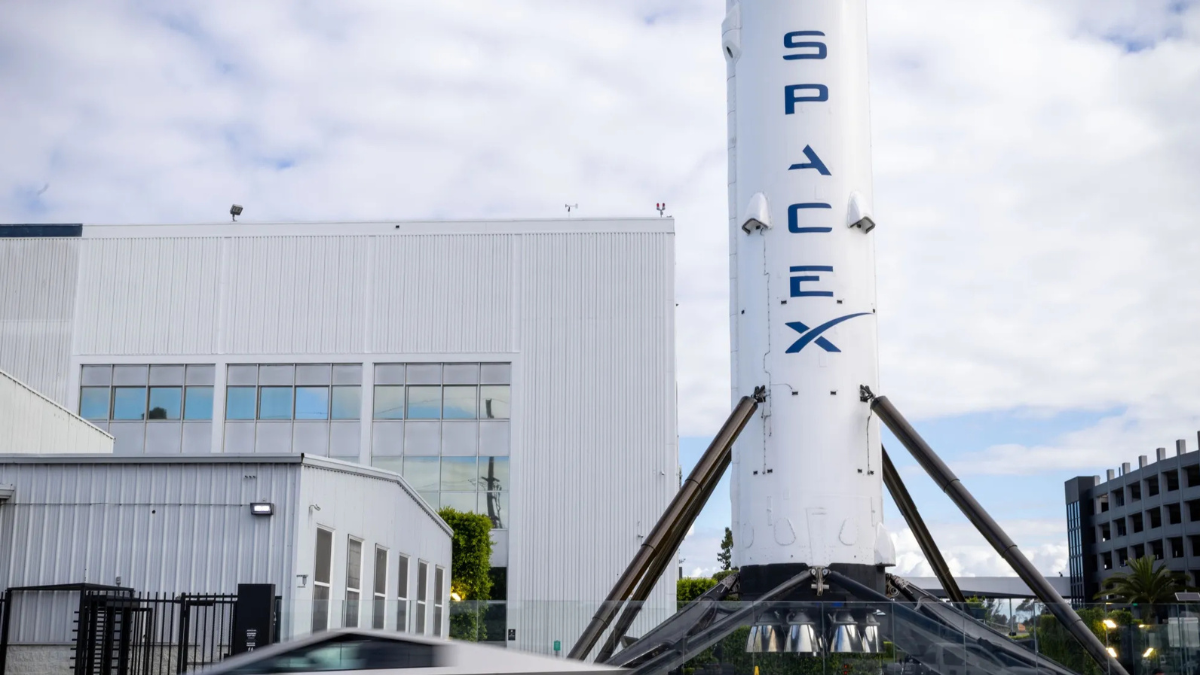
The long-anticipated SpaceX IPO is no longer a distant Wall Street rumor. According to Bloomberg, Elon Musk’s private space company is preparing for a public debut that could fundamentally reshape investor sentiment surrounding Tesla, the broader technology sector, and what many analysts now call the “Muskonomy.”
For years, Tesla represented the only practical avenue for retail investors to participate in Elon Musk’s ambitious vision of the future. Whether investors believed in electric vehicles, artificial intelligence, autonomous transportation, robotics, or simply Musk himself, Tesla became the financial embodiment of those expectations. The upcoming SpaceX IPO, however, changes that equation entirely.
Suddenly, investors may no longer need Tesla as a proxy for Musk’s futuristic ambitions. Instead, they can buy direct exposure to a company widely regarded as the global leader in commercial space technology, satellite deployment, reusable rockets, and next-generation aerospace infrastructure.
That possibility is creating serious concerns among Tesla shareholders.
Why the SpaceX IPO Matters So Much
The importance of the SpaceX IPO extends far beyond another high-profile technology listing. Unlike many speculative startups entering public markets, SpaceX already commands enormous credibility among institutional investors and the retail trading community.
According to Bloomberg, several Wall Street strategists believe the SpaceX IPO could siphon both investor attention and capital away from Tesla. That risk becomes particularly significant because Tesla’s valuation has long depended more on Elon Musk’s vision than on traditional financial fundamentals.
Joe Gilbert, portfolio manager at Integrity Asset Management, told Bloomberg that the IPO “cannot be a positive for Tesla.” His concern reflects a broader fear spreading through the market: Elon Musk’s focus may increasingly shift toward SpaceX at Tesla’s expense.
That perception matters because Tesla’s premium valuation has always relied heavily on confidence in Musk’s leadership and future ambitions.
Even after an 8.8% decline this year, Tesla still trades at an extraordinarily high earnings multiple. Investors continue valuing the company as an autonomous driving and robotics powerhouse rather than merely an automaker.
The SpaceX IPO introduces a new challenge. Investors now have an alternative way to buy into Musk’s long-term futuristic narrative without relying exclusively on Tesla.
“SpaceX is the new shiny object,” Bloomberg quoted Roundhill Financial CEO Dave Mazza as saying.
That statement captures the growing concern across Wall Street.
Tesla’s Valuation Depends on Future Dreams
One reason the SpaceX IPO has generated so much anxiety is that Tesla’s valuation has rarely reflected its current financial reality.
Tesla today faces mounting competitive pressure in multiple sectors simultaneously. Chinese EV manufacturers continue gaining global market share. Traditional automakers are accelerating electric vehicle production. Alphabet’s Waymo already operates commercial robotaxi services in several cities. Meanwhile, dozens of technology companies are investing heavily in humanoid robotics.
Despite those challenges, Tesla still maintains a market capitalization exceeding $1.5 trillion.
That valuation only makes sense if investors believe Elon Musk can successfully transform Tesla into a dominant AI, robotics, and autonomous transportation company in the future.
The problem is that the SpaceX IPO may weaken Tesla’s monopoly over Musk-driven optimism.
Nicholas Colas, co-founder of DataTrek Research, explained this dynamic clearly in comments cited by Bloomberg. He argued that Tesla trades almost entirely on future expectations rather than present-day fundamentals.
“The vast majority of that company’s valuation is based on future hope, not current reality,” Colas said.
If investors suddenly gain direct access to another Musk-led company with stronger growth momentum and clearer competitive advantages, Tesla’s premium valuation could face substantial pressure.
The SpaceX IPO therefore represents more than a new stock listing. It represents competition for investor imagination.
SpaceX Has Clearer Competitive Advantages
Unlike Tesla, SpaceX currently dominates its core industry with relatively limited competition.
The company has transformed the economics of space travel through reusable rockets and rapidly expanding satellite infrastructure. Its Starlink satellite internet business continues growing globally, while NASA and military contracts provide recurring revenue and strategic credibility.
According to Bloomberg, some analysts even believe the SpaceX IPO could eventually produce a company worth more than Tesla.
That possibility may sound shocking today, but several factors support the argument.
- SpaceX operates in an industry with extremely high barriers to entry.
- The company possesses deep technological leadership.
- Government partnerships create durable competitive advantages.
- Global satellite demand continues rising rapidly.
- The commercial space economy remains in its early stages.
Tesla, by contrast, now operates in increasingly crowded markets.
Electric vehicles no longer represent a unique category. Autonomous driving technology faces regulatory hurdles and fierce competition. Robotics commercialization remains uncertain.
The SpaceX IPO therefore offers investors exposure to a business with arguably stronger structural advantages and clearer long-term growth opportunities.
Joe Gilbert even described SpaceX as having “no true competitors,” according to Bloomberg.
That level of market dominance naturally attracts investor attention.
The Retail Investor Problem
Retail investors have historically formed the backbone of Tesla’s shareholder base. According to BNP Paribas analyst James Picariello, cited by Bloomberg, retail traders own approximately 40% of Tesla shares.
That matters because retail investors often invest emotionally, particularly when charismatic founders are involved.
Tesla became a cultural movement as much as a stock.
For many small investors, buying Tesla represented belief in Elon Musk himself. The upcoming SpaceX IPO may divide that loyalty.
Picariello warned that the IPO could “split” the pro-Musk retail shareholder base.
In practical terms, that means investors who previously allocated all their Musk-related capital to Tesla may now diversify into SpaceX instead.
Even modest capital rotation could create significant pressure on Tesla shares given the company’s massive retail ownership.
According to Bloomberg, Tesla has already experienced relatively muted retail inflows since SpaceX confirmed IPO intentions for 2026.
That trend suggests investors may already be waiting for the SpaceX IPO rather than aggressively adding Tesla exposure.
The psychology behind this shift is important.
Tesla no longer feels like the only gateway into Musk’s futuristic ecosystem.
That exclusivity once justified extraordinary investor enthusiasm.
Could Musk Merge Tesla and SpaceX?
The growing overlap between Tesla and SpaceX has reportedly fueled discussions about a possible merger.
According to Bloomberg, Musk has considered combining the companies partly because of the competitive tension that the SpaceX IPO could create.
From a strategic perspective, a merger would solve several problems simultaneously.
- It would consolidate investor enthusiasm under one publicly traded entity.
- It would prevent internal competition for capital.
- It would strengthen Musk’s broader technological ecosystem narrative.
- It would allow investors to gain exposure to multiple industries through one stock.
Nicholas Colas argued that combining the companies “makes the most sense.”
His reasoning is straightforward. If investors primarily buy Musk-related companies because they believe in Elon Musk himself, maintaining multiple publicly traded entities may create unnecessary fragmentation.
The SpaceX IPO complicates that issue because it introduces another major publicly traded Musk brand competing for investor enthusiasm.
Still, a merger would face enormous regulatory, operational, and governance challenges.
Tesla and SpaceX operate in fundamentally different industries with distinct financial structures, risk profiles, and capital requirements.
Government contracts connected to SpaceX could also create complications for any combined entity.
At least for now, the market appears more focused on how the SpaceX IPO alone could reshape Tesla’s future.
The Institutional Investor Perspective
Institutional investors may respond differently than retail traders once the SpaceX IPO arrives.
Large funds typically rotate capital more slowly, particularly when dealing with newly public companies.
Bloomberg reported that analysts expect the full impact of the IPO on Tesla shares may take several months to emerge.
Institutional investors often prefer waiting for post-IPO volatility to settle before establishing meaningful positions.
That delay could temporarily protect Tesla from aggressive capital outflows.
Additionally, Tesla’s inclusion in the S&P 500 creates structural support through passive index funds.
Those funds must continue holding Tesla regardless of shifting investor sentiment surrounding the SpaceX IPO.
Nevertheless, long-term capital allocation decisions could gradually evolve.
If SpaceX delivers stronger revenue growth, superior margins, and clearer market leadership, institutional investors may increasingly favor it over Tesla.
That transition would not happen overnight, but Wall Street already appears to be preparing for the possibility.
SpaceX Represents a Different Type of Story
One reason the SpaceX IPO feels particularly compelling is that the company occupies a unique position within the global technology landscape.
Unlike many speculative AI startups, SpaceX already delivers tangible technological achievements at scale.
The company launches rockets routinely. It deploys satellites globally. It partners with NASA. It builds infrastructure with direct military and geopolitical significance.
In many ways, SpaceX feels less speculative than Tesla despite operating in a far more futuristic industry.
That paradox explains why investor excitement surrounding the SpaceX IPO has become so intense.
SpaceX combines technological ambition with operational credibility.
Tesla still possesses enormous advantages, including manufacturing scale, brand recognition, charging infrastructure, and software integration. However, Tesla’s future roadmap depends heavily on technologies that remain commercially unproven at scale.
Robotaxis, humanoid robots, and full self-driving systems still face substantial technical and regulatory uncertainty.
SpaceX’s achievements, by contrast, already exist in the real world.
That distinction matters enormously to institutional investors seeking growth narratives supported by operational execution.
The Future of the Muskonomy
The upcoming SpaceX IPO may ultimately force investors to reconsider the structure of Elon Musk’s business empire.
For years, Tesla absorbed nearly all investor enthusiasm connected to Musk’s futuristic ambitions. That concentration created enormous wealth for shareholders but also introduced substantial valuation risk.
Now the market is evolving.
Investors may soon divide their expectations across multiple Musk-led companies rather than concentrating entirely on Tesla.
That diversification could reduce Tesla’s dominance within the broader Musk ecosystem.
At the same time, it may strengthen Musk’s overall financial influence by creating multiple publicly traded power centers tied to his vision.
Some analysts believe the SpaceX IPO could actually enhance investor enthusiasm for Musk-related ventures overall.
According to Bloomberg, Tigress Financial Partners argued that the IPO may strengthen the broader “Musk ecosystem” narrative instead of weakening Tesla alone.
That argument has merit.
Successful SpaceX trading performance could reinforce investor confidence in Musk’s leadership capabilities across all companies.
Still, the immediate concern for Tesla shareholders remains straightforward: capital is finite.
Every dollar flowing into the SpaceX IPO represents capital that may otherwise have entered Tesla.
Whether Tesla can maintain its extraordinary valuation premium under those conditions remains one of the most important questions facing Wall Street in 2026.
Conclusion
The SpaceX IPO represents a defining moment not only for Elon Musk’s business empire but also for modern technology investing itself.
For the first time in years, investors will have direct access to another major Musk-led company operating at the forefront of innovation.
That opportunity inevitably changes the dynamics surrounding Tesla.
According to Bloomberg, Wall Street increasingly believes the IPO could redirect investor attention, capital, and enthusiasm away from Tesla toward SpaceX.
The reasoning is difficult to ignore.
SpaceX currently possesses clearer competitive advantages, stronger industry leadership, and arguably more compelling long-term growth opportunities than Tesla.
At the same time, Tesla’s valuation remains deeply dependent on investor faith in Elon Musk’s future ambitions.
The SpaceX IPO therefore introduces a direct competitor for that faith.
Whether the two companies eventually merge or continue operating independently, one reality appears increasingly clear: the public debut of SpaceX could permanently reshape how investors value the entire Musk ecosystem.
And if the IPO succeeds at the scale many analysts expect, Tesla may no longer stand alone as Wall Street’s ultimate bet on Elon Musk’s vision of the future.