



AI chip boom Drives Korea's Export Surge
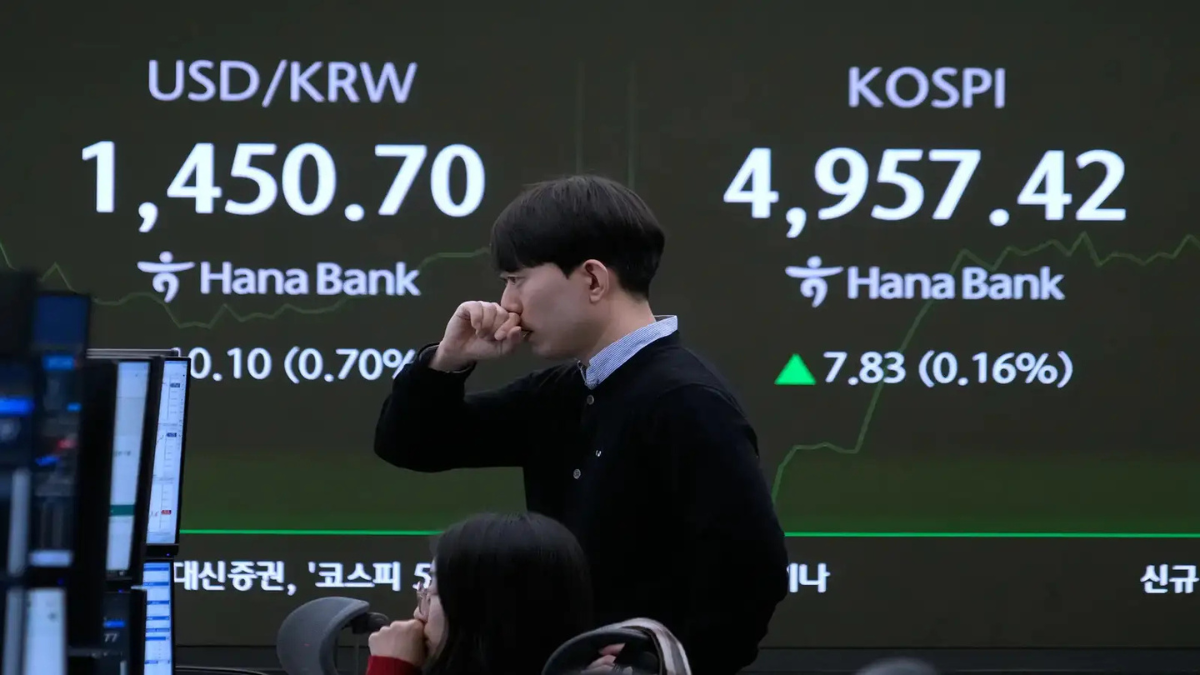
The global artificial intelligence revolution is no longer defined only by software breakthroughs. Behind every major advancement is an enormous demand for computing power, and that demand has triggered an unprecedented AI chip boom that is reshaping global trade flows and industrial growth patterns.
According to Reuters, South Korea’s exports surged 70.9% year-over-year in June, marking the fastest annual growth since 1978. Semiconductor exports alone jumped 199.5% to $44.8 billion, highlighting how the AI chip boom has become the dominant driver of the country’s external trade performance.
This is not simply a cyclical rebound. It reflects a structural shift in the global economy, where AI infrastructure investment is now one of the most powerful forces shaping industrial output, capital expenditure, and cross-border trade.
The AI Chip Boom and Global Trade Transformation
Global trade has traditionally been driven by automobiles, consumer electronics, energy products, and machinery. However, the rise of artificial intelligence has introduced a new category of demand: AI infrastructure hardware.
Technology giants such as Microsoft, Google, Amazon, Meta, and OpenAI are continuing to expand massive data center investments. Each AI model requires GPUs, high-bandwidth memory (HBM), networking systems, and advanced server infrastructure. This sustained spending cycle has intensified the AI chip boom across the entire semiconductor ecosystem.
Unlike previous technology cycles, AI demand is not limited to one sector. It spans cloud computing, enterprise software, robotics, autonomous systems, financial services, healthcare, and scientific research. This makes the current expansion far broader and more durable than earlier semiconductor booms.
The AI chip boom represents a shift from consumer-driven electronics cycles to infrastructure-driven global computing demand.
South Korea at the Center of Semiconductor Growth
South Korea has emerged as one of the primary beneficiaries of the AI chip boom due to its dominance in memory chip production. Home to Samsung Electronics and SK Hynix, the country controls a significant share of global DRAM and high-bandwidth memory (HBM) supply.
According to Reuters, semiconductor exports reached $44.8 billion in June, nearly tripling compared to the previous year. This surge reflects the rising importance of memory chips in AI server architecture.
AI workloads require significantly higher memory capacity and speed compared to traditional computing tasks. As a result, HBM has become one of the most critical components in the entire AI supply chain, placing Korean manufacturers in a highly strategic position within the AI chip boom.
- Global leadership in DRAM production
- Strong dominance in HBM technology
- Advanced semiconductor manufacturing ecosystem
- Highly integrated electronics supply chain
AI Demand Extends Beyond Semiconductors
While semiconductors are the headline driver, the impact of the AI chip boom extends far beyond chipmakers. Reuters data shows that multiple sectors experienced significant export growth in June.
Computer exports rose by 308.8%, driven by increasing demand for AI servers and enterprise computing systems. Steel exports also rebounded after 13 months of decline, supported by data center construction projects globally.
Energy-related exports such as petroleum products also increased significantly, reflecting rising industrial activity and infrastructure expansion tied to AI development.
- AI servers require advanced semiconductor components
- Data center construction boosts steel and materials demand
- Energy consumption rises with AI infrastructure expansion
- Global logistics networks expand alongside AI deployment
This demonstrates that the AI chip boom is not limited to a single industry but is instead reshaping entire industrial ecosystems.
Structural Growth Rather Than Short-Term Spike
South Korea’s export surge is not an isolated event. Export growth has been sustained since mid-2025, indicating that the AI chip boom is still in an early expansion phase rather than approaching saturation.
Tech companies continue to increase capital expenditure on AI infrastructure, while governments and enterprises accelerate digital transformation initiatives. This sustained demand supports the view that the current cycle is structurally driven rather than speculative.
Unlike previous semiconductor cycles driven primarily by consumer electronics such as smartphones or PCs, the current AI chip boom is supported by multiple overlapping demand sources, making it more resilient and longer-lasting.
Why Growth May Be Approaching a Peak Phase
Although South Korea’s export data highlights extraordinary momentum, some analysts believe the pace of growth may gradually normalize in the coming months. This does not necessarily signal weakening demand, but rather reflects a high base effect following an exceptional surge in semiconductor exports.
According to Reuters, analysts cited in the report noted that the AI chip boom remains strong across global markets, with no immediate signs of demand exhaustion. However, growth rates are expected to moderate as comparisons become more difficult in the second half of the year.
In other words, the trajectory of the AI chip boom is still upward, but the slope of growth may become less steep. This is typical in large industrial cycles, where early acceleration phases are followed by periods of stabilization.
Rising export figures may slow in percentage terms, but underlying demand for AI infrastructure continues to expand globally.
AI Infrastructure Expansion Continues Globally
The foundation of the AI chip boom remains strong because global investment in AI infrastructure is still accelerating. Major technology companies are not reducing spending; instead, they are expanding data center capacity to support increasingly complex AI workloads.
Microsoft, Amazon, Google, Meta, and other cloud providers continue to allocate significant capital expenditure toward GPUs, networking systems, and high-performance storage. These investments ensure that demand for advanced semiconductors remains elevated.
At the same time, enterprise adoption of AI tools is accelerating across industries such as finance, healthcare, logistics, manufacturing, and education. Each of these sectors contributes additional long-term demand to the AI chip boom.
- Hyperscalers expanding global data center footprints
- Rising demand for AI training and inference hardware
- Enterprise AI adoption accelerating across industries
- Government-backed AI infrastructure initiatives
The Critical Role of Samsung and SK Hynix
South Korea’s position in the AI chip boom is heavily supported by Samsung Electronics and SK Hynix, two of the world’s leading memory chip manufacturers.
Both companies are benefiting from unprecedented demand for high-bandwidth memory (HBM), a critical component used in AI GPUs and high-performance computing systems. Without HBM, modern AI training systems would face significant performance limitations.
As AI models grow larger and more complex, memory bandwidth becomes just as important as processing power. This shift has elevated the strategic importance of Korean memory producers within the global semiconductor ecosystem.
The continued expansion of AI server deployments ensures that Samsung and SK Hynix remain central players in the ongoing AI chip boom, with strong order visibility across major cloud providers.
Global Trade Is Being Rewritten by AI
The latest trade data from South Korea illustrates a broader transformation in global commerce. AI infrastructure is now a key driver of international trade flows, reshaping demand across multiple industries and regions.
Exports to China rose 92.1%, while shipments to the United States increased 78.6%, and exports to the European Union climbed 31.8%. These figures show that demand for AI-related products is not concentrated in a single region but is globally distributed.
However, exports to the Middle East declined by 8.4%, highlighting uneven regional demand dynamics. This divergence reflects differences in industrial development, technology adoption, and investment cycles across markets.
The AI chip boom is therefore not just a technological shift but also a geopolitical and economic one, influencing trade balances and industrial competitiveness worldwide.
What Investors Should Watch Next
For investors, South Korea’s export surge provides important signals about the durability of the AI chip boom. However, future performance will depend on several key indicators that determine whether the cycle continues or begins to stabilize.
- Global semiconductor demand trends, particularly HBM pricing
- Capital expenditure levels from major cloud providers
- AI server deployment growth across enterprises
- Order visibility for Samsung Electronics and SK Hynix
- Supply chain constraints in advanced chip manufacturing
If these indicators remain strong, the AI chip boom is likely to maintain momentum into the next phase of global AI expansion. However, any slowdown in capital expenditure could signal a transition from rapid growth to a more mature industry cycle.
Conclusion: A Structural Shift in the Global Economy
South Korea’s record export performance is not an isolated economic event but a reflection of a deeper structural transformation driven by the AI chip boom. Semiconductor exports, computer equipment, steel, and energy products all benefited from rising AI infrastructure demand.
According to Reuters, the scale of growth highlights how deeply AI investment is embedded in global industrial activity. The semiconductor industry, once cyclical and volatile, is now increasingly tied to long-term infrastructure development.
While growth rates may moderate in the future, the underlying demand for AI computing power remains strong. As AI models continue to expand in size and complexity, the need for advanced chips, memory systems, and data center infrastructure will persist.
Ultimately, the AI chip boom is not just driving South Korea’s exports—it is reshaping global trade patterns, redefining industrial priorities, and setting the foundation for the next decade of technological and economic development.