



SpaceX Stock Is Back Down: What Investors Should Expect Next
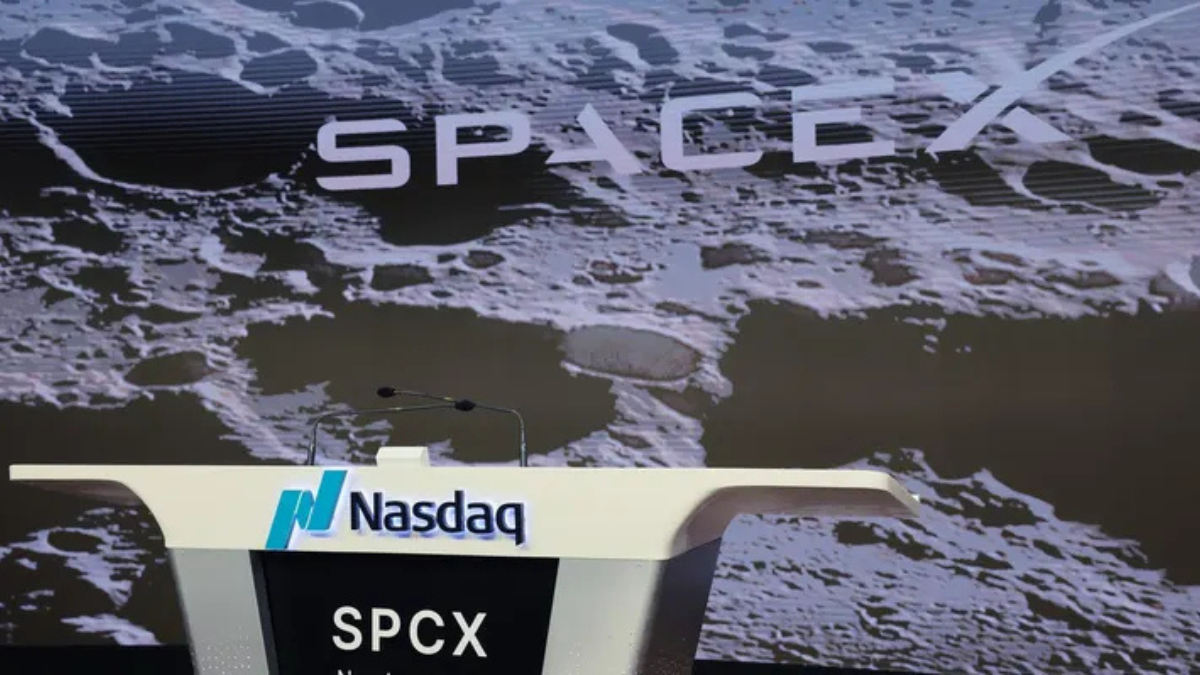
The excitement surrounding SpaceX Stock Is Back Down has quickly evolved into one of the most closely watched stories in the technology and investment community. After making its long-awaited public debut at an opening price of $150 per share on June 12, Space Exploration Technologies attracted overwhelming investor demand. Within just a few trading sessions, enthusiasm pushed the stock to an intraday high of $225.64, fueling speculation that another legendary growth story similar to Nvidia or Amazon had finally arrived.
However, market sentiment rarely moves in a straight line. Within weeks, the stock gradually surrendered most of its gains, falling back toward its IPO price. As of July 1, shares traded below $158, only slightly above where they first entered the public market. While some investors viewed the decline as disappointing, others considered it a healthy adjustment after an exceptionally strong debut.
According to The Motley Fool, the recent decline should not necessarily be interpreted as a sign that the company's long-term prospects have weakened. Instead, it reflects a combination of fading IPO enthusiasm, investor profit-taking, and concerns over future financing requirements. Understanding why SpaceX Stock Is Back Down provides valuable insight into how newly listed growth companies often behave after entering public markets.
Why Did SpaceX Shares Rise So Quickly?
Few companies have generated as much anticipation before an IPO as SpaceX. For years, investors had watched the company remain private while revolutionizing commercial space launches, satellite internet through Starlink, reusable rocket technology, and increasingly ambitious artificial intelligence infrastructure projects.
Once public trading began, demand significantly exceeded available supply. Many investors feared missing what they believed could become the next trillion-dollar technology leader. This imbalance between buyers and available shares naturally pushed prices sharply higher during the opening days.
The rapid appreciation was not necessarily driven by changes in business fundamentals. Rather, it reflected market psychology. Investors often assign premium valuations to companies with exceptional growth narratives, especially when supply of tradable shares remains relatively limited.
This explains why SpaceX Stock Is Back Down should not automatically be viewed as a negative surprise. History shows that many highly anticipated IPOs experience strong initial rallies before prices normalize as early enthusiasm gradually fades.
"IPO momentum often reflects expectations rather than fundamentals. Eventually, valuation begins to matter."
Why Has SpaceX Stock Fallen Back?
Several factors contributed to why SpaceX Stock Is Back Down toward its initial offering price.
First, demand naturally cooled after the first wave of investors completed their purchases. Once the initial buying frenzy subsided, fewer new buyers entered the market at elevated prices. Without fresh momentum, shares became increasingly vulnerable to profit-taking.
Second, SpaceX announced a massive $25 billion bond offering only days after completing its IPO. Although raising capital is common for companies pursuing aggressive expansion, the timing raised concerns among investors.
The announcement reminded the market that SpaceX remains an extremely capital-intensive business. Launch infrastructure, satellite deployment, AI data centers, Starlink expansion, and future Mars ambitions all require enormous financial resources. While debt financing can accelerate growth, it also introduces additional financial obligations.
As investors reassessed the company's capital requirements, selling pressure increased. On the day of the announcement alone, shares declined more than 12%, illustrating how quickly market sentiment can shift following unexpected corporate financing decisions.
- IPO excitement gradually faded.
- Early investors began taking profits.
- The $25 billion bond offering raised financing concerns.
- Valuation expectations became more realistic.
Upcoming Events Could Drive Volatility
Although SpaceX Stock Is Back Down, the coming months could remain highly active for investors.
One important catalyst is the company's scheduled inclusion in the Nasdaq-100 Index. Index inclusion frequently generates additional institutional demand because mutual funds and exchange-traded funds tracking the benchmark must purchase shares to replicate the index.
This automatic buying activity can temporarily support stock prices even without changes in company fundamentals.
Another major event will be SpaceX's first quarterly earnings report as a publicly traded company. Investors will closely examine revenue growth, profitability, capital expenditures, AI infrastructure investments, Starlink performance, and management's long-term guidance.
Because this will be the company's first earnings release after going public, market expectations remain especially high. Even relatively small surprises could trigger substantial price movements in either direction.
The Lock-Up Expiration Matters
Another event receiving considerable attention is the gradual expiration of insider lock-up restrictions.
Following the first earnings announcement, eligible insiders will be permitted to sell a portion of previously restricted shares. If the share price exceeds certain performance thresholds, additional shares may also become available for sale.
Lock-up expirations often increase market volatility because investors anticipate greater supply entering the market. Increased selling does not necessarily indicate management lacks confidence. Instead, founders, executives, and early investors frequently diversify their personal holdings after years of owning concentrated positions.
Nevertheless, if insider selling proves heavier than expected, investors could interpret the activity negatively in the short term. Consequently, SpaceX Stock Is Back Down may continue experiencing elevated volatility throughout the remainder of the quarter.