



Micron Boosts US Chip Investment to $250 Billion
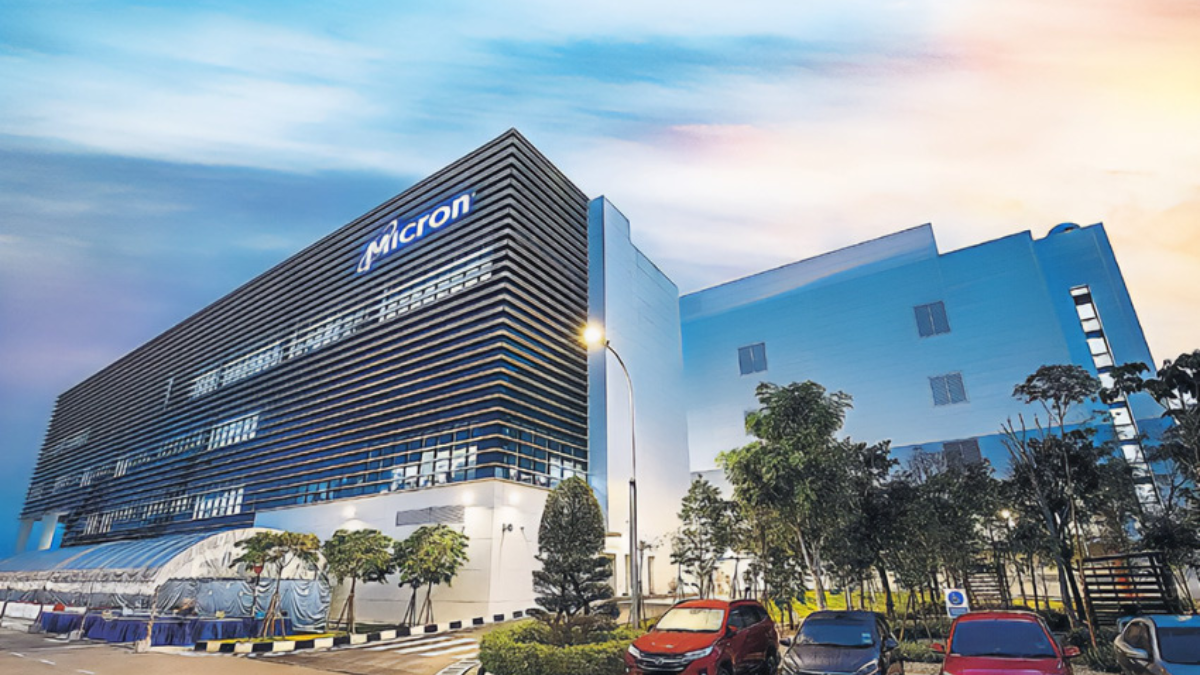
Micron at a Glance
Micron Technology is one of the world's three dominant memory chip manufacturers, alongside Samsung Electronics and SK Hynix, and it remains the only one of the three headquartered in the United States. Based in Boise, Idaho, the company supplies dynamic random access memory and NAND flash memory used in everything from smartphones and personal computers to the data centers now powering the global artificial intelligence boom.
Over the past year, Micron has moved from being viewed primarily as a cyclical commodity chipmaker to being treated by investors as central AI infrastructure, a shift reflected in a stock price that has surged more than 200% since the start of 2026. That re-rating forms the backdrop against which the company announced Micron's $250 billion investment plan for expanding its domestic manufacturing base through 2035.
A Bigger Number, Again
Micron said on Thursday that it now plans to invest more than $250 billion in US manufacturing and technology through 2035, up from the roughly $200 billion the company had previously committed. Micron's $250 billion investment plan adds $50 billion to prior pledges and reflects, in the company's own words, unprecedented demand for the memory chips that underpin modern AI systems.
The increase marks the second time in roughly a year that Micron has raised its domestic spending target. The company's prior $200 billion plan, announced in mid-2025 alongside the Trump administration, was itself already $30 billion higher than Micron's original spending plans, split between about $150 billion for domestic manufacturing and $50 billion for research and development. Micron's $250 billion investment figure now supersedes that commitment entirely.
Key numbers: more than $250 billion total US investment through 2035, up from $200 billion previously; roughly 90,000 direct and indirect jobs expected; up to $6.4 billion in CHIPS Act support secured.
Why Micron Is Spending More
Micron's chief executive, Sanjay Mehrotra, told Fox Business that memory chips are in what he called a deep shortage, with data centers now driving more than half of overall demand. Memory, he said, is a key enabler of AI innovation because more of it allows AI systems to operate with greater speed, accuracy, and intelligence, even as demand for memory also continues to grow across smartphones, personal computers, automotive systems, industrial equipment, and defense and aerospace applications.
"The demand for memory is at unprecedented levels. Memory is in deep shortage right now," Mehrotra said, describing data centers as the source of more than half of current demand.
That shortage has translated directly into pricing power and profitability for Micron, and Micron's $250 billion investment is explicitly framed by the company as a response to demand that shows no sign of slowing through the next decade. Shares of Micron rose roughly 8% in early trading on the day of the announcement, extending a rally that has made the company one of the best-performing large-cap technology stocks of the year.
Where the Money Is Going
Micron's $250 billion investment spans three states: Idaho, New York, and Virginia. In Boise, Idaho, construction is already underway on a second leading-edge memory fabrication plant, with domestic dynamic random access memory output targeted to begin in 2027. In Manassas, Virginia, the company's existing fab is undergoing a significant modernization and expansion.
The centerpiece of the expanded plan is a new semiconductor campus in Clay, New York, where Micron marked a construction milestone on Thursday by pouring the first concrete for its new fabrication facility. The company describes the New York project as the largest private manufacturing investment in the state's history, with the site ultimately expected to house as many as four fabrication plants. Micron said the New York project alone could create about 50,000 jobs, including roughly 9,000 direct positions, and that it is currently running more than one quarter ahead of schedule.
- Idaho: second leading-edge memory fab under construction in Boise, DRAM output targeted for 2027
- New York: new Clay, New York campus, up to four fabs planned, first concrete poured on schedule-beating timeline
- Virginia: modernization and expansion of the existing Manassas fabrication facility
- Ecosystem: separate commitment of up to $3 billion to strengthen the domestic semiconductor supply chain
- Workforce: an additional $250 million commitment toward workforce development and family savings programs
Together, Micron said its Idaho, New York, and Virginia projects are expected to generate more than 90,000 direct and indirect jobs, while the company said it intends to remain disciplined in aligning new production capacity with actual market demand rather than building capacity purely for its own sake.
The CHIPS Act and Washington's Role
Federal policy has played a significant role in shaping Micron's $250 billion investment plan. The company has secured up to $6.4 billion in federal support through the CHIPS Act, including finalized awards that specifically allocate $275 million toward its Virginia operations. The Trump administration has made domestic chip manufacturing a central priority, framing efforts like Micron's expansion as part of a broader push to reduce US dependence on overseas semiconductor production, strengthen economic output, and preserve American leadership in the global race to build AI infrastructure.
The goal embedded in Micron's $250 billion investment plan is for Micron to produce 40% of its dynamic random access memory chips domestically within a decade, a sharp increase from current levels and a direct reversal of the decades-long trend of moving advanced chip manufacturing to Asia, particularly Taiwan. Technology giants including Nvidia, Microsoft, and Apple have publicly endorsed Micron's expansion plans, reflecting how deeply their own AI roadmaps depend on a reliable domestic supply of advanced memory.
High-Bandwidth Memory and the AI Supply Chain
At the center of Micron's $250 billion investment is high-bandwidth memory, or HBM, the specialized chip technology that stacks memory dies vertically to achieve data transfer speeds far beyond what conventional DRAM can deliver. HBM has become essential to modern AI training and inference, since the massive models now being deployed require memory that can feed data to processors fast enough to keep pace with their computational throughput.
Micron competes directly with SK Hynix and Samsung Electronics for HBM supply contracts with the makers of AI accelerators, and demand across all three suppliers has been running well ahead of available capacity. Micron currently trades at a 12-month forward price-to-earnings ratio of about 11.2 times, compared with roughly 5.5 times for SK Hynix and 23.1 times for Taiwan Semiconductor Manufacturing Company, according to analyst estimates, reflecting somewhat differing market views on how each company's earnings growth will play out over the next several years.
"As long as there is demand for graphic processors and AI data centers," one industry analyst noted of the broader memory market, the leading suppliers are likely to remain indispensable to the AI buildout for years to come.
Risks Analysts Are Watching
Not every observer views Micron's $250 billion investment without caution. Some analysts have flagged that Micron shares appear significantly overvalued relative to certain fair-value estimates, and have pointed to risks including volatile trading patterns and a relatively high level of non-cash earnings in the company's recent results. The sheer scale and multi-decade time horizon of the spending plan also means Micron is committing enormous capital based on a bet that AI-driven memory demand will remain robust for the next ten years, a period over which technology cycles, competitive dynamics, and government policy could all shift substantially.
There is also a broader market question hanging over the entire AI infrastructure buildout: whether the current pace of capital spending across chipmakers, data-center operators, and cloud providers can be sustained without a slowdown, and whether returns on that spending will materialize on the timeline investors currently expect. Micron's own stock has, like its semiconductor peers, experienced sharp swings in recent weeks as investors periodically reassess those questions, even as the long-term thesis behind Micron's $250 billion investment remains intact for now.
- Execution risk across three simultaneous mega-projects in Idaho, New York, and Virginia
- Dependence on continued AI infrastructure capital spending by data-center operators and cloud providers
- Potential oversupply if new capacity across Micron, SK Hynix, and Samsung arrives faster than demand growth
- Sensitivity to shifting US industrial policy and the durability of CHIPS Act-related support
Micron's Stock Rally in Context
The scale of Micron's $250 billion investment only makes sense against the backdrop of the company's remarkable run in financial markets over the past year and a half. Micron's market capitalization has grown to the point where it has, at times, overtaken longstanding technology giants by value, a shift that would have seemed unlikely for a company long viewed as a boom-and-bust commodity chipmaker subject to punishing pricing cycles. That transformation reflects a broader re-rating of memory chipmakers as essential AI infrastructure providers rather than interchangeable component suppliers.
Historically, Micron's earnings have moved in wide swings tied to the balance between global memory supply and demand, with periods of oversupply driving prices, and profits, sharply lower. The current cycle looks different in the eyes of many analysts because the source of demand, AI data-center buildouts by a relatively small number of extremely well-capitalized customers, appears more durable and better funded than past demand drivers such as smartphone upgrade cycles. That has given Micron's management the confidence to commit to a multi-decade, quarter-trillion-dollar spending plan rather than the more cautious, incremental capital expenditure typical of past cycles.
Wall Street's reaction to Micron's $250 billion investment announcement, an approximately 8% single-day jump in the stock, suggests investors are, for now, treating the expanded spending as a credible signal of future revenue growth rather than a warning sign of overexpansion. Whether that reading holds up will depend heavily on how AI infrastructure spending evolves across the hyperscale cloud providers and AI labs that ultimately consume the bulk of Micron's output.
What It Means for Chip Investors
For investors, Micron's $250 billion investment plan reinforces Micron's position as the primary US-headquartered pure-play on the memory side of the AI buildout, distinct from SK Hynix and Samsung, which remain based in South Korea. That domestic footprint carries particular weight given the current US policy emphasis on reshoring critical semiconductor manufacturing, and it may make Micron a more direct beneficiary of future federal incentives or procurement preferences tied to domestically produced chips.
At the same time, the scale of Micron's $250 billion investment means the company's fortunes are now tightly bound to the multi-year trajectory of AI infrastructure spending. A sustained slowdown in that spending, whether driven by macroeconomic conditions, a pullback in cloud capital expenditure, or faster-than-expected efficiency gains in AI hardware, would test the assumptions behind a spending plan that stretches nearly a decade into the future. For now, however, order backlogs and public commitments from major technology companies suggest that Micron's expanded bet on domestic manufacturing capacity is being made from a position of considerable strength.
Longer term, the success or failure of Micron's $250 billion investment plan is likely to be judged less by any single quarter's earnings and more by whether Micron can actually bring the New York, Idaho, and Virginia projects online on schedule while keeping utilization rates high enough to justify the capital outlay. Delays in construction, shortages of specialized equipment or skilled labor, or a sharper-than-expected downturn in AI capital spending could all complicate a plan that currently looks well ahead of schedule and well received by both customers and investors.
For now, the combination of federal policy support, endorsements from major technology customers, and a stock market that has rewarded the announcement with an immediate share-price gain suggests that Micron's $250 billion investment is being read as a rational response to genuine, structural demand rather than an overextension. Investors weighing exposure to the memory side of the AI trade will likely watch Micron's construction milestones, utilization rates, and HBM order backlog closely over the coming years as the clearest signals of whether that reading proves correct.
According to Bloomberg, Reuters, and Fox Business reporting on Micron's announcement and its US expansion plans.