



Oil Price Shock Rattles Markets as Hormuz Crisis Grows
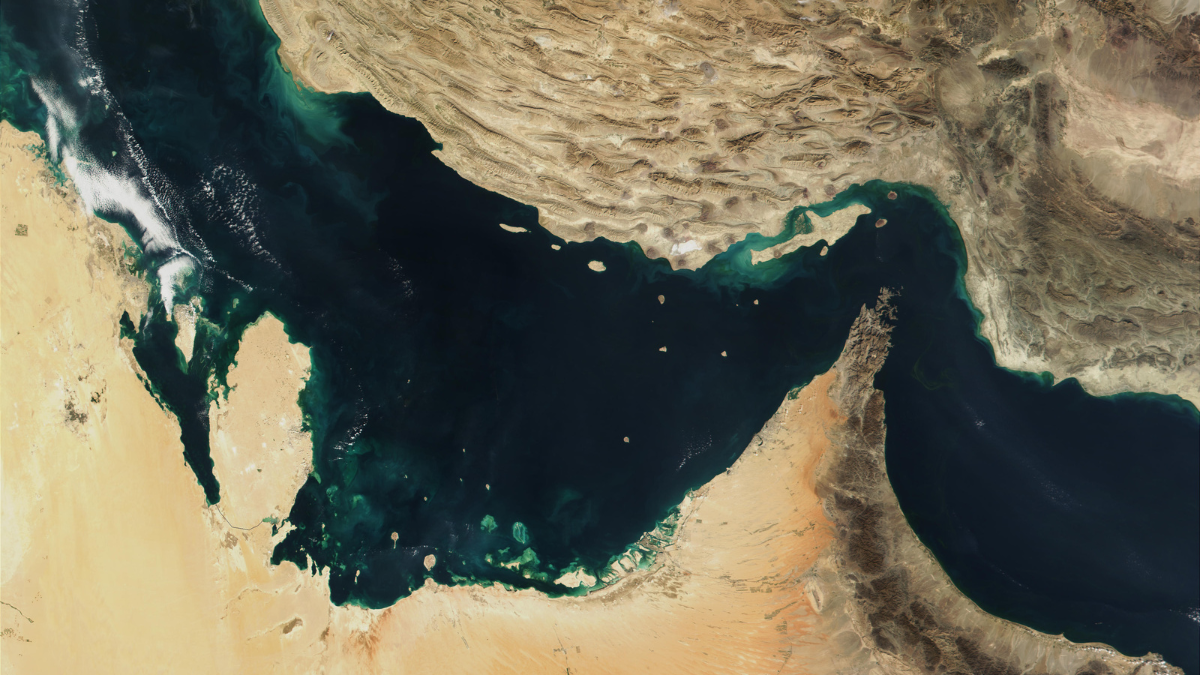
Wall Street is once again bracing for an oil price shock after the United States and Iran traded fresh strikes over the weekend, reigniting a conflict that many investors had hoped was cooling. Brent crude jumped toward the high-$70s and West Texas Intermediate pushed back above $73 a barrel as traders absorbed conflicting claims over whether the Strait of Hormuz, the narrow waterway that carries roughly a fifth of the world's seaborne oil, remains open to commercial traffic. For a market that had spent the past several weeks pricing in a durable, if fragile, ceasefire, the renewed hostilities are a reminder that this oil price shock risk has not gone away, and that portfolios positioned for calm energy markets may need a second look.
The latest escalation began when Iranian forces attacked a Qatari-flagged tanker transiting the strait, prompting a swift US military response that reportedly struck more than a hundred targets inside Iran over a single weekend. Tehran answered with strikes on American facilities across the Gulf, and state media declared the strait closed to shipping "until further notice." US Central Command publicly disputed that claim, saying its forces were actively working to preserve freedom of navigation through the waterway. That standoff between rhetoric and reality is precisely why this new oil price shock has been so difficult for markets to price cleanly: nobody, including the shipping companies whose vessels are transiting the region, can say with confidence whether the strait is truly open, partially open, or closed.
What Triggered This Round of the Crisis
The proximate cause of this oil price shock traces back to a memorandum of understanding signed by Washington and Tehran last month, intended to formally end nearly four months of open warfare that began in late February. That interim deal was always described by analysts as thin on detail, particularly around who controls shipping lanes through Hormuz and under what conditions vessels could pass. Iran has continued to insist that ships use a northern route through its territorial waters, asserting a degree of control over the strait that the United States and its Gulf allies reject outright.
That unresolved disagreement created what one Washington-based energy security analyst described as a "grey area" that neither side has been willing to close. When Iran attacked a commercial vessel again last week, the US Treasury moved quickly to revoke a temporary sanctions waiver on Iranian oil exports, removing an economic incentive Tehran had for keeping the peace. The combination of a military escalation and a sanctions escalation arriving almost simultaneously is a big part of why this oil price shock has proven sharper than earlier flare-ups in the spring.
Quick Facts: The Latest Escalation
Brent crude: trading near $78-79 per barrel, up more than 5% over the past week
WTI crude: trading near $73-74 per barrel
Strait of Hormuz: roughly 20% of global seaborne oil trade passes through it
US strikes: reported to have hit over 140 targets inside Iran in a single weekend
Iran's response: strikes on US facilities in Jordan, Kuwait, Bahrain and Oman
How Equity Markets Are Responding
Unlike the oil market, where the oil price shock has been immediate and visible, equity markets have so far reacted with more nuance than panic. The Dow Jones Industrial Average slid roughly 1.1% in the session immediately following President Trump's comment that the earlier ceasefire with Iran was "over," while the S&P 500 dipped a more modest 0.28%. Notably, the Nasdaq Composite actually rose on that same day, a divergence that speaks to how differently investors are treating energy-sensitive cyclical stocks compared with mega-cap technology names that carry less direct exposure to Gulf shipping lanes.
That pattern has held up in the days since. Airlines, cruise operators, and trucking-adjacent logistics names have underperformed as fuel-cost assumptions get revised upward, while energy producers and oilfield services firms have caught a bid. Financials have been comparatively resilient, in part because the timing of this oil price shock coincides with the start of second-quarter bank earnings season, which is drawing at least as much investor attention as the geopolitical headlines.
"Both sides should ultimately have an interest in containing the conflict, but the situation around the Strait of Hormuz remains unsettled," one chief economist wrote in a client note, cautioning that markets should not assume a quick resolution.
Why the Bond Market and the Fed Are Watching Closely
Perhaps the more consequential story is what this oil price shock means for the inflation outlook, and by extension, for Federal Reserve policy. Fed officials had already signaled at their most recent meeting that persistent inflation pressures could warrant at least one more interest rate hike before year-end. A sustained rise in crude and refined-product prices complicates that calculus considerably, because energy costs feed directly into headline inflation readings and indirectly into transportation, manufacturing, and agricultural input costs across the economy.
Market strategists have pointed out that this oil price shock is arriving at an particularly delicate moment. Ongoing investment in artificial intelligence infrastructure, continued strength in consumer spending, and a labor market that remains historically tight are all, in isolation, inflationary forces. Layer a geopolitically driven spike in energy costs on top of that mix, and the case for a more hawkish Fed stance becomes harder to dismiss. Treasury yields have ticked higher in response, reflecting a market that is, at the margin, pricing in a somewhat greater chance of tighter monetary policy later this year.
Sector Impact: Who Wins and Who Loses
Every oil price shock produces winners and losers across the equity market, and this one is following a fairly conventional playbook so far, albeit with some AI-era twists. Energy majors and exploration and production companies benefit almost mechanically from higher realized prices for their output, and oilfield services firms tend to see improved sentiment as producers signal willingness to ramp activity. Refiners are a more mixed case, since their profitability depends on the spread between crude input costs and product prices rather than the absolute price level.
On the losing side of the ledger, airlines face one of the most direct hits, since jet fuel typically represents a fifth to a third of total operating costs depending on the carrier. Shipping and logistics companies with significant Gulf-region exposure face both higher fuel costs and potential insurance premium increases tied to the elevated risk of transiting the strait. Consumer discretionary names broadly are exposed indirectly through the risk that sustained higher energy costs eat into household discretionary spending, a dynamic that becomes more acute the longer this oil price shock persists.
- Energy producers and services firms: typically benefit from higher realized prices and improved capex sentiment
- Airlines and cruise operators: face immediate margin pressure from higher jet fuel and bunker fuel costs
- Shipping and freight: exposed to both direct fuel costs and rising war-risk insurance premiums on Gulf routes
- Financials: relatively insulated near-term, though a prolonged shock could pressure loan demand and credit quality
- Consumer discretionary: indirect exposure through squeezed household budgets if elevated prices persist
How This Compares With Past Oil Shocks
Investors with longer memories will recognize the broad contours of this oil price shock, even if the specific triggers differ from past episodes. The 1973 Arab oil embargo, the 1990 Gulf War spike, and the 2019 Abqaiq drone strikes on Saudi facilities all produced sharp, short-term jumps in crude prices followed by a range of outcomes depending on how quickly supply disruptions were resolved and how central banks responded. A key structural difference today is the scale of US shale production and the strategic petroleum reserves that Washington, its allies, and China can draw upon, all of which act as partial shock absorbers that were less available in earlier decades.
Saudi Arabia and the United Arab Emirates have reportedly been rerouting oil through pipelines that bypass the Strait of Hormuz entirely, and multiple governments have coordinated stockpile releases to help cap prices. Even so, analysts caution that this oil price shock carries genuine tail risk: if the strait were to face a prolonged closure rather than intermittent disruption, some estimates suggest crude could test levels not seen in over a decade, with knock-on effects for global growth that would be difficult for any single country's strategic reserves to fully offset.
Ripple Effects in Currencies and Safe Havens
An oil price shock of this kind rarely stays contained to the energy complex, and currency markets are already showing the spillover. The US dollar has firmed modestly against a basket of major currencies, a pattern consistent with its traditional role as a haven during periods of geopolitical stress, even though the United States itself is a major energy consumer that is not immune to higher fuel costs. Oil-importing economies in Asia and Europe are seeing more pronounced currency pressure, since a sustained rise in their energy import bill tends to widen current account deficits and weigh on local currencies relative to the dollar.
Gold's reaction has been more complicated. The metal had already fallen more than 20% from its January highs as investors unwound safe-haven positioning built up during the earlier phase of the Iran conflict, and it continued sliding even as this latest oil price shock unfolded, settling lower for a fourth straight session before the newest round of strikes. That disconnect illustrates an important nuance: gold's price reflects a blend of real interest rate expectations, dollar strength, and geopolitical risk premium, and right now the first two factors are outweighing the third. A materially longer or more damaging escalation could still reverse that dynamic, particularly if it began to threaten broader regional stability beyond the strait itself, but for now gold is behaving more like a rates-sensitive asset than a pure crisis hedge.
What Investors Should Watch From Here
Navigating an oil price shock of uncertain duration requires investors to track a specific set of indicators rather than reacting to daily headlines. Shipping and maritime intelligence data on actual vessel transits through Hormuz offers a more reliable signal than public statements from either government, since tanker movements are difficult to fabricate and are tracked independently by several commercial services. Options market pricing on oil futures also provides a useful gauge of how much of a risk premium is currently embedded in prices versus how much reflects an expectation of sustained disruption.
- Track daily tanker transit data through the Strait of Hormuz from independent maritime intelligence sources
- Monitor Brent-WTI spread movements as a signal of regional versus global supply concerns
- Watch Treasury yield moves for clues on how bond markets are pricing incremental Fed tightening risk
- Follow diplomatic signals out of Washington and Tehran for any sign of a renewed ceasefire framework
- Review sector-level earnings commentary during Q2 reporting season for management's read on energy cost pass-through
Diversification across energy-sensitive and energy-insulated holdings remains one of the more straightforward defensive tools available to investors facing an oil price shock whose duration nobody can confidently forecast. Some strategists are also pointing to gold as a partial hedge, even though the metal has itself pulled back sharply from its January highs as investors previously unwound safe-haven positions; a re-escalation in the Gulf could plausibly reverse some of that unwind if the conflict widens.
The Bigger Picture for the Rest of 2026
Zooming out, this oil price shock arrives at a moment when the broader market backdrop was otherwise constructive. Corporate earnings are expected to post a second consecutive quarter of growth above 20%, unemployment remains low, and layoffs have stayed contained relative to historical norms. That underlying resilience is precisely why many strategists are not yet abandoning constructive views on equities, even as they acknowledge that a geopolitically driven spike in energy costs is a legitimate near-term risk to both corporate margins and consumer spending power.
Bottom Line
This oil price shock is a genuine near-term risk to inflation, Fed policy, and energy-sensitive sectors, but it is unfolding against a backdrop of resilient earnings growth and a still-healthy labor market, which should limit, though not eliminate, the risk of a broader market downturn if the conflict remains contained.
For now, the situation remains genuinely unresolved. Iran's claim that the strait is closed sits directly at odds with US Central Command's insistence that commercial traffic continues to move, and until one narrative clearly wins out, markets are likely to stay volatile. Investors who treat this oil price shock as a signal to reassess energy exposure, rather than a reason to abandon a well-diversified strategy altogether, are likely to be better positioned regardless of how the standoff in the Gulf ultimately resolves.
According to CNBC, Bloomberg, Al Jazeera, and Edward Jones market research.