



Intel foundry business: Capex Test Ahead
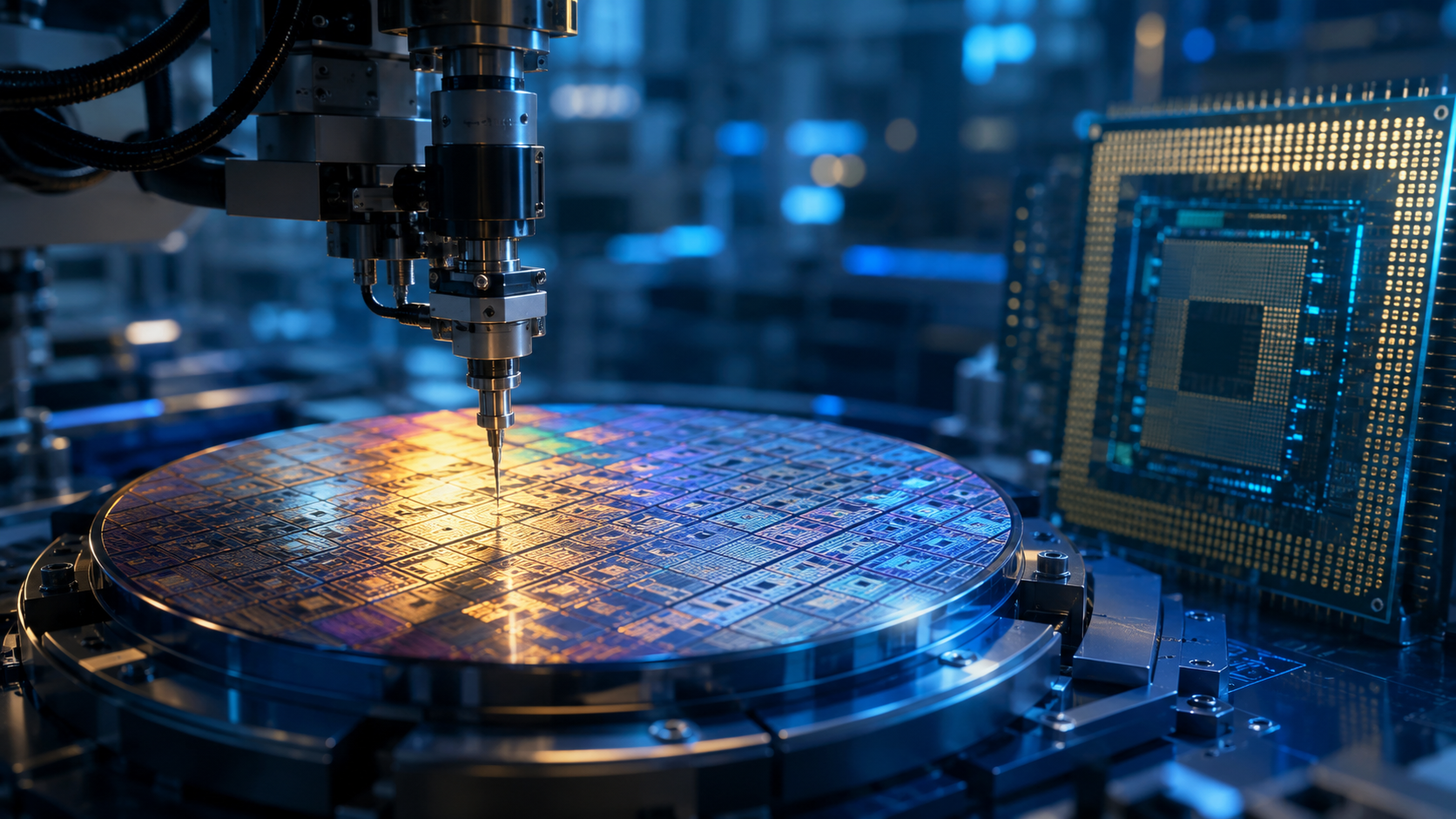
Intel’s Higher Spending Signals a New Foundry Phase
Intel Corporation’s renewed focus on investment has placed the Intel foundry business back in the spotlight. For years, investors have viewed Intel primarily as a processor company, but the company’s future growth strategy increasingly depends on becoming a major global semiconductor manufacturing partner.
According to Barchart.com, Intel’s decision to raise capital expenditure expectations above $20 billion for 2026, with even higher spending expected in 2027, reflects a broader industry reality: semiconductor supply chains are under pressure, artificial intelligence demand continues to accelerate, and advanced manufacturing capacity has become one of the most valuable resources in technology.
The Intel foundry business is now positioned at the center of this transformation. The company is betting that aggressive investment in fabrication facilities, advanced packaging, and next-generation process technology will allow it to compete with leading foundry players and attract more external customers.
However, spending alone does not guarantee success. The semiconductor industry has repeatedly shown that execution matters as much as capital. The key question for investors is whether Intel can convert billions of dollars of investment into profitable customer relationships and sustainable manufacturing advantages.
Why Semiconductor Capacity Has Become a Strategic Asset
The global chip market has entered a period where supply capacity is becoming just as important as product demand. AI infrastructure, cloud computing, data centers, and advanced consumer electronics all require increasingly sophisticated semiconductor technology.
Companies are no longer competing only through chip design. They are also competing through manufacturing capability. This shift creates an opportunity for the Intel foundry business, because many technology companies are searching for reliable manufacturing partners outside traditional supply chains.
Advanced packaging has become especially important. Modern AI chips often combine multiple components into complex systems, meaning manufacturing expertise is no longer limited to producing individual processors. Companies need partners capable of integrating, packaging, and delivering high-performance solutions.
Intel’s strategy is based on the belief that its manufacturing experience, engineering talent, and investments in advanced nodes can create a competitive advantage. The Intel foundry business aims to become a critical supplier for companies that need leading-edge semiconductor production.
- AI demand is increasing pressure on chip supply.
- Advanced packaging capacity remains limited.
- Technology companies are seeking diversified manufacturing partners.
- Semiconductor fabrication requires massive long-term investment.
Intel’s Valuation Reflects Expectations for Future Growth
Intel’s stock performance has changed significantly as investors have started pricing in a potential turnaround. The company’s shares gained strongly during 2026, supported by optimism around AI exposure, manufacturing improvements, and future foundry opportunities.
At the same time, the market valuation suggests investors are expecting meaningful progress. Intel’s premium valuation compared with historical levels indicates that shareholders are looking beyond current results and focusing on future improvements.
The Intel foundry business plays a major role in this valuation story. If Intel successfully attracts external customers and proves its manufacturing roadmap, the foundry operation could become a significant growth engine. However, if customer adoption develops slower than expected, investors may question whether the large capital investments can generate acceptable returns.
This creates a high-expectation environment. Intel is no longer judged only by processor sales. The company is increasingly evaluated on whether it can become a trusted manufacturing partner in a competitive global market.
Strong Quarterly Results Support Intel’s Recovery Story
Intel’s second-quarter 2026 financial results provided additional support for the company’s recovery narrative. According to Barchart.com, revenue reached $16.13 billion, representing a 25% increase compared with the same period a year earlier.
The company also reported improved profitability metrics, including a gross margin of 41.8%. Operating margin increased significantly, while net income attributable to Intel reached $2.2 billion.
These results are important because the Intel foundry business requires substantial investment while the company continues improving financial performance. Investors want to see that Intel can fund expansion without sacrificing operational discipline.
Improving profitability gives Intel more flexibility to continue investing in manufacturing technology. A stronger financial position could help support the long-term ambitions of the Intel foundry business as the company attempts to build a larger external manufacturing ecosystem.
Capital investment creates opportunity, but execution determines whether that opportunity becomes long-term value.
External Customers Are the Real Test for Intel Foundry
The biggest challenge for Intel is not simply building factories. The real test is convincing outside companies to trust Intel with critical semiconductor production.
The Intel foundry business needs customer validation because manufacturing success depends on long-term partnerships. A factory can only generate strong returns when customers commit production volume and continue using the technology roadmap.
One important development came when Fortinet agreed to co-develop the Fortinet Security Processor 6 on Intel 4 technology. This partnership provides evidence that Intel’s manufacturing capabilities are attracting external interest.
While one customer does not completely change the competitive landscape, it represents progress. The Intel foundry business needs more examples like this to demonstrate that its technology can move from internal development into commercial production.
For investors, customer announcements may become one of the most important indicators to watch. Process technology achievements are valuable, but customer adoption determines whether those achievements translate into revenue.
18A Technology Could Become a Turning Point
Intel’s advanced process roadmap remains central to the future of its manufacturing ambitions. The company has highlighted progress on 18A technology, including improvements in performance, power efficiency, and thermal capabilities.
The Intel foundry business depends heavily on these technology milestones. Leading-edge customers require confidence that a manufacturing partner can deliver competitive performance compared with alternative suppliers.
The introduction of improved process versions such as 18A-P represents Intel’s effort to make its technology more attractive for external customers. By improving performance and efficiency, Intel hopes to create a stronger reason for companies to consider using its foundry services.
However, semiconductor manufacturing is extremely demanding. A successful roadmap requires consistent execution, reliable production yields, and the ability to scale manufacturing efficiently.
Apple Rumors Add Potential Upside but Remain Uncertain
Another possible catalyst for Intel comes from discussions surrounding potential future partnerships with major technology companies such as Apple.
If Apple were to expand manufacturing relationships with Intel, it could significantly strengthen confidence in the Intel foundry business. Apple has a reputation for working with advanced semiconductor suppliers, and any relationship would represent a strong endorsement of Intel’s technology capabilities.
However, investors should view this possibility carefully. A potential partnership does not immediately translate into large-scale production. Semiconductor product cycles require years of planning, testing, and qualification.
The Intel foundry business must continue building credibility through actual customer commitments rather than relying only on future possibilities.
Analyst Views Show Growing Market Attention
Intel’s upcoming earnings reports will likely remain important events for investors. Analysts are watching whether improving financial performance can continue and whether the company’s manufacturing strategy is gaining momentum.
According to Barchart.com, analyst expectations suggest continued earnings improvement, while broader market sentiment has become more constructive toward Intel’s turnaround potential.
The Intel foundry business has become one of the main reasons investors are reconsidering Intel’s long-term value. A successful foundry strategy could transform Intel from a traditional chip manufacturer into a broader semiconductor infrastructure company.
Still, analysts remain aware of the risks. Competition is intense, manufacturing transitions are difficult, and customers require consistent performance before making major commitments.
The Road Ahead Requires More Than Investment
Intel’s increased capital spending creates an opportunity, but the company’s future will depend on how effectively it executes its strategy.
The Intel foundry business represents a major transformation that could reshape Intel’s position in the semiconductor industry. If the company succeeds, it could capture a larger share of the growing demand for advanced chip manufacturing.
But the market will continue looking for evidence. Investors will want to see more external customers, successful technology launches, improved production efficiency, and stronger financial returns from manufacturing investments.
The semiconductor industry rewards companies that can consistently deliver. Large factories and advanced technology are important, but customer confidence is the ultimate measure of success.
Conclusion: Intel Foundry’s Biggest Opportunity Is Also Its Biggest Challenge
The current momentum around Intel reflects a renewed belief that the company may be entering a new chapter. Higher capital expenditure, improving financial results, and stronger interest in domestic semiconductor manufacturing have created a more positive outlook.
The Intel foundry business stands at the center of this opportunity. It has the potential to become one of Intel’s most important growth engines, especially as global demand for AI-related chips continues expanding.
However, investment alone cannot guarantee success. The next stage will depend on execution, customer wins, and the ability to transform manufacturing ambitions into real business results.
The Intel foundry business story is no longer only about technology development. It is about whether Intel can prove that its factories, processes, and partnerships can deliver sustainable value in the competitive semiconductor market.