


Nasdaq Selloff: AI Debt Fears Rock Global Markets

Nasdaq Selloff: AI Debt Fears Rock Global Markets
Tech stocks moved sharply last week as two big concerns came together. A Nasdaq selloff kicked off by hotter-than-expected US inflation data, then deepened by concerns over AI company debt, pushed the Nasdaq Composite to its worst weekly showing since June. By Friday October 16, the index was down 4.5% for the week. The Nasdaq-100 fared even worse, dropping 5.5% over the same period, its steepest weekly fall since April 2025. Chipmakers, Asian markets, and credit markets all took the hit. This Monday morning, futures are in the green and investors are cautiously testing the waters again.
Two Triggers: Inflation and AI Debt
Two things came together to spark this Nasdaq selloff. The first was an inflation reading. On Wednesday October 15, US Consumer Price Index data for September came in above forecasts, bringing back the conversation about whether the Federal Reserve might need to raise rates again. The 10-year Treasury yield had already touched 5.30% earlier in October, its highest since 2002, so any inflation surprise landed on already nervous ground.
The second trigger was CoreWeave. Bond yields on the AI infrastructure company's debt reportedly hit 15%, which put a spotlight on how much debt some AI buildout companies are carrying. CoreWeave's stock dropped 15.5% on Wednesday, then clawed back some ground on Thursday.
Put the two together and you get a selloff. Rising rates make heavy debt more expensive to carry, and when investors see that combination in one week, they tend to reprice the whole sector quickly. That is what happened here.
How Deep Did the Nasdaq Selloff Go?
By Friday's close, the numbers told a clear story. The Nasdaq Composite finished at 26,140.04, off 572.99 points or 2.14% on the day alone. The S&P 500 closed at 7,659.44, down 1.09%. The Dow Jones held up better, falling 0.34% to 52,002.41, helped by a rotation toward more defensive stocks rather than broad selling.
Semiconductor stocks took the hardest hit. The Philadelphia Semiconductor Index closed at 11,137.29, down 3.83% on Friday and in the red for seven sessions running. Market-cap losses across the sector were significant, reflecting just how much AI-linked exposure is concentrated in chips.
The VIX closed at 19.99 after hitting an intraday high of 22.31, a sign that nerves were elevated but not at crisis levels. Bank of America strategist Michael Hartnett noted that high Treasury yields, oil prices, and the coming midterm elections could keep a lid on US equity enthusiasm for the next few weeks.
- Nasdaq Composite weekly loss: 4.5% (worst week since June)
- Nasdaq-100 weekly loss: 5.5% (largest since April 2025)
- Philadelphia Semiconductor Index: 7 straight losing sessions, down 3.83% on Friday
- VIX: closed at 19.99, intraday high of 22.31
- Brent crude: touched $110 a barrel as tensions escalated in the Strait of Hormuz
Semiconductors and AI Stocks Lead the Losses
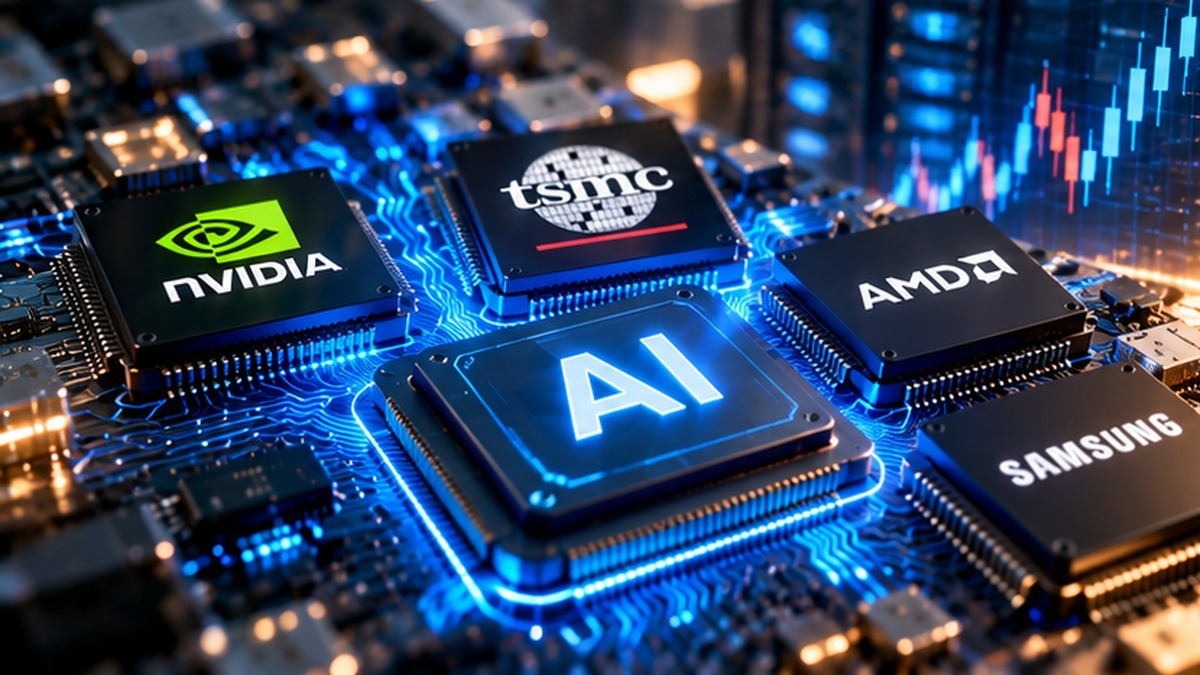
The hardest-hit names in this Nasdaq selloff were the ones most tied to AI infrastructure. Nvidia fell 1.9% on October 15 and stayed under pressure through the week. AMD dropped 4%. CoreWeave kept sliding after Wednesday's 15% fall, even with CEO Jensen Huang telling Bloomberg that the company's cost of capital was coming down.
The S&P 500 information technology sector fell 1.1% on October 15, with software names and Microsoft helping limit the damage. Communication services fell 2.45% on Friday.
According to Reuters, Jordan Rizzuto, Chief Investment Officer at GammaRoad Capital Partners, said there is "growing concern about the cash flow reality underlying the AI narrative." He pointed to rate volatility as a continued pressure point for companies carrying heavy debt loads. This is a useful framing: the question investors are asking right now is not whether AI demand is real. It is whether some of the companies built around that demand can service their debts when money is this expensive.
Asia Caught in the Crossfire
The Nasdaq selloff moved quickly beyond Wall Street. Asia, with its deep ties to the semiconductor supply chain, felt it sharply on October 15. South Korea's KOSPI fell 7.6%, its worst single-day drop since July, according to the Associated Press. That brings the index's decline from its June peak to 39%. Samsung Electronics and SK Hynix, which together carry enormous weight in the KOSPI, were at the centre of the selling.
Japan's Nikkei 225 fell 4.9% the same day. The pattern was quick: weakness in US futures overnight fed into selling in Asian chipmakers at the open, which then carried into European markets. London's FTSE 100 managed to close up 1.1% on Thursday, but the broader regional mood was cautious.
Korea's 39% decline from the June peak is worth putting in context. This was not a one-week move. It reflects months of accumulated pressure on the semiconductor investment case. When AI valuations come into question, Samsung and SK Hynix feel it fast and feel it hard.
What Credit Markets Are Saying
One of the more telling signals last week did not come from stock prices at all. CoreWeave's bond yields reportedly hitting 15% was the headline number, but the broader point was this: some of the companies being built around the AI boom are carrying real balance sheet risk, and rising rates have brought that risk back into view.
According to Reuters, Bank of America's Tal Liani said of CoreWeave: "This is not about fundamentals." His read was that the market was repricing the structure of AI financing, not walking away from AI itself. That is worth keeping in mind. A selloff driven by financing concerns is a different kind of problem than one driven by demand falling off. The opportunity may still be there. The question is who is built well enough to take advantage of it.
Companies with clean balance sheets and visible revenue paths are in a stronger position here. The Nasdaq selloff of the past week, read through the credit lens, is partly a sorting exercise.
TSMC's Record Profit: The Other Side of the Story
While all this was playing out, TSMC reported its third-quarter results. They were strong. According to Reuters and AFP, TSMC posted Q3 net profit of NT$763.1 billion (approximately USD 23.6 billion), up 68.7% year-on-year and a sixth consecutive quarterly record. Revenue rose 50.9% year-on-year to NT$1.5 trillion, beating estimates of NT$739.5 billion.
TSMC CFO Wendell Huang said strong demand should carry into Q4 2026. The company's chips power Nvidia's data centre processors, putting TSMC at the centre of the AI hardware trade.
TSMC's stock still fell 2.2% going into the report and stayed in the red after it. That reflects the mood across the sector, not the company's own performance. The earnings make clear that underlying demand for advanced chips is holding up. What came under pressure last week was valuations and financing, not the order books.

The Fed and What Rates Mean for the Trade
The Federal Reserve sat in the background all week. The 10-year Treasury yield peaked at 5.30% earlier in October, its highest since 2002, before pulling back to around 5.09% by October 15 as investors moved into bonds during the selloff. The bond rally alongside the Nasdaq selloff tells you something: this was not just about rates going up. It was also about growth expectations coming down.
Fed Chair Kevin Warsh spoke at IMF meetings in Washington and stayed deliberately vague, saying only: "I don't prejudge meetings." Markets took that as a neutral read. The probability of a rate hike at the October 27 to 28 Fed meeting has since dropped well below 20%.
The 10-year yield is still the number to watch going forward. AI infrastructure companies carry long-duration cash flows. At 5.30%, those future earnings are worth a lot less than they were at 3%. That math does not change until rates fall or earnings show that AI revenue is coming in faster than expected. This week's earnings reports will be the first real test of the latter.
October 19: Markets Try to Stabilise
Monday morning is looking better than Friday's close suggested it might. US stock futures are up. The Nasdaq had already managed a 0.1% gain on Thursday October 16, with the S&P 500 up 0.3% and the Dow up 1.1%, suggesting buyers were starting to come back before the final Friday dip.
Gold was near $4,154 on October 15, up over 1% on the day, a sign that safe-haven demand was present but not extreme. Treasury yields have eased back from their highs. Oil is still elevated near $110 on Brent, which Hartnett flagged as a factor worth watching.
The shift into defensive sectors during the week, with healthcare up 2.6% and consumer staples up 1% on October 15, looks more like a recalibration than a full retreat. Whether those flows reverse or hold depends largely on what earnings season delivers over the coming days.
What Traders Should Watch This Week
There is a lot landing this week that could reframe how this Nasdaq selloff gets remembered. Netflix, Meta Platforms, and Tesla all report earnings later in the week. They will give the clearest read yet on whether AI-related spending is generating the kind of revenue that makes current valuations defensible. Good numbers from this group could move things quickly.
The Fed meeting on October 27 to 28 is still a few days away. Oil is worth watching for any further move up. But the immediate rate pressure has eased, and sentiment coming into Monday is more constructive than it was heading into Friday.
- Tech earnings: Netflix, Meta, and Tesla results this week will test whether AI revenue is arriving fast enough to justify valuations.
- 10-year Treasury yield: A move back below 5.00% would ease pressure on growth stocks considerably.
- Philadelphia Semiconductor Index: Seven straight losing sessions. Any recovery here would be an early sign the sector has found a floor.
- CoreWeave credit spreads: If yields on CoreWeave's debt start to tighten, it signals the financing concern is fading.
- Oil: Brent near $110 with geopolitical pressure in the background. A pullback would take one inflation variable off the table.
According to Reuters, this market is caught between two competing realities: rising rates putting pressure on AI valuations, and underlying chip demand remaining as strong as TSMC's record earnings show. Whether the Nasdaq selloff of October 2026 turns out to be the bottom of a repricing or the start of a longer correction remains to be seen. But one thing is clear: the days of pricing AI stocks without watching rates, debt levels, and actual cash flow are over.