



Tesla’s Hidden SpaceX Bet Reshapes TSLA Outlook
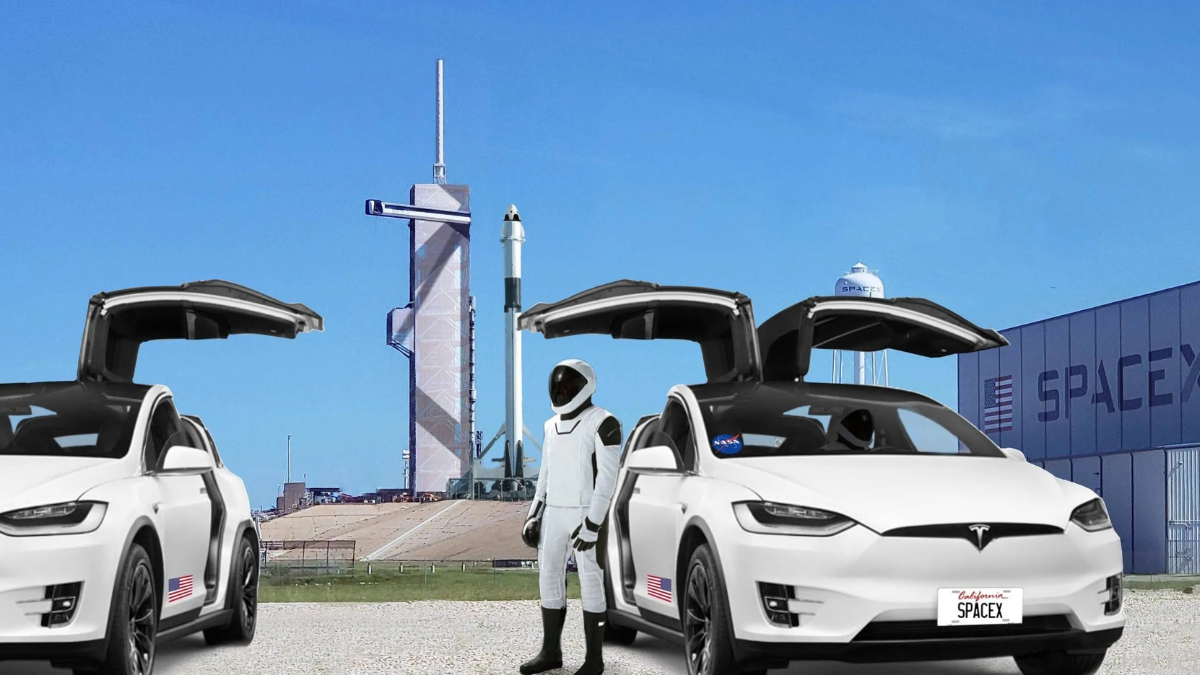
Tesla investors have spent years focusing on electric vehicles, autonomous driving technology, robotics, and Elon Musk’s long-term artificial intelligence ambitions. Yet one of the company’s most important assets may have been hiding in plain sight all along.
According to reports surrounding the upcoming SpaceX IPO filing, Tesla beneficially owns nearly 19 million shares of SpaceX Class A common stock. That disclosure instantly changed how many analysts view the broader TSLA investment story.
The revelation matters because it introduces a major new dimension to Tesla valuation. Investors who believed they were simply buying exposure to electric vehicles and energy storage may now also hold indirect exposure to the global space economy, satellite internet infrastructure, rocket launches, and Starlink’s rapidly growing communications business.
According to 24/7 Wall St.com and market commentary tied to the SpaceX S-1 filing, Tesla owns approximately 18,990,195 shares of SpaceX Class A stock as of May 1, 2026. Although the stake represents less than 1% ownership after the IPO offering, the potential financial implications remain enormous because of SpaceX’s staggering implied valuation.
The disclosure immediately triggered debate across Wall Street. Is Tesla now dramatically undervalued because of this hidden asset? Or does the news simply reinforce concerns that Elon Musk’s empire has become too financially intertwined?
Either way, the upcoming SpaceX IPO may become one of the most important moments in modern Tesla history.
Tesla’s SpaceX Stake Changes the Narrative
For years, investors primarily evaluated Tesla through several familiar lenses:
- Electric vehicle deliveries
- Gross margins
- Battery technology
- Full Self-Driving adoption
- Energy storage growth
- AI and robotics ambitions
Now, however, the company’s ownership stake in SpaceX adds an entirely different category of strategic value.
According to the filing analysis, Tesla previously disclosed a $2 billion investment in SpaceX equity during its Q1 2026 filings. At the time, many investors viewed the investment as interesting but difficult to properly value because SpaceX remained private.
The SpaceX IPO changes that equation immediately.
Once SpaceX begins trading publicly, Tesla investors will finally have a transparent market benchmark for valuing the company’s holdings.
This is important because private-company stakes often remain discounted in investor models due to uncertainty and limited liquidity. Public markets remove much of that ambiguity.
If SpaceX debuts near the rumored valuation range between $1.75 trillion and $2 trillion, Tesla shareholders may suddenly discover they own exposure to one of the world’s most valuable technology companies indirectly through TSLA stock.
That possibility alone could force analysts to reevaluate existing price targets for Tesla.
Why Tesla Investors Are Paying Attention
The reason the SpaceX stake matters so much to Tesla investors is simple: the market increasingly values narratives, ecosystems, and future optionality rather than traditional industrial metrics alone.
Historically, Tesla has traded at valuation multiples far above traditional automakers because investors viewed the company as:
- An AI company
- A robotics company
- An energy infrastructure company
- An autonomous mobility company
- A technology platform
The addition of SpaceX exposure further expands the “Musk ecosystem” narrative.
According to market commentary, Polymarket traders currently assign high probability to a SpaceX valuation exceeding $2 trillion shortly after IPO.
Remarkably, some traders now believe SpaceX could even surpass Tesla in total market value.
That possibility highlights how rapidly investor sentiment surrounding space infrastructure has evolved.
Just a decade ago, commercial space was viewed as highly speculative and niche. Today, investors increasingly see satellite networks, rocket launches, military contracts, global communications, and orbital infrastructure as critical components of the future economy.
By owning SpaceX shares, Tesla may now benefit from that enthusiasm indirectly.
Tesla and the “Hidden Asset” Argument
One of the strongest bullish arguments emerging from the SpaceX disclosure is that the market may not fully appreciate the value embedded within Tesla.
According to the analyst commentary tied to the filing, the nearly 19 million SpaceX shares represent a “hidden asset” that traditional consensus models may not properly account for.
This argument is especially powerful because Tesla already trades largely on future expectations rather than current earnings alone.
At roughly 370 times trailing earnings, Tesla remains one of the most expensive large-cap stocks in the market.
Critics frequently argue that the valuation is disconnected from fundamentals.
Supporters counter that Tesla should not be valued like a car company because its future opportunities extend far beyond automobiles.
The SpaceX stake strengthens the bullish side of that debate.
If SpaceX eventually becomes one of the world’s most valuable companies, then Tesla shareholders effectively own a piece of that growth story today.
Importantly, investors did not previously assign major valuation weight to that possibility because the ownership details remained relatively obscure.
The IPO filing changed that overnight.
Tesla’s Relationship With SpaceX Keeps Expanding
The relationship between Tesla and SpaceX extends beyond simple stock ownership.
According to reports mentioned in the article, collaboration between the companies has deepened significantly during 2026.
One major example is the Terafab chip collaboration announced earlier this year.
Intel’s reported involvement in April further strengthened speculation that the Musk ecosystem is becoming increasingly interconnected.
This matters because investors often reward ecosystems rather than standalone companies.
Apple benefited enormously from ecosystem economics through hardware, software, and services integration. Amazon built a similar model across e-commerce, cloud computing, advertising, and logistics.
Now Elon Musk appears to be constructing his own interconnected industrial ecosystem centered around:
- Tesla
- SpaceX
- Starlink
- xAI
- Neuralink
- X
The more these entities collaborate technologically and strategically, the more investors may value them collectively rather than individually.
Could Tesla and SpaceX Eventually Merge?
One of the most fascinating questions raised by the IPO disclosure is whether Tesla and SpaceX could eventually merge.
According to current market betting data, the probability of a merger announcement by June 30 remains low.
Still, analysts continue discussing the possibility because of how naturally the companies complement each other in terms of branding, leadership, and technological ambition.
A combined Tesla-SpaceX structure would create one of the most extraordinary corporate entities in modern history.
Such a company would simultaneously operate across:
- Electric vehicles
- Artificial intelligence
- Energy storage
- Satellite internet
- Rocket launches
- Robotics
- Communications infrastructure
Supporters argue that a merger could simplify investor exposure to Elon Musk’s broader vision.
Critics argue that combining such large, volatile, and capital-intensive businesses could create major governance and regulatory complications.
For now, Tesla and SpaceX remain separate entities. But the increasing financial overlap between them guarantees continued speculation.
Tesla’s Valuation Debate Is About to Intensify
The SpaceX IPO arrives at a sensitive time for Tesla.
The company continues facing pressure across several fronts:
- Slowing EV demand growth
- Chinese EV competition
- Margin compression
- Robotaxi skepticism
- Regulatory scrutiny
- Execution risks in AI and robotics
Yet despite those concerns, Tesla continues commanding extraordinary investor enthusiasm.
The SpaceX disclosure may reinforce the idea that TSLA stock is evolving into something larger than a traditional operating company.
Some investors increasingly treat Tesla as a gateway into the broader Musk innovation ecosystem.
That shift carries both advantages and risks.
On one hand, ecosystem narratives can support premium valuations for long periods. On the other hand, they also increase dependence on Elon Musk personally.
If investor confidence in Musk weakens, the interconnected structure could amplify downside risk across multiple companies simultaneously.
The Space Economy Could Become Tesla’s New Growth Driver
Another reason the SpaceX stake matters is that the global space economy itself may become one of the fastest-growing sectors of the next two decades.
Governments and private investors are rapidly increasing spending across:
- Satellite communications
- Defense systems
- Orbital infrastructure
- Rocket launches
- Global broadband networks
- Earth observation technologies
Starlink alone has already transformed how investors think about satellite internet economics.
If SpaceX successfully scales its launch business and Starlink network globally, the valuation upside could be enormous.
That means Tesla investors now possess indirect exposure to one of the most strategically important industries in the world.
For many institutional investors, that dramatically changes the long-term attractiveness of TSLA stock.
Tesla’s Risks Still Cannot Be Ignored
Despite the excitement surrounding the SpaceX IPO, investors should remain cautious about assuming automatic upside for Tesla.
Several important limitations remain.
First, the ownership stake remains relatively small compared to SpaceX’s enormous overall valuation.
Second, accounting rules may limit how much direct financial benefit appears on Tesla financial statements.
Third, market enthusiasm surrounding SpaceX may already be partially reflected in current TSLA prices.
Finally, the broader issue remains that Tesla still trades at exceptionally aggressive valuation multiples compared to traditional industrial companies.
That means investor expectations remain extraordinarily high.
Even strong developments may not always justify the market’s current optimism.
Conclusion
The revelation that Tesla owns nearly 19 million shares of SpaceX fundamentally changes how investors may evaluate TSLA going forward.
According to 24/7 Wall St.com and SpaceX filing analysis, the stake transforms Tesla from purely an EV and AI story into a much broader exposure vehicle tied to Elon Musk’s expanding technological empire.
The upcoming SpaceX IPO could therefore become far more than a standalone market event.
It may serve as a revaluation catalyst for Tesla itself.
Whether investors ultimately interpret the disclosure as hidden value or additional complexity remains uncertain.
But one thing is increasingly clear: Tesla is no longer just competing in the automotive sector.
It now sits at the center of a sprawling ecosystem that includes artificial intelligence, robotics, communications infrastructure, and space technology.
For TSLA shareholders, that reality creates both enormous opportunity and enormous risk.
And as the SpaceX IPO approaches, the market is only beginning to understand how closely the futures of SpaceX and Tesla may now be connected.