



Stellantis Bets Big on Four Core Brands
Stellantis has entered a decisive new chapter. After years of operational turbulence, weak profitability, and growing investor skepticism, the global automaker is attempting to reset expectations with an ambitious long-term strategy that could redefine its future.
According to Yahoo Finance, Stellantis recently introduced its five-year strategic roadmap called FaSTLAne 2030, a plan centered around aggressive cost cuts, platform consolidation, software integration, and a concentrated focus on four key brands: Jeep, Ram, Peugeot, and Fiat.
The announcement immediately captured Wall Street’s attention. Although Stellantis shares initially traded lower during the company’s capital markets day presentation, investor sentiment improved once updated financial targets were unveiled. The stock eventually rebounded into positive territory, signaling that markets may be willing to give management another opportunity to prove its turnaround story.
For investors, suppliers, dealers, and consumers alike, the company’s latest strategic shift raises a fundamental question:
Can Stellantis successfully transform itself into a more focused, profitable, and technologically competitive automaker by the end of the decade?
Why Stellantis Needed a Strategic Reset
The need for a strategic overhaul did not emerge overnight. Stellantis, formed through the merger of Fiat Chrysler and PSA Group, inherited a vast portfolio of automotive brands spanning multiple continents.
While scale offered potential advantages, it also created enormous complexity.
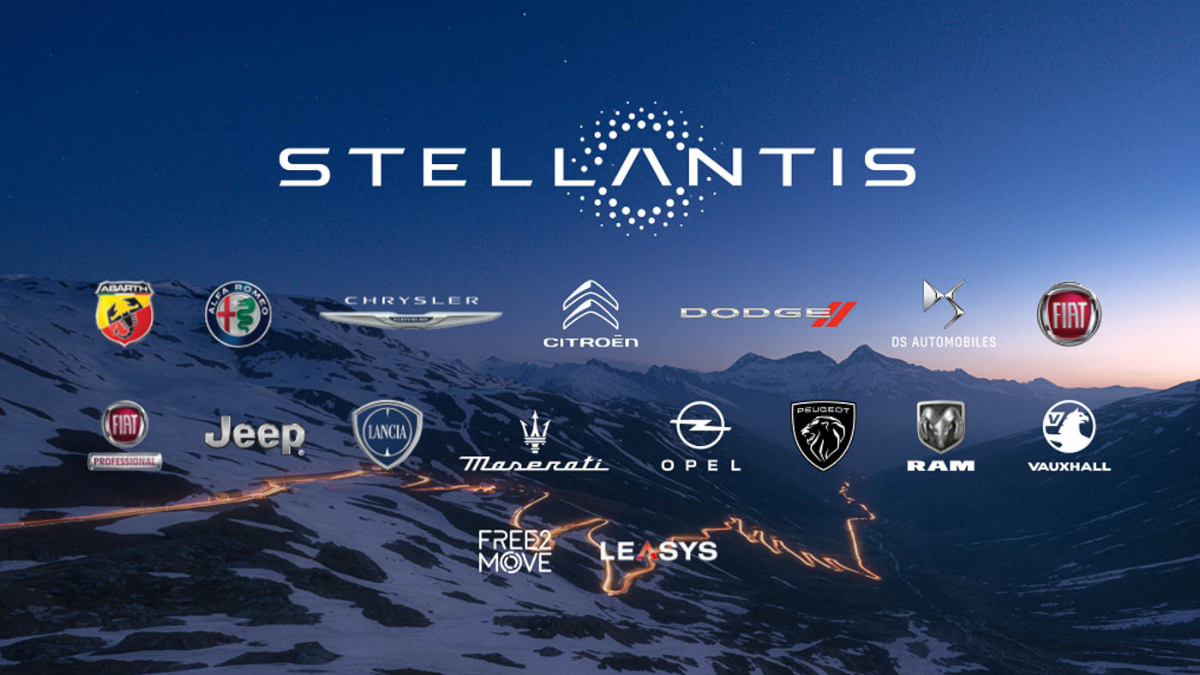
Managing brands such as Jeep, Ram, Dodge, Chrysler, Peugeot, Citroën, Fiat, Opel, Alfa Romeo, Maserati, and commercial vehicle operations simultaneously has proven increasingly difficult in a rapidly changing automotive environment.
The modern auto industry demands:
- Heavy EV investment
- Advanced software development
- AI integration
- Lower-cost manufacturing
- Faster development cycles
- Global platform efficiency
At the same time, consumer expectations continue evolving while competition from Tesla, BYD, and Chinese EV manufacturers intensifies globally.
Against this backdrop, Stellantis could no longer afford to spread resources evenly across all brands.
The FaSTLAne 2030 strategy reflects an important reality facing nearly every global automaker today:
Not every brand can remain equally important in the electric and software-defined future of transportation.
Jeep, Ram, Peugeot, and Fiat Become Stellantis Priorities
Perhaps the most consequential aspect of the FaSTLAne 2030 plan is Stellantis’ decision to concentrate the majority of investment into just four “global” brands:
- Jeep
- Ram
- Peugeot
- Fiat
These brands will reportedly receive 70% of future brand and product investment, alongside the company’s Pro One commercial vehicle division.
This move signals a major philosophical shift for Stellantis. Instead of trying to elevate every brand equally, management appears determined to prioritize the brands with the strongest global scalability and profit potential.
Jeep remains one of the company’s most recognizable international assets. The SUV brand continues benefiting from strong consumer demand worldwide and retains significant pricing power.
Ram, meanwhile, remains critical for North America, particularly in the highly profitable pickup truck market.
Peugeot gives Stellantis a stronger position in Europe, while Fiat continues serving as an accessible entry-level brand with mass-market appeal.
From a capital allocation perspective, the logic is difficult to ignore.
The automotive industry is becoming increasingly expensive, particularly as electrification and AI-driven software systems reshape vehicle architecture.
Concentrating resources into fewer brands may improve operational efficiency and generate better long-term returns.
The Brands Losing Priority
While some brands gained strategic importance, others clearly moved down the hierarchy.
Under the new structure, Chrysler, Dodge, Citroën, Opel, and Alfa Romeo will receive reduced investment and operate with more regional focus.
This does not necessarily mean these brands are disappearing, but it does indicate that Stellantis intends to manage them more selectively.
For some enthusiasts, this announcement may feel disappointing.
Brands like Dodge and Alfa Romeo possess passionate fan bases and strong emotional identities. However, emotional appeal does not always translate into sustainable profitability.
The challenge facing Stellantis is balancing heritage with financial discipline.
One particularly interesting case is Maserati.
Rumors had circulated for months suggesting the luxury Italian marque could eventually be sold or phased out. Instead, management confirmed Maserati will receive two larger new vehicles, with an updated roadmap expected later this year.
That decision suggests Stellantis still sees long-term value in maintaining a luxury presence, even if Maserati currently struggles against stronger competitors such as Porsche and Mercedes-Benz.
Stellantis Is Betting Heavily on Software and AI
The automotive business is no longer simply about engines and manufacturing. Increasingly, it revolves around software ecosystems, connected services, autonomous systems, and artificial intelligence.
That reality is deeply embedded within the new Stellantis strategy.
The company plans to allocate approximately 24 billion euros toward three global platforms and a new architecture known as STLA One.
Alongside the hardware investments, Stellantis is also building several AI-enabled software systems, including:
- STLA Brain
- STLA SmartCockpit
- STLA AutoDrive
All three systems are expected to launch in 2027.
This represents a critical evolution for Stellantis. Modern vehicles increasingly function as rolling software platforms, where recurring digital revenue and connected services may become as important as vehicle sales themselves.
Automakers that fail to build competitive software ecosystems risk falling behind technologically advanced rivals.
Tesla demonstrated years ago that software integration could fundamentally reshape consumer expectations around vehicles.
Now traditional automakers, including Stellantis, are racing to catch up.
North America Remains the Financial Engine
One detail from the FaSTLAne 2030 presentation stands out clearly:
North America remains absolutely central to the future of Stellantis.
Of the 36 billion euros earmarked for brands and product spending, roughly 60% will go toward North American operations.
This is hardly surprising.
The region remains one of the company’s most profitable markets, especially due to the strength of Jeep and Ram.
CEO Antonio Filosa also outlined plans for more than 60 new vehicles globally by 2030, while targeting 25% revenue growth in North America and regional adjusted operating margins between 8% and 10%.
Those are ambitious targets.
For Stellantis to achieve them, execution will need to improve significantly across manufacturing, supply chains, software integration, and product development.
Still, the strategy suggests management believes North America offers the clearest path toward sustainable profitability.
Affordability Has Become a Critical Issue
Another major component of the Stellantis strategy involves vehicle affordability.
Over the last several years, vehicle prices across the industry have surged dramatically due to inflation, supply shortages, technology costs, and changing consumer preferences.
Many consumers now find new vehicles increasingly unaffordable.
To address this challenge, Stellantis plans to launch seven new vehicles priced below $40,000 by 2030, including two models under $30,000.
This initiative could prove strategically important.
While premium vehicles often generate higher margins, affordability remains essential for maintaining long-term market share and brand accessibility.
As economic pressures continue affecting middle-class consumers globally, automakers that successfully balance technology and affordability may gain meaningful competitive advantages.
Partnerships Will Play a Huge Role
One of the most revealing aspects of the FaSTLAne 2030 plan is how heavily Stellantis intends to rely on strategic partnerships.
The company is expanding cooperation with Leapmotor in Europe and Dongfeng in China while reportedly exploring opportunities with Jaguar Land Rover for US products.
These alliances reflect broader industry trends.
The cost of developing EVs, autonomous systems, and AI-enabled software has become so large that few automakers can manage everything independently.
Partnerships allow companies like Stellantis to:
- Reduce development costs
- Accelerate product timelines
- Share technological expertise
- Improve manufacturing scale
- Expand market reach
In many ways, collaboration is becoming a survival strategy across the global automotive sector.
Can Stellantis Deliver Faster Development Cycles?
One of the more ambitious operational goals announced by Stellantis involves compressing vehicle development timelines from as much as 40 months down to only 24 months.
If achieved, that would represent a substantial competitive advantage.
Faster development cycles allow automakers to:
- Respond more quickly to consumer trends
- Reduce engineering inefficiencies
- Lower inventory risks
- Improve capital allocation
- Launch technology updates more frequently
However, accelerating development while maintaining quality is extremely difficult.
Traditional automakers often struggle balancing speed with reliability, especially when integrating complex software systems.
Whether Stellantis can successfully execute this transition remains one of the key questions investors will monitor over the next several years.
The Cost-Cutting Challenge
Cost reduction sits at the center of the entire FaSTLAne 2030 strategy.
The company aims to generate approximately 6 billion euros in annual cost reductions by 2028 through its Value Creation Program.
Additionally, Stellantis plans to reduce European manufacturing capacity by more than 800,000 units while attempting to preserve jobs.
This balancing act will not be easy.
European manufacturing operations often face high labor costs, political scrutiny, and regulatory pressure.
Reducing capacity while maintaining workforce stability may prove one of the most difficult aspects of the plan.
Still, management clearly believes leaner operations are necessary if Stellantis hopes to compete effectively in an increasingly price-sensitive market.
Investor Confidence Is Still Fragile
Although the stock rebounded after management presented updated targets, investor confidence in Stellantis remains somewhat fragile.
The company continues facing major risks:
- Global economic uncertainty
- EV transition costs
- Intensifying Chinese competition
- Execution risks
- Margin pressure
- Political and regulatory challenges
Furthermore, investors remain cautious following recent earnings weakness and the company’s reported full-year loss.
For the FaSTLAne 2030 strategy to succeed, Stellantis must consistently demonstrate operational improvement quarter after quarter.
Ambitious presentations alone will not convince markets indefinitely.
Final Thoughts on Stellantis
The new FaSTLAne 2030 strategy represents one of the most important strategic pivots in Stellantis’ short corporate history.
By concentrating investment into four major brands, accelerating software development, embracing AI systems, and pursuing aggressive cost reductions, the company is attempting to transform itself into a more focused and competitive global automaker.
The road ahead remains difficult.
Competition is intensifying, consumer expectations are evolving rapidly, and the economics of electrification continue challenging the entire industry.
Yet despite those risks, the latest presentation offered investors something that had been increasingly absent:
A clearer sense of direction.
Whether Stellantis can successfully execute this ambitious roadmap remains uncertain. But one thing is becoming increasingly obvious:
The company no longer intends to be everything to everyone.
Instead, Stellantis is making a concentrated bet that fewer priorities, stronger brands, and smarter technology investments can restore long-term profitable growth.