

APEC Summit Shenzhen: What Traders Must Watch
APEC Summit Shenzhen: What Traders Must Watch
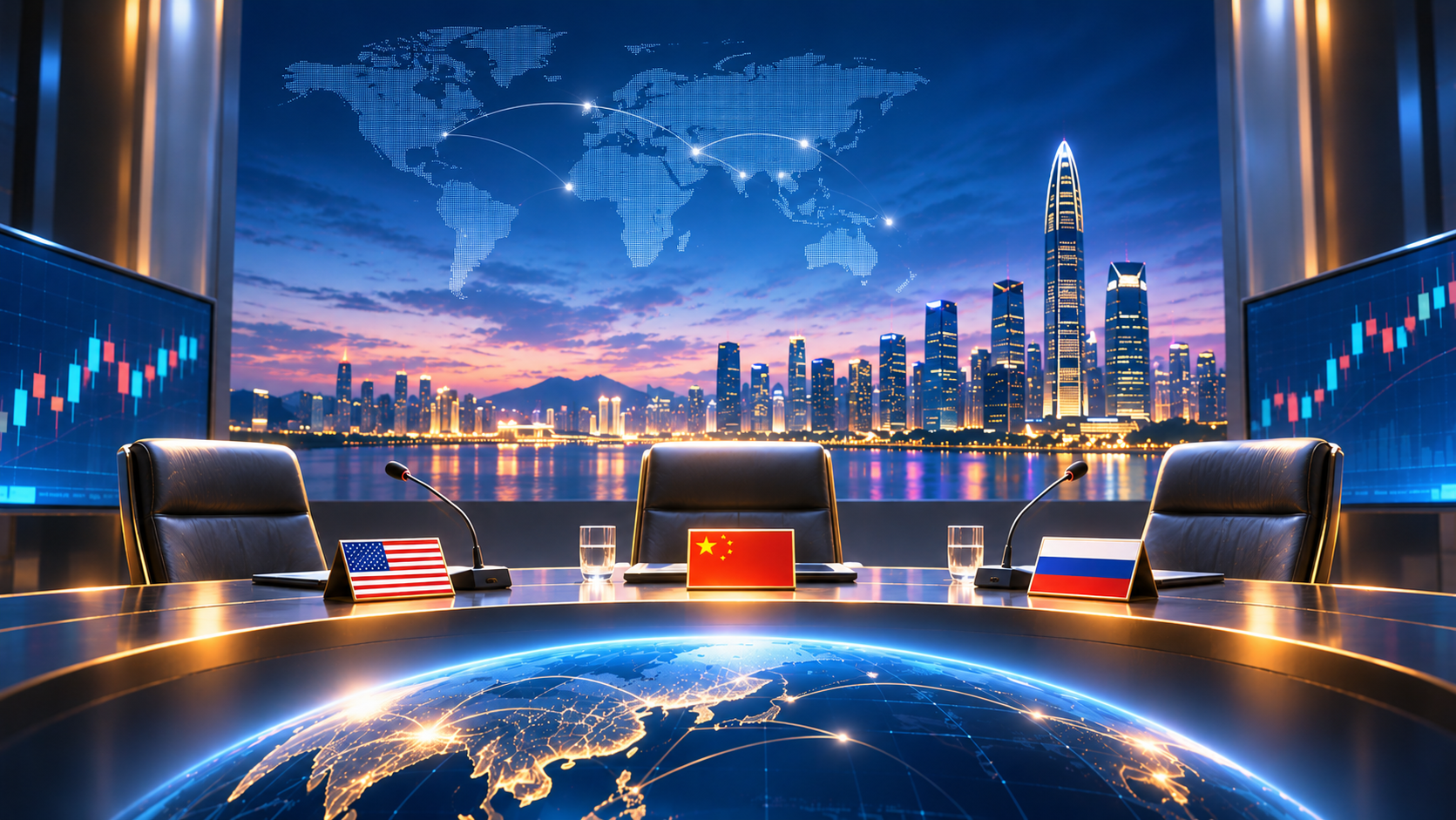
The world's three most powerful leaders are meeting in the same room for the first time ever. As the 33rd APEC Economic Leaders' Meeting continues in Shenzhen, the APEC summit Shenzhen markets are navigating a moment with no historical comparison: a Trump-Xi-Putin trilateral sit-down on the sidelines of the most consequential trade forum of the year. What happens inside the Qianhai International Convention Center today will set the tone for global risk appetite well into early 2027.
This is not a routine summit. The meeting carries weight on three separate tracks simultaneously: nuclear arms control, trade, and geopolitics. Any one of them, resolved or unresolved, can move markets. Traders watching from Kuala Lumpur, Jakarta, or Singapore need to understand what each track means for the assets on their screens right now.
The Meeting That Markets Have Been Waiting For
Reuters reported on November 13 that Trump would hold a Trump-Xi-Putin trilateral summit in Shenzhen. By November 14, the White House confirmed it. By November 16, China's Foreign Ministry said the meeting carried "groundbreaking significance." All three governments are on record. The meeting is happening today.
Trump arrived in Shenzhen on November 18 and attended the APEC leaders' banquet alongside Xi and Putin. The Trump-Xi-Putin trilateral is the final event of Trump's Asia trip. For traders monitoring APEC summit Shenzhen markets, the sequencing matters. The bilateral Trump-Xi check-in on the US-China trade truce came first, with the more geopolitically charged trilateral set for today. Market-moving signals on the trade truce could land during Asian trading hours before the trilateral concludes.
Xi has met Trump three times since October last year. He has met Putin more than 40 times since taking office. But a room containing all three is genuinely unprecedented. The Globe and Mail and Al Jazeera both reported that allies in Asia-Pacific markets and Europe are watching Shenzhen nervously, concerned about potential agreements that could reshape global power arrangements without input from smaller economies.
Trade Truce: What the Trump-Xi Bilateral Means for Asia
The US-China trade truce currently runs to January 10, 2027. The bilateral was framed by US officials, according to Reuters, as an "implementation check-in" rather than a renegotiation. That framing signals neither side came to Shenzhen looking to tear up the existing arrangement.
But a check-in can still produce headlines. If Trump and Xi signal the US-China trade truce will be extended, rolled into a broader framework, or strengthened with sector-specific commitments, the APEC summit Shenzhen markets reaction would likely be positive for Asian equities and risk-sensitive currencies. The Australian dollar, the South Korean won, and the Malaysian ringgit all have meaningful exposure to US-China trade sentiment. A positive trade signal would put pressure on safe-haven flows.
Conversely, any suggestion that the US-China trade truce is under strain, or that tariffs might return after January, would trigger a quick rotation back into the yen and gold. Asian exporters, particularly those with deep US-China supply chain exposure in semiconductors and consumer electronics, would take the first hit.
Asian markets ended mostly higher on November 18 in choppy trading, according to CNBC, as investors assessed Nvidia earnings, Japan exports data, and early comments from APEC leaders. The market is not pricing in a breakthrough. It is pricing in uncertainty. That gap between current pricing and a positive outcome is where the trade opportunity sits for APEC summit Shenzhen markets.
Nuclear Arms: Why This Track Is Less About Markets and More About Risk
Trump has said publicly that the Shenzhen meeting is a chance for all three countries to reach a deal on nuclear stockpiles. The White House confirmed he will push for the reduction of nuclear weapons. The context is significant: the New START treaty between Washington and Moscow expired in February 2026, leaving the world's two largest nuclear powers without numerical limits on atomic arsenals for the first time since 1972, according to Al Jazeera.
China has complicated the picture further. Beijing is currently expanding its nuclear arsenal and has historically resisted joining any bilateral US-Russia arms framework, insisting on parity before it signs any cap. Kerry Brown, professor of Chinese Studies at King's College London, told IntelliNews that China's position is essentially: "We'll stop when we've got parity with you." A binding three-way treaty is not happening in Shenzhen.
US officials downplayed deal expectations before the trip, describing the meeting as a starting point. The White House is not expecting an agreement. A formal nuclear arms control framework, researchers at the Open Nuclear Network noted, requires months of technical preparation at working levels before leaders sign anything.
What matters for the APEC summit Shenzhen markets on this track is the signal, not the outcome. If Trump, Xi, and Putin emerge and announce a commitment to resume formal nuclear arms control dialogue, that is a de-escalation signal for geopolitical risk globally. It would put modest downward pressure on gold and could support equities. If the meeting ends with public disagreement on nuclear arms control, risk-off sentiment would return quickly.
Oil, Iran, and What Putin Brings to the Room
Putin's presence at a non-Russian APEC summit is itself a headline. He has not attended in-person since 2017. His arrival in Shenzhen signals that Moscow sees strategic value in the Trump-Xi-Putin trilateral format, independent of the APEC agenda itself.
Iran is on the US agenda for Shenzhen, though Ukraine is not, according to Reuters. Trump intends to raise Iran directly with both Xi and Putin. The connection to energy markets is direct. Brent crude fell 16% in a single week in early November on Iran peace talk signals, before stabilising. Any further Iran de-escalation signalled out of Shenzhen, particularly with Russian and Chinese endorsement, would add downward pressure to oil prices.
WTI and Brent have been sensitive to Hormuz-related headlines all year. A signal from the Shenzhen Trump-Xi-Putin trilateral that an Iran framework is progressing, backed by all three major powers, would be a larger-scale de-escalation than anything Iran bilateral talks alone could produce. For oil traders watching APEC summit Shenzhen markets, this is the commodity-specific variable with the most direct summit linkage.
Putin's other market relevance is rare earths. FX Street noted that the Nvidia espionage story that broke days before the summit weakened Trump's negotiating position on technology with Beijing, potentially making it harder to keep rare earth supply chains flowing to Western chipmakers. Any indication that rare earth export restrictions are part of Shenzhen's behind-the-scenes discussion would immediately hit semiconductor stocks across the region.

Tech and Semiconductors: The Quiet Theme Running Through Shenzhen
Shenzhen is not a neutral backdrop. The city is home to more than 2,600 large-scale AI companies. Its trade with APEC economies rose 33% in the first half of 2026 to 1.98 trillion yuan. The host city is itself a statement about where China sees its economic leverage: advanced manufacturing, electric vehicles, lithium batteries, AI hardware, and green technology.
The APEC CEO Summit, which wrapped on November 17, drew more than 2,000 political and business leaders including representatives from 115 Fortune Global 500 companies. US firms formed the largest non-host contingent, at nearly 20% of attendees. The business-level conversations happening around the edges of the official summit are as market-relevant as the leader meetings, particularly on technology export controls and AI policy.
China's high-tech exports to APEC economies reached 4.63 trillion yuan in 2025, up 8.1% year-on-year. Any signal from Shenzhen that US-China technology restrictions are easing, or conversely tightening, will move TSMC, Nvidia, and regional semiconductor names the moment it lands. For traders watching APEC summit Shenzhen markets, the tech track is worth monitoring in parallel to the official diplomatic agenda.
Asia-Pacific Allies: The Stakes for Regional Markets
US allies in Asia are watching Shenzhen with a specific concern: that a three-way great-power deal could be struck that sidelines their interests. Taiwan, South Korea, and Japan have all expressed wariness about being excluded from arrangements that directly affect their security and trade relationships, according to The Globe and Mail.
This geopolitical sensitivity has a direct market expression. The Taiwan dollar, South Korean won, and Japanese yen all have embedded geopolitical risk premiums that fluctuate on US-China relations. A summit outcome that reassures regional allies would compress those premiums. An outcome that suggests Washington, Beijing, and Moscow are carving up spheres of influence would trigger defensive positioning in Asia-Pacific markets.
The IMF projects 4.8% growth for the Asia-Pacific in 2026. That growth picture depends significantly on stable trade relationships across APEC economies. If Shenzhen produces a framework that reinforces multilateral trade norms, the macro backdrop for Asia-Pacific markets improves. If it produces the opposite, growth forecasts for export-dependent economies in Southeast Asia become harder to sustain. Either way, APEC summit Shenzhen markets will be the first to price the outcome.
The Four Market Outcomes Traders Should Model
The APEC summit Shenzhen markets reaction will depend on how summit outcomes stack up against current positioning. Here are the four scenarios that matter most:
- Positive trade signal, no arms deal: Asian equities rally, risk-sensitive currencies firm, gold slides further, oil holds. This is the base case most markets are priced for and would represent a relief trade rather than a breakout.
- US-China trade truce concern, no nuclear progress: Risk-off. Yen and gold bid, Asian equities extend losses, AUD and regional EM currencies under pressure.
- Nuclear arms control dialogue commitment plus Iran de-escalation: Broad geopolitical risk reduction. Oil drops, gold falls sharply, equities bid across the board including European and US futures.
- Acrimony or public disagreement from any of the three leaders: Maximum risk-off. Safe havens surge, Asia-Pacific markets test recent lows, USD strengthens broadly.
The base case is scenario one. The tail risk for traders is scenario four. The opportunity, if markets are under-pricing it, is scenario three.
What to Watch and When
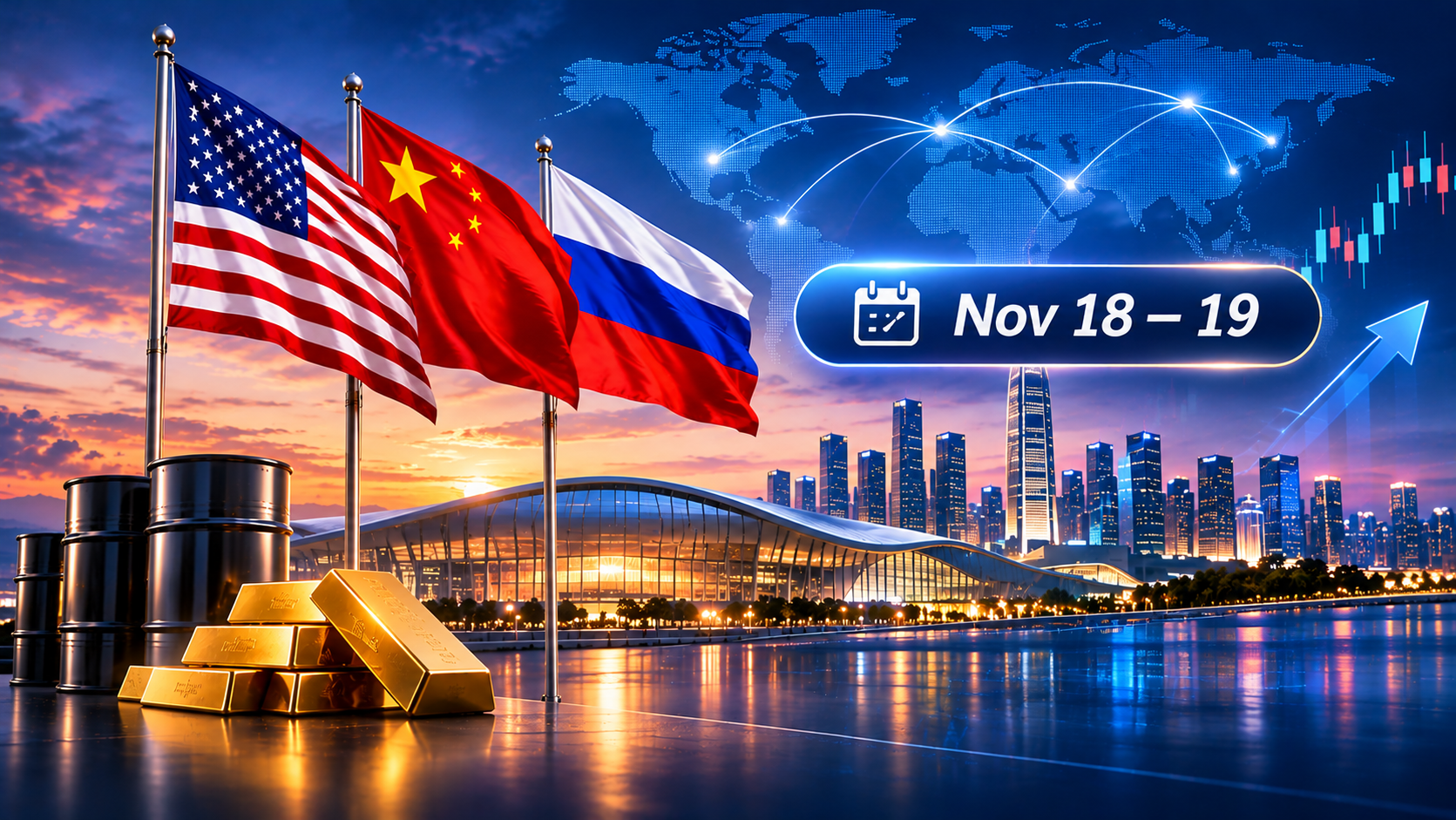
The Trump-Xi-Putin trilateral is today and is harder to time. Post-meeting statements from all three governments, and Trump's comments to press traveling with him, will be the first signals. Watch Trump's social media feed. He has historically broken summit news himself before formal readouts are issued.
Watch for headlines on US-China trade truce language from the Trump-Xi bilateral. Any statement that the truce is "on track" or will be "renewed" is a buy signal for Hang Seng and China-exposed positions.
The next scheduled major event after Shenzhen is the G20 in Doral, Miami, on December 14 and 15. If Shenzhen produces unresolved threads, they will carry directly into G20 positioning.
The Bigger Picture
What is happening in Shenzhen today is not a standard trade forum. It is the first time the leaders of the United States, China, and Russia have sat down together in the same room. The APEC summit Shenzhen markets are navigating something genuinely new: a world where the three major nuclear powers are attempting to negotiate directly on the terms of the next phase of global order, in a Chinese tech city built from scratch in four decades.
The outcomes are uncertain. The expectations are low for binding agreements. But the fact that the Trump-Xi-Putin trilateral is happening at all, and that all three governments confirmed it publicly and called it historically significant, tells traders something: all three sides see value in the dialogue continuing. That alone is a risk-reduction signal, even before a single concrete outcome is announced.
According to Reuters, China's Foreign Ministry described the trilateral as carrying "groundbreaking significance." Whether the significance translates into market-moving outcomes will become clear over the next few hours. The question traders should sit with is this: if Shenzhen delivers even a modest de-escalation across any one of these tracks, are APEC summit Shenzhen markets priced for it?
Source: Reuters, CNBC, Al Jazeera, November 18-19, 2026. This article is for informational purposes only and does not constitute financial advice. Trading involves risk. Please consider your financial situation before making any trading decisions.
FAQ
Frequently asked questions
What is the APEC summit Shenzhen 2026? +
The 33rd APEC Economic Leaders' Meeting is held in Shenzhen, China on November 18 and 19, 2026, under the theme 'Building an Asia-Pacific Community to Prosper Together.' It brings together leaders from all 21 APEC member economies.
Is the Trump-Xi-Putin meeting confirmed? +
Yes. The White House confirmed the trilateral meeting, and China's Foreign Ministry called it of 'groundbreaking significance.' It is the first-ever three-way in-person summit between the leaders of the United States, China, and Russia, according to Reuters.
What is on the agenda at Shenzhen? +
Nuclear arms reduction tops the US agenda, as the New START treaty lapsed in February 2026. The Trump-Xi bilateral meeting will also serve as a trade truce check-in, with the current truce running to January 10, 2027. Iran is also expected to come up.
How are financial markets reacting to the APEC summit? +
Asian markets ended mostly higher on November 18 in choppy trading as investors assessed comments from global leaders at the APEC summit. Oil, gold, and Asia-Pacific equities remain in play depending on today's trilateral outcome.
What happens if the trade truce is extended at the APEC summit in Shenzhen? +
An extension or strengthening of the US-China trade truce beyond January 2027 would likely lift Asian equities, support risk appetite, and weigh on safe-haven assets like gold. Failure to signal progress could trigger a risk-off move across Asia-Pacific markets.
Trade the markets you follow
Open a live or demo account in minutes
KVB Market Analysis
Latest from our insights