


Tesla and SpaceX: Inside Wall Street's Merger Bet
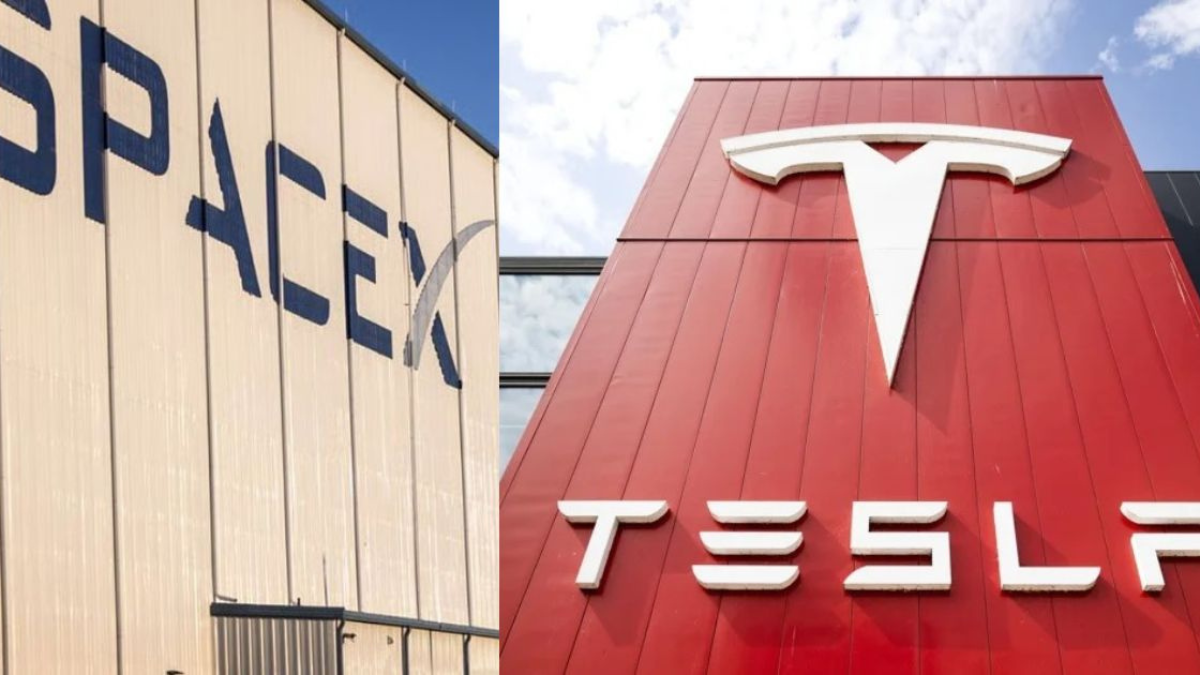
There is a rumor that refuses to die in tech and finance circles, and this week it got a number attached to it. Wedbush analyst Dan Ives has put the odds of a Tesla and SpaceX merger at more than 80% within the next year. That is not a casual guess from an analyst chasing headlines — it is a specific, public number tied to one of the most closely watched relationships in American business: Elon Musk's dual role atop two of the most talked-about companies on the planet.
According to The Motley Fool, the case for combining Tesla and SpaceX rests on Musk's broader artificial intelligence and data strategy, not simply on convenience or overlapping leadership. Tesla already made a symbolic first move earlier in 2026, investing $2 billion into SpaceX and picking up nearly 19 million shares — a stake just under 1% of SpaceX's total shares outstanding. It's a small position in isolation, but it is also the kind of quiet groundwork that tends to precede bigger conversations.
Why the Merger Talk Suddenly Feels Real
For years, a Tesla and SpaceX combination was mostly speculative — the sort of thing bloggers floated because both companies share a CEO and a certain cultural DNA. What changed is that SpaceX now has a public stock price, thanks to its June 2026 initial public offering. That single fact matters more than people initially give it credit for. Before the IPO, valuing a stock-based merger between the two companies would have required guesswork about what SpaceX was actually worth. Now there's a market-derived number to work from, which makes any deal easier to structure, negotiate, and eventually pitch to shareholders.
This is precisely why the Tesla and SpaceX merger conversation has moved from "interesting hypothetical" to "something Wall Street analysts are willing to price." An IPO doesn't just raise capital — it creates a valuation benchmark. And once you have a benchmark, questions that used to be unanswerable, like "how many Tesla shares would be worth one SpaceX share," suddenly have a starting point.
The Growth Engine Tesla Doesn't Have
Here's the part of the story that tends to get lost in the noise: SpaceX isn't just a rocket company anymore. In 2025, SpaceX generated $18.7 billion in revenue, and roughly $11.4 billion of that came from Starlink, its satellite-powered connectivity business. Starlink's user base had climbed to nearly 10.3 million subscribers by the first quarter of 2026. That is a recurring-revenue business, built on consumer subscriptions and enterprise contracts, sitting inside a company that Tesla investors might eventually gain exposure to through a merger.
Tesla, for all its scale, doesn't have anything quite like that. Its business is still heavily tied to vehicle sales, which are lumpy, cyclical, and increasingly pressured by Chinese competitors. A combined Tesla and SpaceX entity would pair Tesla's hardware-and-software ecosystem with a satellite-based connectivity arm that grows on its own schedule, less dependent on quarterly delivery numbers or consumer sentiment about electric vehicles.
Meanwhile, Tesla itself is not sitting still on the spending front. The company raised its 2026 capital expenditure plan to more than $25 billion, up from an earlier $20 billion estimate, largely to fund AI infrastructure, custom chips, and manufacturing capacity. Despite generating $1.44 billion in free cash flow during the first quarter, Tesla expects negative free cash flow for the remainder of 2026. That is an aggressive spending posture for a company already burning through capital on humanoid robots, autonomous driving, and next-generation chips — and it is exactly the kind of financial profile that makes a broader platform strategy, one where SpaceX's cash-generating businesses could help offset Tesla's cash-burning ones, more appealing to entertain.
Building a Vertically Integrated Platform
The pitch for combining these two companies isn't just about diversifying revenue. It's about stitching together a platform that spans transportation, energy, robotics, and space-based infrastructure under one roof. Tesla brings electric vehicles, robotaxis, Optimus humanoid robots, and energy storage products that create direct consumer and enterprise demand. SpaceX brings satellites, launch capacity, mobile connectivity, and the AI infrastructure tied to xAI, which SpaceX has already folded into its operations.
Put those pieces together and you get a company that doesn't just sell cars or launch rockets — it potentially controls the full stack of hardware, energy, and connectivity that ties Musk's various ventures together. That's the underlying thesis behind the Tesla and SpaceX merger speculation: not two separate businesses sharing a CEO, but one integrated platform where each division reinforces the others.
The Synergies Already Quietly Happening
What makes this merger case more concrete than pure speculation is that Tesla and SpaceX are already doing business with each other. Reuters reported that SpaceX and xAI purchased about $650 million in goods and services from Tesla in 2025 alone, including $506 million worth of Tesla Megapack batteries and $131 million in Cybertrucks. This isn't a hypothetical future synergy — it's an existing commercial relationship, and a fairly substantial one at that.
Tesla's energy storage division is projected to bring in roughly $18.3 billion in revenue in 2026, with gross profit near $5.3 billion and a gross margin approaching 29%. That's a meaningfully higher margin than Tesla's core automotive business currently manages. Since SpaceX and xAI require massive power storage capacity to run AI workloads and communications infrastructure, Tesla's Megapack unit is well positioned to become an even more important internal supplier if the two companies formally combine.
There's more. Reuters has also reported that SpaceX, xAI, and Tesla are jointly planning two advanced chip factories at the Terafab facility in Austin, Texas — one dedicated to Tesla vehicles and Optimus robots, the other aimed at future AI data centers in space. On top of that, the companies are collaborating on Macrohard, an early-stage AI platform designed to automate digital workflows. These aren't just talking points for a future pitch deck; they're active projects that suggest Tesla and SpaceX are already building shared technology infrastructure, independent of whether a formal merger ever happens.
As Wedbush's Dan Ives frames it, the potential deal fits neatly into Elon Musk's broader ambitions around artificial intelligence and data — an ambition that increasingly treats Tesla, SpaceX, and xAI as interlocking pieces rather than standalone companies.
Connectivity as the Long-Term Wildcard
One of the more forward-looking arguments for combining Tesla and SpaceX involves connectivity. The Federal Communications Commission has approved 7,500 additional Gen2 Starlink satellites, bringing SpaceX's total permitted Gen2 capacity to 15,000 satellites. SpaceX is also expanding into direct-to-cell technology and broader U.S. mobile services.
Over time, that infrastructure could theoretically keep Tesla's vehicles, robotaxis, charging network, and energy assets connected in ways that don't depend on traditional cellular carriers. It's an intriguing idea, but it's worth being honest about where this stands today: this is a future opportunity, not a near-term revenue driver. Investors weighing the Tesla and SpaceX merger case should treat the connectivity angle as a long-term possibility rather than something that moves the needle on 2026 or 2027 earnings.
The same caution applies to SpaceX's next-generation Starship rocket system, designed to carry more than 100 metric tons into orbit. If Starship performs reliably at scale, it could lower the cost of deploying satellite networks and space-based infrastructure, strengthening the overall case for a combined company. But Starship's development has had its share of setbacks, and betting on flawless execution is its own kind of risk — one investors shouldn't wave away just because the long-term vision sounds compelling.
The Risks Tesla Shareholders Can't Ignore
Here's where the enthusiasm needs a reality check. SpaceX currently trades at 77 times trailing twelve-month sales, despite posting a $4.9 billion net loss in 2025. Its AI division alone recorded a $6.4 billion operating loss last year and accounted for $12.7 billion of SpaceX's total capital expenditures. Folding those losses and that capital intensity into Tesla would not be a neutral event for Tesla shareholders — it would directly import SpaceX's financial risk profile onto Tesla's balance sheet and income statement.
Tesla has its own unresolved execution risks to worry about before adding SpaceX's. Reuters found that Tesla's robotaxi service in Texas is still dealing with long wait times, limited availability, navigation glitches, and safety concerns in some vehicles. If Tesla hasn't yet proven that autonomous driving works reliably at scale, and SpaceX hasn't yet proven that its AI infrastructure bets will pay off, then a Tesla and SpaceX merger wouldn't so much reduce risk as combine two separate, unresolved long-term bets into a single, larger one.
This is a genuinely important distinction. Mergers are often pitched as risk-reducing diversification plays. In this case, the honest framing is closer to the opposite: two ambitious, unproven, capital-intensive ventures joining forces, with shareholders being asked to trust that the combined entity executes better than either would alone.
Musk's Outsized Control Complicates the Fairness Question
Any discussion of a Tesla and SpaceX combination eventually has to address Elon Musk's personal stake in both companies. Before SpaceX's IPO, Musk reportedly controlled 42.5% of SpaceX's equity and a commanding 83.8% of its voting power. Following the offering, he's expected to retain around 82.4% of that voting power. He also holds close to a 19.9% stake in Tesla's common stock.
That level of concentrated control cuts both ways. On one hand, it makes a deal easier to push through, since Musk effectively controls the decision-making apparatus on both sides of the table. On the other hand, it raises the bar for fairness considerably. Tesla shareholders would need real assurance that any merger terms accurately reflect SpaceX's losses, Tesla's own standalone growth potential, and the value of the commercial relationships the two companies already share — rather than terms shaped primarily to benefit the person sitting at the head of both boardrooms.
- Valuation risk: SpaceX's 77x sales multiple, paired with billions in losses, could dilute Tesla's earnings profile.
- Execution risk: Both companies are still proving out unfinished technology bets — robotaxis on one side, AI infrastructure on the other.
- Governance risk: Musk's dominant voting control across both entities raises legitimate fairness questions for minority shareholders.
What Investors Should Actually Watch For
So where does this leave Tesla shareholders trying to make sense of an 80% merger probability floated by a single analyst? The honest answer is: it's too early to treat this as a done deal, but too significant to ignore. The building blocks are visibly there — shared chip factories, existing Megapack and Cybertruck purchases between the companies, a joint AI platform in Macrohard, and now a public valuation benchmark for SpaceX that didn't exist a year ago.
At the same time, nothing about deal terms, exchange ratios, board approval processes, or a clear path from "synergy" to actual cash flow has been made public. Until those specifics surface, the smartest posture for investors is measured attentiveness rather than certainty in either direction. A Tesla and SpaceX merger could genuinely reshape Tesla into a broader AI, energy, and connectivity platform — or it could saddle Tesla shareholders with SpaceX's losses and unresolved execution risk at a moment when Tesla is already navigating plenty of its own.
The Bottom Line
Wall Street doesn't usually attach hard percentages to speculative mergers unless there's real substance behind the talk. The fact that an analyst is willing to put an 80% probability on Tesla and SpaceX combining says something about how seriously this idea is now being taken inside investment circles. Whether that materializes into an actual deal — and whether the terms treat Tesla shareholders fairly when it does — remains the real question worth watching over the coming year.