



MediaTek hires former TSMC executive
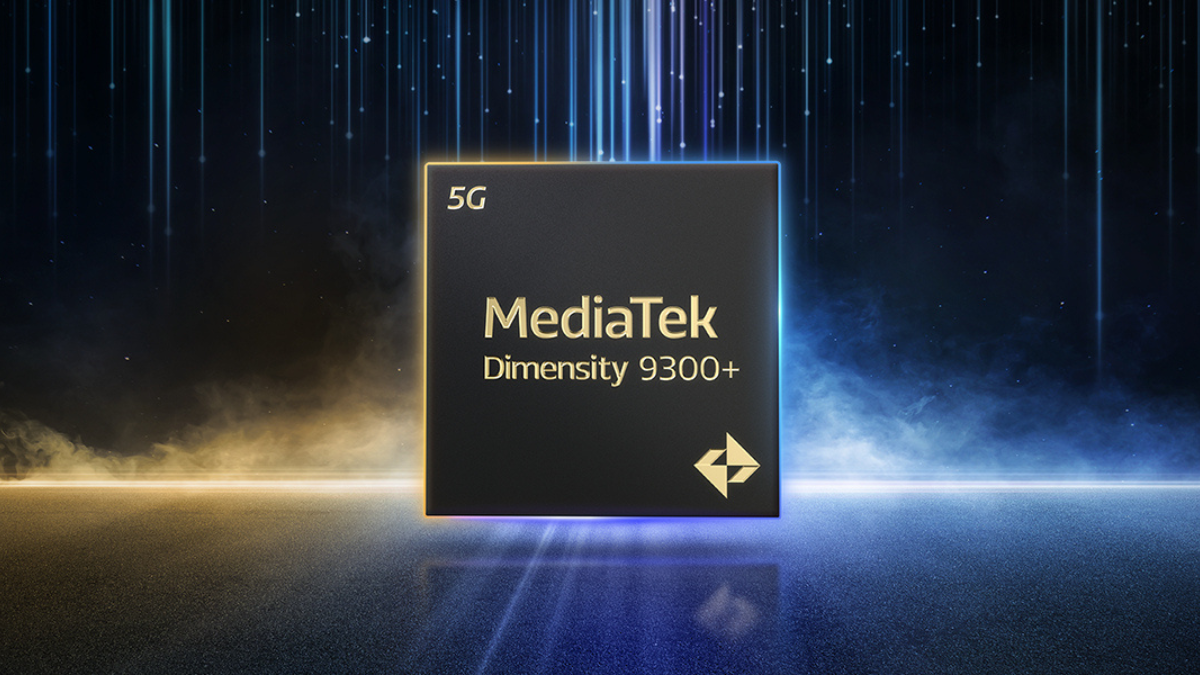
MediaTek hires former TSMC executive Douglas Yu in what may become one of the most strategically significant talent acquisitions in Taiwan’s semiconductor industry this year. According to Reuters, MediaTek’s appointment of Yu as a part-time adviser signals far more than a routine executive addition—it reflects the company’s intensifying ambition to secure a larger role in the rapidly expanding artificial intelligence chip market, where advanced packaging has become as strategically critical as chip design itself.
As AI infrastructure spending accelerates globally, the semiconductor battleground is shifting beyond transistor density and processing power into backend integration technologies such as CoWoS (Chip on Wafer on Substrate). In this environment, MediaTek hires former TSMC executive Douglas Yu not merely for prestige, but for highly specialized expertise in one of the most supply-constrained and commercially decisive technologies in modern computing.
The move highlights MediaTek’s recognition that future AI competitiveness may depend less on traditional smartphone processor dominance and more on mastering the complex supply chains and packaging ecosystems that support large-scale AI accelerators.
Why MediaTek’s Move Matters Beyond a Personnel Announcement
At surface level, the headline that MediaTek hires former TSMC executive could appear like standard corporate recruitment. Yet Douglas Yu is not an ordinary industry veteran. Having joined Taiwan Semiconductor Manufacturing Company in 1994 and retired in 2025, Yu spent decades shaping some of the world’s most advanced backend R&D initiatives.
Most notably, Yu played a crucial role in developing TSMC’s CoWoS technology, a packaging innovation now central to AI chips used by Nvidia and major hyperscale cloud providers. CoWoS allows multiple high-performance chiplets and memory systems to be integrated with extraordinary bandwidth and efficiency—an essential requirement for AI model training and inference.
According to Reuters, MediaTek said Yu’s technical depth will support roadmap planning, R&D guidance, and investment strategy tied to advanced packaging technologies associated with TSMC.
When MediaTek hires former TSMC executive, it is effectively importing strategic institutional knowledge from the world’s most critical semiconductor manufacturing ecosystem.
The CoWoS Bottleneck and AI’s Packaging Crisis
To understand why MediaTek hires former TSMC executive is such a major story, one must first grasp the current supply constraints surrounding advanced chip packaging.
CoWoS capacity has emerged as one of the semiconductor industry's most severe bottlenecks. Demand from Nvidia, AMD, custom ASIC developers, and cloud providers has surged dramatically as AI model complexity expands. While leading-edge silicon manufacturing remains essential, packaging capacity increasingly determines which companies can actually deliver products to market at scale.
This has transformed packaging from a backend engineering function into a front-line strategic weapon.
- AI chips require massive memory bandwidth integration
- Power efficiency depends on advanced interconnect density
- Hyperscalers need reliable long-term capacity
- Packaging innovation affects total system cost
By ensuring that MediaTek hires former TSMC executive Douglas Yu, the company gains insider-level understanding of one of the most critical choke points in the AI semiconductor economy.
MediaTek’s Evolution Beyond Smartphones
Historically, MediaTek built its reputation as a smartphone and connectivity chip powerhouse, often competing aggressively in mobile SoCs, Wi-Fi, and consumer electronics. However, the AI revolution presents a different opportunity.
Last week, MediaTek projected it could generate multiple billions of dollars in revenue from AI accelerator ASICs by 2027. This forecast underscores why MediaTek hires former TSMC executive is strategically aligned with a larger business transformation.
The company appears to be pursuing three parallel objectives:
- Expand into AI accelerator custom silicon
- Strengthen advanced packaging capabilities
- Reduce dependence on traditional handset cycles
This shift mirrors broader industry trends, where semiconductor firms are repositioning themselves to capture enterprise AI infrastructure growth rather than solely consumer electronics demand.
In this context, MediaTek hires former TSMC executive becomes a foundational step in corporate reinvention.
TSMC’s Influence and the Competitive Ecosystem
TSMC remains the world’s dominant semiconductor foundry, and its packaging innovations increasingly define industry capability. CoWoS, alongside future packaging methods, provides TSMC with leverage not just over fabrication, but over full-system semiconductor architecture.
Therefore, when MediaTek hires former TSMC executive, it potentially enhances its negotiating position and technical synergy with TSMC itself.
Douglas Yu’s understanding of:
- TSMC’s packaging roadmap
- Capacity expansion constraints
- Technical implementation challenges
- Customer prioritization models
could help MediaTek optimize product planning more effectively than competitors lacking such embedded knowledge.
This does not mean MediaTek gains preferential access, but it may gain critical strategic foresight.
AI ASICs: MediaTek’s Multi-Billion Dollar Bet
The AI chip market is no longer dominated solely by Nvidia GPUs. Increasingly, hyperscale customers are seeking custom ASICs optimized for specific workloads, power efficiency, and deployment costs.
MediaTek’s projected AI ASIC revenue ambitions suggest it sees substantial room in this market. Thus, MediaTek hires former TSMC executive at a time when advanced packaging could determine whether these future ASIC products are commercially viable.
Key challenges include:
- Securing sufficient packaging capacity
- Designing competitive accelerator architectures
- Managing cost-performance balance
- Competing against Nvidia, Broadcom, AMD, and Marvell
Yu’s role may be particularly important in ensuring MediaTek’s backend technology strategy can scale alongside front-end design ambitions.
Taiwan’s Semiconductor Talent Arms Race
The fact that MediaTek hires former TSMC executive also reflects a broader industry pattern: elite semiconductor talent has become a strategic asset as valuable as capital expenditure.
Taiwan’s chip ecosystem is uniquely concentrated, with TSMC serving as both technological nucleus and training ground for generations of engineering leaders. Companies like MediaTek increasingly recognize that competing in AI demands not only R&D budgets, but also access to rare institutional knowledge.
This intensifying talent competition may accelerate:
- Executive migration
- Packaging specialization
- Cross-company advisory structures
- Strategic alliances
By moving early, MediaTek may be positioning itself advantageously before advanced packaging talent becomes even scarcer.
Risks and Strategic Uncertainty
Despite optimism, MediaTek hires former TSMC executive does not guarantee success. Significant challenges remain.
Among them:
- Packaging supply remains externally constrained
- AI ASIC market competition is fierce
- Customer adoption cycles are uncertain
- Execution complexity is high
Moreover, advisory expertise alone cannot overcome macroeconomic slowdowns, geopolitical trade restrictions, or technological missteps.
Still, the decision indicates MediaTek understands the stakes. Rather than reacting passively to AI’s rise, it is actively investing in the expertise necessary to shape its future.
Apple, Nvidia, and the Broader Industry Context
The Reuters article appeared alongside broader industry developments, including Apple CEO Tim Cook’s comments regarding leadership transition timing and Nvidia’s continuing central role in AI infrastructure.
These parallel narratives underscore a larger truth: semiconductor and technology giants are entering a period of strategic restructuring driven by AI.
Against this backdrop, MediaTek hires former TSMC executive becomes part of a global repositioning where companies are racing to secure leadership in next-generation compute ecosystems.
The winners may not simply be those who design the fastest chips—but those who control the full stack of manufacturing, packaging, deployment, and scalability.
Final Outlook: A Calculated AI Infrastructure Play
MediaTek hires former TSMC executive Douglas Yu at a pivotal moment for both the company and the semiconductor sector. According to Reuters, this move directly supports MediaTek’s ambitions in advanced packaging and AI accelerators, two of the most strategically vital domains in modern chipmaking.
The decision suggests MediaTek recognizes several realities:
- AI demand will continue expanding rapidly
- Packaging technology is a critical competitive frontier
- TSMC ecosystem expertise offers immense strategic value
- Long-term growth requires diversification beyond mobile chips
By acting now, MediaTek is attempting to secure relevance not just as a chip designer, but as an integrated AI infrastructure contender.
Whether this strategy ultimately delivers multi-billion-dollar success remains uncertain. But one point is increasingly clear: when MediaTek hires former TSMC executive, it is making a deliberate statement that the future of AI competition will be won not only through silicon innovation, but through mastery of the sophisticated technologies that bring advanced chips to life.