



Jeff Bezos Pushes New Tax Debate
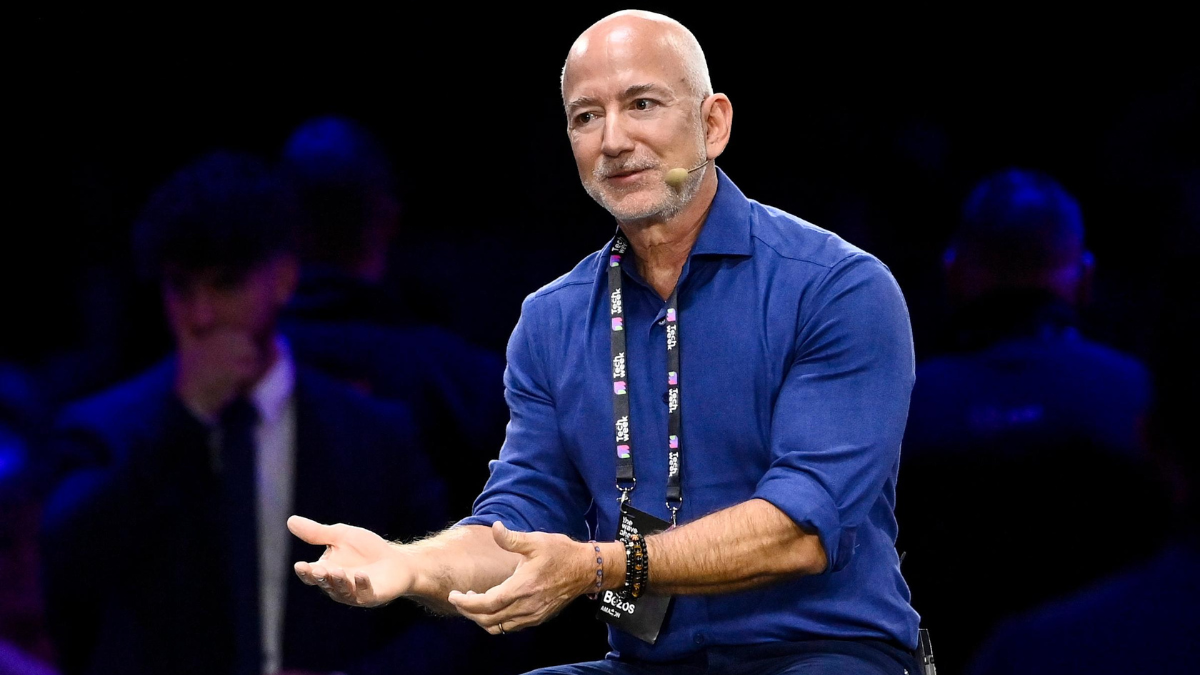
Jeff Bezos has once again stepped into the center of America’s political and economic debate, but this time the billionaire founder of Amazon is not defending corporate power or space exploration. Instead, Jeff Bezos is advocating for something that would have seemed politically unlikely only a few years ago: eliminating federal income taxes for lower-income Americans.
According to Yahoo Finance, Jeff Bezos argued during a CNBC interview that struggling Americans should be allowed to keep more of what they earn rather than losing a portion of their paychecks to Washington. His comments immediately reignited national arguments surrounding wealth inequality, tax fairness, government spending, and the role billionaires should play in shaping economic policy.
For years, public pressure in the United States has focused on the idea of “taxing the rich.” Progressive lawmakers have proposed wealth taxes, higher corporate taxes, and increased levies on billionaires. Yet Jeff Bezos chose a different angle. Rather than emphasizing what the wealthy should pay, he focused on what ordinary workers should not pay.
The comments were politically strategic, emotionally resonant, and economically controversial all at once.
Jeff Bezos Frames the Tax Debate Around Opportunity
One of the most striking aspects of the interview was how Jeff Bezos framed his argument around personal experience rather than abstract economic theory.
According to Yahoo Finance, Jeff Bezos reflected on growing up as the son of a Cuban immigrant and a teenage mother. He described how difficult circumstances shaped his understanding of opportunity and economic mobility.
“I want to make sure that the people who are struggling today have a chance to do that, too,” Jeff Bezos said during the interview.
The message was carefully constructed. Instead of portraying tax relief as charity, Jeff Bezos framed it as investment in future innovators, entrepreneurs, and workers.
He even suggested that the next Steve Jobs could emerge from a struggling household if financial burdens were reduced.
That framing matters politically because it appeals to both conservatives and moderates. Conservatives traditionally support lower taxes, while moderates often emphasize economic mobility and middle-class opportunity.
By positioning tax cuts for lower-income workers as a way to unlock human potential, Jeff Bezos attempted to bridge ideological divisions.
Still, critics quickly pointed out that the broader debate over taxation cannot be separated from the enormous concentration of wealth among billionaires like Jeff Bezos himself.
Jeff Bezos Challenges the “Tax the Rich” Movement
The timing of the remarks from Jeff Bezos is significant because wealth taxes and higher taxation on top earners are gaining political momentum in several parts of the United States.
New York City mayor Zohran Mamdani recently introduced a “pied-à-terre” tax targeting luxury second homes owned by wealthy individuals who do not permanently live in the city.
Meanwhile, several states are considering wealth taxes aimed directly at ultra-high-net-worth households.
Against that backdrop, Jeff Bezos effectively pushed back against the core premise of the modern progressive tax movement.
Instead of arguing that the wealthy are overtaxed, Jeff Bezos argued that lower-income workers are unnecessarily taxed.
That distinction is subtle but important.
According to Yahoo Finance, Jeff Bezos highlighted statistics showing that the top 1% of earners already pay roughly 40% of federal income taxes, while the bottom half of earners contribute only around 3%.
Tax Foundation data broadly supports those figures.
For supporters of Jeff Bezos, those numbers demonstrate that the American tax system is already heavily progressive.
For critics, however, income tax figures alone fail to capture the broader issue of wealth accumulation, capital gains advantages, and asset appreciation enjoyed by billionaires.
The disagreement reflects a deeper philosophical divide about what fairness actually means.
Jeff Bezos and the Symbolism of the “Nurse in Queens”
Perhaps the most politically powerful part of the interview came when Jeff Bezos used the example of a nurse in Queens earning $75,000 annually.
According to Yahoo Finance, Jeff Bezos argued that such a worker paying more than $12,000 annually in taxes did not make sense in the world’s wealthiest economy.
“A nurse in Queens should not pay taxes,” Jeff Bezos argued.
The example was not accidental.
Nurses symbolize middle-class labor, public service, and economic pressure all at once. By choosing a relatable worker rather than abstract statistics, Jeff Bezos turned a policy debate into a human story.
He emphasized how an extra $1,000 per month could help pay for rent, groceries, childcare, or transportation.
That argument resonates strongly at a time when inflation pressures continue affecting household budgets across the United States.
Housing costs remain elevated in major cities. Grocery prices have climbed significantly over the past several years. Healthcare expenses continue rising. Student loan burdens remain heavy for many workers.
In that environment, the proposal from Jeff Bezos taps into widespread frustration among working Americans who feel squeezed despite having stable employment.
Would Jeff Bezos’s Proposal Actually Work?
The practical reality behind the proposal from Jeff Bezos is far more complicated than the headline itself.
First, millions of lower-income Americans already pay little or no federal income tax because of deductions, credits, and exemptions.
According to the Tax Policy Center, approximately 76 million households paid no federal income tax in 2025.
Many families benefit from:
- Standard deductions
- Child tax credits
- Earned income tax credits
- Education credits
- Dependent exemptions
As a result, the proposal from Jeff Bezos may affect fewer people than some headlines initially imply.
However, payroll taxes remain a major burden even for households that owe little federal income tax.
Workers still pay Social Security and Medicare taxes directly from paychecks. State taxes, sales taxes, gasoline taxes, and property taxes also continue consuming household income.
That means even if federal income taxes disappeared for many workers, their overall tax burden would remain substantial.
Critics of Jeff Bezos therefore argue that the proposal oversimplifies the complexity of the American tax system.
Jeff Bezos and America’s Massive Tax Structure
The broader conversation triggered by Jeff Bezos also highlights how deeply taxation is embedded into everyday American life.
According to the article, Paradigm Life Insurance identified nearly 100 different forms of taxes, fees, and government charges in the United States.
These include:
- Gasoline taxes
- Hotel taxes
- Property taxes
- Vehicle registration taxes
- Cigarette taxes
- Liquor taxes
- Business licensing fees
- Toll road charges
- Payroll taxes
That list illustrates an uncomfortable truth: even eliminating federal income taxes would not fundamentally transform the tax-heavy nature of modern economic life.
Still, the argument from Jeff Bezos succeeds politically because federal income tax is highly visible psychologically.
Workers see deductions directly on every paycheck. The annual filing process reinforces awareness of taxation in a way that indirect taxes do not.
Removing that burden could therefore have symbolic and emotional power beyond its pure financial impact.
The Political Appeal of Jeff Bezos’s Message
Politically, the proposal from Jeff Bezos arrives at a fascinating moment in American politics.
Both major political parties are increasingly focused on working-class voters.
Republicans have moved away from traditional free-market orthodoxy toward more populist economic messaging. Democrats continue emphasizing affordability, inequality, and middle-class economic security.
The comments from Jeff Bezos intersect with both trends.
On one hand, reducing taxes aligns naturally with conservative economic philosophy.
On the other hand, targeting relief toward lower-income households reflects populist and progressive concerns.
This hybrid positioning may explain why the remarks generated such widespread attention.
At the same time, some critics argue that proposals from billionaires like Jeff Bezos should be viewed skeptically because wealthy individuals ultimately benefit from preserving low-tax environments.
Those critics believe that focusing public attention on middle-class tax relief can distract from discussions about corporate taxation and wealth concentration.
Congress Is Already Exploring Similar Ideas
The comments from Jeff Bezos are not entirely isolated from ongoing legislative discussions.
According to Yahoo Finance, Senator Cory Booker introduced the “Keep Your Pay Act,” which would make the first $75,000 of income tax-free for jointly filing households.
The proposal remains in committee and has not advanced significantly.
Still, the existence of such legislation demonstrates that the broader idea behind the comments from Jeff Bezos already exists within parts of the political mainstream.
Booker’s approach differs, however, because it would likely require increased taxes elsewhere to offset lost revenue.
That raises one of the central unanswered questions behind the proposal from Jeff Bezos:
If lower-income households pay less tax, who pays more?
Without corresponding spending cuts or alternative revenue sources, federal deficits would likely increase.
Supporters argue that economic growth from increased consumer spending could partially offset lost revenue.
Critics remain unconvinced.
Jeff Bezos and the Psychology of Wealth
The debate surrounding Jeff Bezos ultimately extends beyond economics into psychology and symbolism.
Billionaires occupy a unique cultural position in modern America.
Some view them as innovators who create jobs, industries, and technological progress. Others view them as symbols of inequality and corporate excess.
That duality explains why comments from Jeff Bezos immediately trigger intense reactions.
When ordinary politicians discuss taxes, the conversation remains relatively predictable.
When one of the world’s wealthiest individuals advocates tax relief for workers, the narrative becomes far more complicated.
Some people see sincerity. Others see strategic image management.
Both interpretations can coexist simultaneously.
The Future of the Tax Debate After Jeff Bezos
Regardless of whether the proposal from Jeff Bezos becomes politically realistic, the broader debate it triggered is unlikely to disappear.
Americans remain deeply divided over:
- How much taxation is fair
- How wealth should be distributed
- What role billionaires should play in society
- Whether economic growth benefits ordinary workers
- How government spending should be funded
At the same time, economic pressures continue reshaping political priorities.
Housing affordability, healthcare costs, student debt, and inflation have made economic survival a central issue for millions of households.
That environment makes arguments like those from Jeff Bezos politically potent even if they remain controversial.
Reducing taxes for struggling workers is easy to explain and emotionally appealing.
The harder question is whether such policies can realistically coexist with rising federal debt, aging demographics, expanding entitlement programs, and growing fiscal obligations.
Conclusion
Jeff Bezos may have intended his comments as a straightforward argument for helping lower-income Americans, but the reaction reveals something much deeper about the modern United States.
The country remains divided not only over taxes, but over the meaning of fairness itself.
According to Yahoo Finance, Jeff Bezos believes struggling Americans deserve more financial breathing room and more opportunity to build better futures.
Supporters see that as common sense.
Critics see it as incomplete without broader reforms aimed at wealth concentration and corporate taxation.
What is clear is that Jeff Bezos has once again demonstrated his ability to shape national conversations far beyond technology or business.
Whether Americans ultimately embrace or reject his vision, the debate surrounding Jeff Bezos reflects a growing recognition that the financial pressures facing ordinary workers can no longer be ignored.