


Fed Holds Rates Steady as Dissent Grows Under Warsh
The Federal Reserve on Wednesday voted 9-3 to hold its benchmark rate in a range of 3.5% to 3.75%, marking the fifth consecutive meeting in which the Fed holds interest rates steady. But the headline decision masked a far more contentious undercurrent: three regional Fed presidents broke ranks to dissent in favor of an immediate quarter-point hike, the largest number of dissents the committee has recorded since September 2016.
A Divided Committee
Cleveland Fed President Beth Hammack, Minneapolis Fed President Neel Kashkari, and Dallas Fed President Lorie Logan each voted against the majority, arguing that persistent inflation warranted tighter policy now rather than later. All three had signaled their leanings in public remarks ahead of the meeting, with Logan saying she believed rates should move “modestly” higher and Hammack and Kashkari both voicing support for a more aggressive stance against above-target inflation.
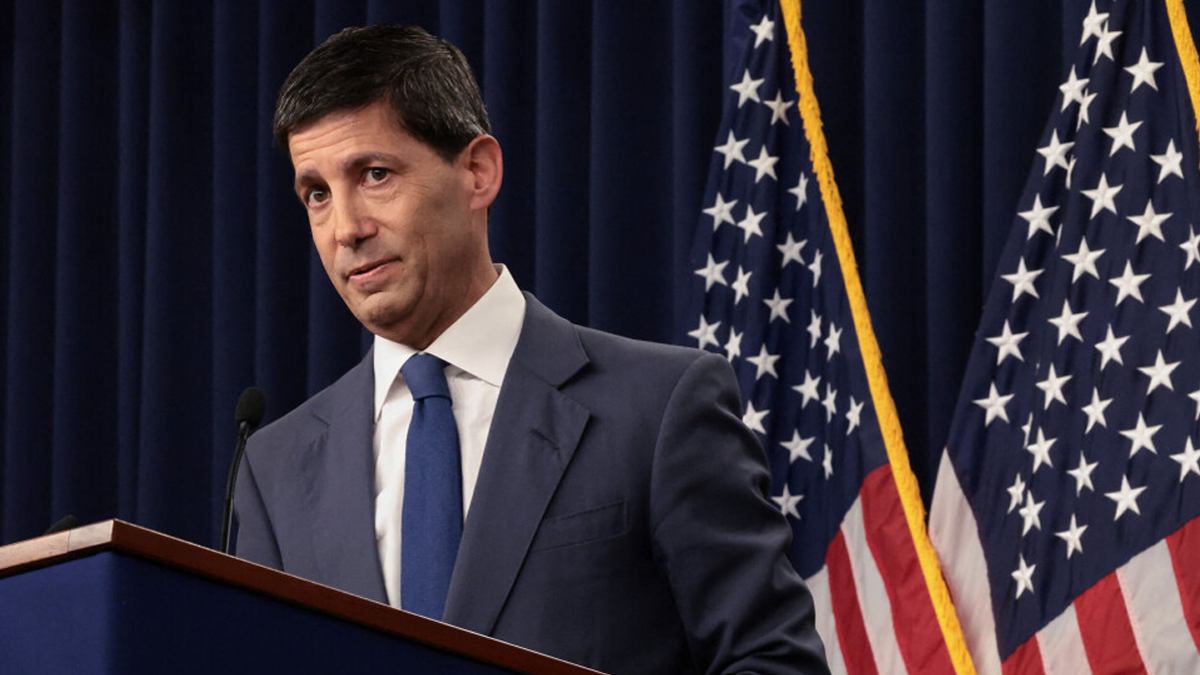
The dissent is notable in part because it comes just months into the tenure of new Fed Chair Kevin Warsh, who has taken a markedly different communication approach than his predecessor. Warsh has stripped back the forward guidance that characterized recent years of FOMC statements, leaving the post-meeting release roughly one-third the length of those issued under former Chair Jerome Powell. At his press conference, Warsh appeared unbothered by the level of internal disagreement, telling reporters that he had explicitly invited a more contentious debate among committee members.
I asked for a good family fight, and I got one. That's the designed feature.
Why the Fed Holds Interest Rates Steady For Now
In its policy statement, the FOMC described economic activity as “expanding at a solid pace” despite what it called elevated uncertainty tied in part to ongoing conflict in the Middle East. The committee noted that productivity growth and capital investment remain strong and that job gains have kept pace with growth in the labor force, with unemployment little changed. At the same time, the statement acknowledged that inflation remains elevated relative to the Fed's 2% target, attributing part of that persistence to supply shocks, including energy-price increases linked to disruptions around the Strait of Hormuz.
That combination, solid growth alongside sticky inflation, helps explain why the Fed holds interest rates steady rather than moving decisively in either direction. Cutting rates risks reigniting inflationary pressure at a moment when price growth is already running above target; raising them risks slowing an economy that, by the committee's own description, continues to expand at a healthy pace. Warsh characterized the current stance as a period of “watchful thinking” rather than the “watchful waiting” language more commonly associated with the Powell-era Fed, a subtle rhetorical shift meant to signal more active engagement with incoming data rather than passive observation.
Where Things Stand
- Federal funds rate: held at 3.5% to 3.75%
- Vote: 9-3, with three dissents favoring a 25 basis-point hike
- Dissenters: Beth Hammack (Cleveland), Neel Kashkari (Minneapolis), Lorie Logan (Dallas)
- Most dissents in a single FOMC vote since September 2016
Market Reaction: Yields Surge, Stocks Slide
Financial markets reacted swiftly and negatively to the decision and the accompanying commentary. Longer-dated Treasury yields jumped to their highest levels in nearly two decades, as bond investors interpreted the mix of persistent inflation language and reduced forward guidance as evidence that rate cuts remain further away than previously hoped. The S&P 500 fell roughly 1.5% on the day, the Nasdaq 100 extended its slide from a record high to roughly 11%, and the Dow Jones Industrial Average dropped more than 800 points at one stage of the session, its worst day in weeks.
Warsh himself offered a partial explanation for the sharp bond-market reaction, suggesting that the Fed's decision to step back from detailed forward guidance may have amplified volatility as traders were forced to react to incoming information in real time rather than relying on central bank signaling. “Markets have made decisions because we stepped back, in part, from trying to influence those markets,” Warsh told reporters, framing the more volatile market response as an intended consequence of a less interventionist communication style rather than a policy misstep.
Inflation, Tariffs, and the Middle East
Behind the committee's caution lies a complicated inflation picture shaped by forces well outside the Fed's direct control. Tariff policy has continued to exert upward pressure on the price of a range of imported goods, while the conflict in the Middle East has driven volatility in energy markets. Gasoline prices have climbed sharply since fighting began earlier this year, even as they ticked marginally lower on the day of the Fed's announcement.
- Tariff-related costs continue to filter through into consumer prices across several categories
- Energy prices remain elevated and volatile due to the ongoing conflict and disruptions around the Strait of Hormuz
- Labor market data has stayed resilient, giving the committee room to prioritize inflation over employment concerns for now
- Committee members remain split on how much of the current inflation is temporary versus structurally embedded
Fed Governor Christopher Waller, while not a voting dissenter at this particular meeting under the current rotation, has also publicly signaled support for a tighter policy stance, suggesting that the three official dissents may understate the level of internal appetite for higher rates. That dynamic sets up a closely watched September meeting, where markets are now pricing in a meaningfully higher probability of an actual rate increase than they were heading into this week's decision.
Political Pressure From the White House
The decision also lands amid an unusually public tug-of-war between the central bank and the White House. President Trump has continued to press for lower rates, creating a difficult political backdrop for Warsh.