



Oil Prices Plunge as Trump Calls Off Iran Strikes
Oil Prices Plunge as Trump Calls Off Iran Strikes
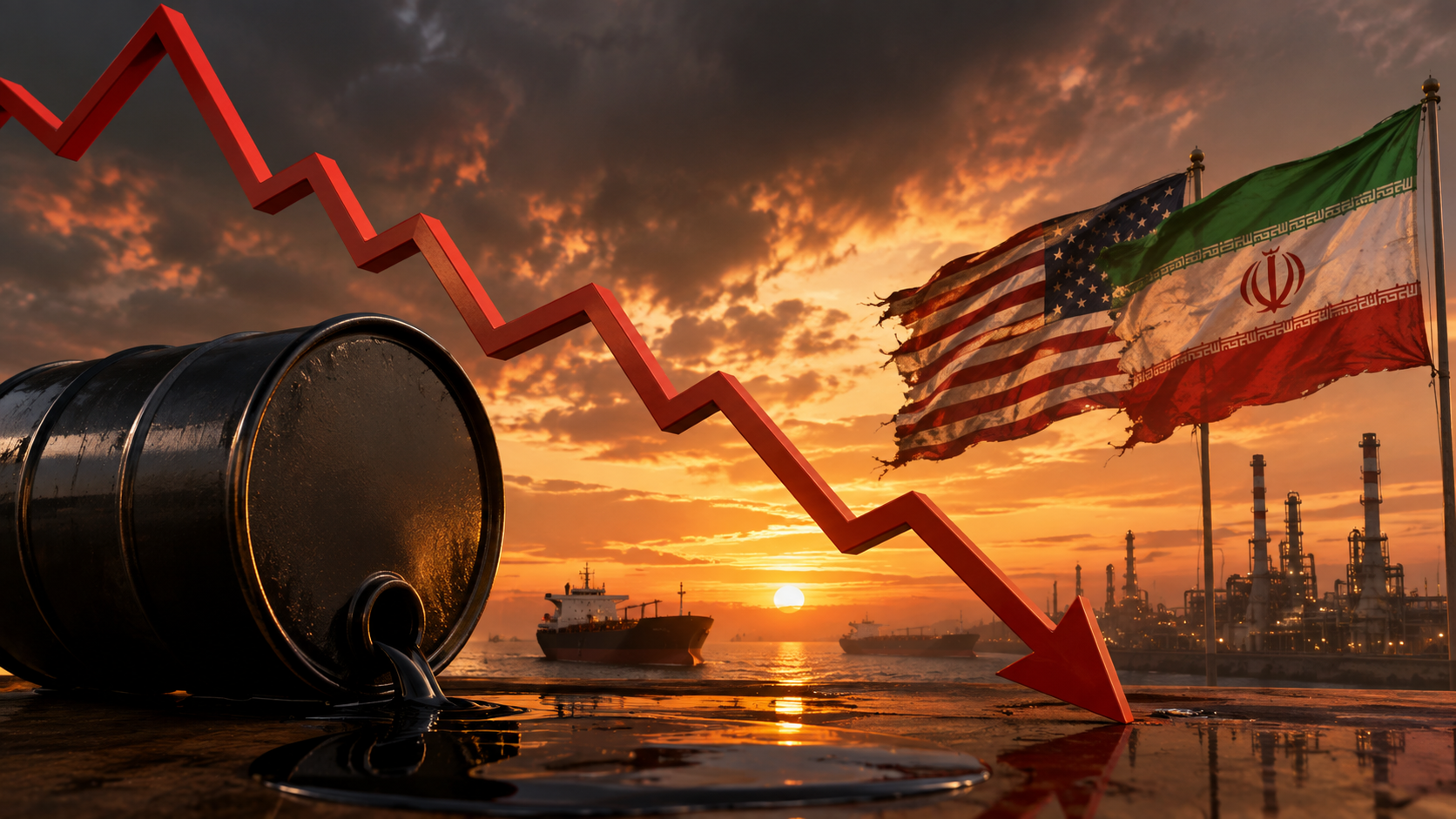
Crude oil prices plunged on Sunday and Monday after President Donald Trump said he had called off planned strikes against Iran and that new negotiations between Washington and Tehran would begin, delivering the sharpest de-escalation signal yet in a Middle East conflict that has kept energy markets on edge for more than five months. Brent crude sank as much as 9.5% in early trading Monday to below $82 a barrel, while West Texas Intermediate lost more than 7% before paring some of its decline to trade near $79.
What Trump Said
Speaking aboard Air Force One on Sunday, Trump said he had halted plans for what he described as a massive attack against Iran, one he characterized as potentially the largest US military action since World War Two. He said the decision followed requests from Iran itself, as well as from US partners Saudi Arabia, the United Arab Emirates, and Qatar, to hold off on strikes. Trump indicated that negotiations would begin the following afternoon and suggested a broader framework was taking shape, saying there was “a deal on Hormuz, and then there will be a deal on the nuclear.”
They knew the extent of the attack because they saw it forming. Now what we're doing is we're talking to them in the form of a negotiation. It begins tomorrow afternoon.
Why Oil Prices Reacted So Sharply
The scale of the price move reflects just how much of a geopolitical risk premium had been built into oil prices during the conflict. The fighting had effectively disrupted normal shipping through the Strait of Hormuz, the narrow waterway through which roughly one-fifth of the world's oil supply typically passes, forcing Middle Eastern producers to sharply curtail output and sending crude prices surging by as much as 50% since the conflict began. Any credible signal that the strait could reopen to more normal traffic tends to trigger an immediate, outsized reaction in oil markets, since the alternative, a prolonged closure or continued disruption, would represent one of the most severe supply shocks in the history of global energy markets.
Adding to the sense of momentum, Iran's foreign minister Abbas Araghchi said separately that discussions between Tehran and Oman over management of the strait were in their final stages, suggesting a parallel diplomatic track focused specifically on restoring shipping traffic was already well advanced even before the Trump-announced talks were set to begin. That combination, a presidential de-escalation announcement paired with concrete diplomatic progress on the specific chokepoint markets had been most worried about, gave traders enough conviction to price out a substantial portion of the conflict risk premium in a single session.
Monday's Oil Price Moves
Brent crude: fell as much as 9.5% intraday to below $82 a barrel
West Texas Intermediate: fell more than 7% before paring losses to trade near $79
Oil prices had risen roughly 50% since the conflict began, per earlier market data
The Strait of Hormuz carries an estimated 20% of global oil supply
A Note of Caution From Iran
Iran's public posture toward the announced talks was notably more measured than Trump's own characterization. While Tehran acknowledged that negotiations over Hormuz shipping management with Oman were advancing, Iranian officials stopped short of confirming they were currently in direct talks with the United States, a distinction that tempered some of the market's initial enthusiasm. That ambiguity is consistent with a pattern seen at earlier points in the conflict, when previous Trump announcements of imminent de-escalation were followed by denials or qualifications from Tehran, occasionally accompanied by continued military action on the ground.
Vital Knowledge founder Adam Crisafulli captured the market's underlying skepticism, noting that while the news had clearly bolstered near-term sentiment, investors were keeping their enthusiasm in check given the pattern of prior false starts, and that the conflict likely still has further to go before reaching any lasting resolution, if it ever does.
How Equity Markets Responded
Falling oil prices combined with reduced geopolitical anxiety to fuel a strong rally across US equities on the first trading day of August. The Dow Jones Industrial Average closed at an all-time high, advancing 693.38 points to settle at 53,178.41, while the Nasdaq Composite led the broader market with a 2.1% gain and the S&P 500 rose 1.5%. The rally was broad-based, touching sectors ranging from AI-linked technology names to more traditional cyclical stocks that tend to benefit from lower energy costs and reduced macro uncertainty.
The bond market also reflected the shift in risk sentiment. The benchmark 10-year Treasury yield slid nearly 6 basis points to about 4.688%, as investors trimmed some of the inflation and geopolitical risk premium that had been embedded in longer-dated yields during the conflict. Lower energy prices directly ease one of the more persistent sources of inflationary pressure policymakers have grappled with in recent months, giving the bond market additional reason to rally alongside equities.
Five Months of Volatility
Monday's plunge in oil prices caps an extraordinarily volatile stretch for energy markets that began more than five months ago when the conflict first erupted. Earlier in the crisis, oil prices had already demonstrated a pattern of sharp swings tied to shifting diplomatic signals: a similar episode in March saw crude tumble more than 10% after Trump first announced a temporary pause on strikes against Iranian energy infrastructure, only for prices to partially rebound within a day after Tehran publicly denied that meaningful negotiations were underway. That earlier round of whiplash offers a useful reference point for how quickly Monday's optimism could unwind if the current talks fail to produce tangible results.
Throughout the conflict, the International Energy Agency has repeatedly warned that the global oil market was facing one of its largest-ever supply shocks, even accounting for substantial releases from emergency strategic reserves and US-facilitated efforts to keep some volume of Russian and Iranian oil moving through alternative channels. Middle Eastern producers, unable to move product through their traditional export routes, had been forced to curtail output on a scale not seen in decades, a dynamic that explains both the severity of the price spike earlier in the conflict and the magnitude of Monday's reversal now that a resolution appears within reach.
How Analysts Are Reading the Signal
Energy strategists broadly agreed that Monday's price action represented a rational market response to genuinely significant news, even as many flagged the same note of caution evident in Iran's own guarded public statements. The core analytical challenge is distinguishing between a durable diplomatic breakthrough and another temporary lull in a conflict that has already produced multiple false starts. Strategists pointed to several factors that could help differentiate this announcement from earlier, ultimately unsuccessful de-escalation attempts, including the apparent involvement of multiple regional mediators, Saudi Arabia, the UAE, and Qatar among them, suggesting a broader coalition pushing for resolution than in prior rounds.
At the same time, analysts noted that the specific framing of a two-stage deal, one addressing Hormuz shipping first and a separate nuclear-related agreement to follow, introduces its own execution risk. Even if the shipping-focused talks progress smoothly, a comprehensive resolution addressing the underlying nuclear dispute that has driven much of the conflict's intensity could prove considerably harder to reach, potentially leaving oil markets in a prolonged state of partial de-escalation rather than a clean resolution.
Timeline of Recent De-Escalation Signals
March: Trump announces a five-day pause on strikes against Iranian energy infrastructure; oil falls more than 10% before partially rebounding after Iran denies active negotiations
Since the conflict began: oil prices had risen roughly 50% at their peak amid sustained disruption to Hormuz shipping
August 2: Trump calls off planned strikes entirely and announces new talks; oil posts one of its sharpest single-session declines of the conflict
The Broader Economic Stakes
Beyond the immediate market reaction, a genuine de-escalation carries meaningful implications for the broader economic outlook. Elevated energy prices tied to the conflict have been cited by economists as a contributing factor to persistently above-target inflation readings in recent months, complicating the Federal Reserve's policy calculus at a time when the central bank has already been navigating a divided committee over the appropriate pace of further rate moves. A sustained decline in oil prices would ease one of the more visible inflationary pressures weighing on that debate, potentially giving policymakers more room to maneuver as they weigh the path of interest rates through the remainder of the year.
- Sustained lower oil prices could ease inflationary pressure tied to energy costs
- A reopened Strait of Hormuz would restore a critical global shipping route disrupted for months
- Middle Eastern producers could gradually restore output curtailed during the conflict
- Continued uncertainty around whether talks will hold keeps a residual risk premium in place
Winners and Losers From the De-Escalation
Trump himself pointed to one group he suggested had benefited disproportionately from the conflict, telling reporters on Saturday that oil companies were “making too much money” during the war, a comment that underscored the political dimension of energy prices during a period of elevated inflation concern. Airlines and other transportation-dependent industries, which had faced higher fuel costs throughout the conflict, stand to benefit most directly from a sustained decline in crude prices, while energy producers that had enjoyed elevated margins during the supply disruption face the prospect of narrower profitability if prices continue to normalize.
Shipping and logistics companies that route vessels through or near the Persian Gulf also stand to benefit from reduced insurance costs and shorter, less risky routing options if the Strait of Hormuz genuinely returns to normal operating conditions. Conversely, companies that had adapted their supply chains around the disruption, including firms that had shifted to longer alternative routes or absorbed higher shipping costs, may see less immediate benefit if their existing contracts and logistics arrangements take time to unwind.
What Happens Next
With talks set to begin and diplomatic progress reportedly advancing on the specific issue of Hormuz shipping, markets are likely to remain highly sensitive to any further developments in the coming days and weeks. Investors are watching several key signals to gauge whether Monday's rally reflects a durable shift or another temporary reprieve in a conflict that has proven difficult to resolve.
- 1. Whether the talks Trump described actually take place as scheduled, and whether Iran's own public statements align with or contradict the US characterization of progress
- 2. Confirmation of any concrete agreement specifically restoring normal shipping traffic through the Strait of Hormuz
- 3. Whether Israel, which has continued its own military operations in the region, aligns its posture with any broader de-escalation effort
- 4. Follow-through on the broader nuclear-related framework Trump referenced, which would represent a more fundamental resolution than a narrower shipping agreement alone
For now, the sharp drop in oil prices and the accompanying equity rally reflect genuine optimism that a resolution may be closer than it has been at any point since the conflict began. But given the pattern of prior announcements that failed to hold, seasoned market participants are treating Monday's move as an important signal rather than a certainty, with the coming days likely to determine whether this de-escalation proves durable or becomes another entry in a long list of near-misses.
Financial advisors generally caution against making significant portfolio decisions based on rapidly evolving geopolitical headlines, given how quickly sentiment and prices can reverse if diplomatic progress stalls. As always, individual circumstances, time horizon, and risk tolerance should guide any specific investment decision, and this article should not be read as personalized financial advice.
What is clear, regardless of how the coming days unfold, is that energy markets remain acutely sensitive to the trajectory of this conflict five months after it first erupted, and that traders have grown accustomed to pricing in dramatic swings on short notice whenever diplomatic signals shift. That sensitivity is unlikely to fade until a genuinely durable resolution, one that survives beyond a single news cycle, is reached and confirmed on the ground rather than merely announced from the White House.
According to Bloomberg, Reuters, CNBC, The Associated Press, Yahoo Finance, and The Washington Post.