



Nvidia CEO Sees Robotics as Korea’s Next Growth Engine
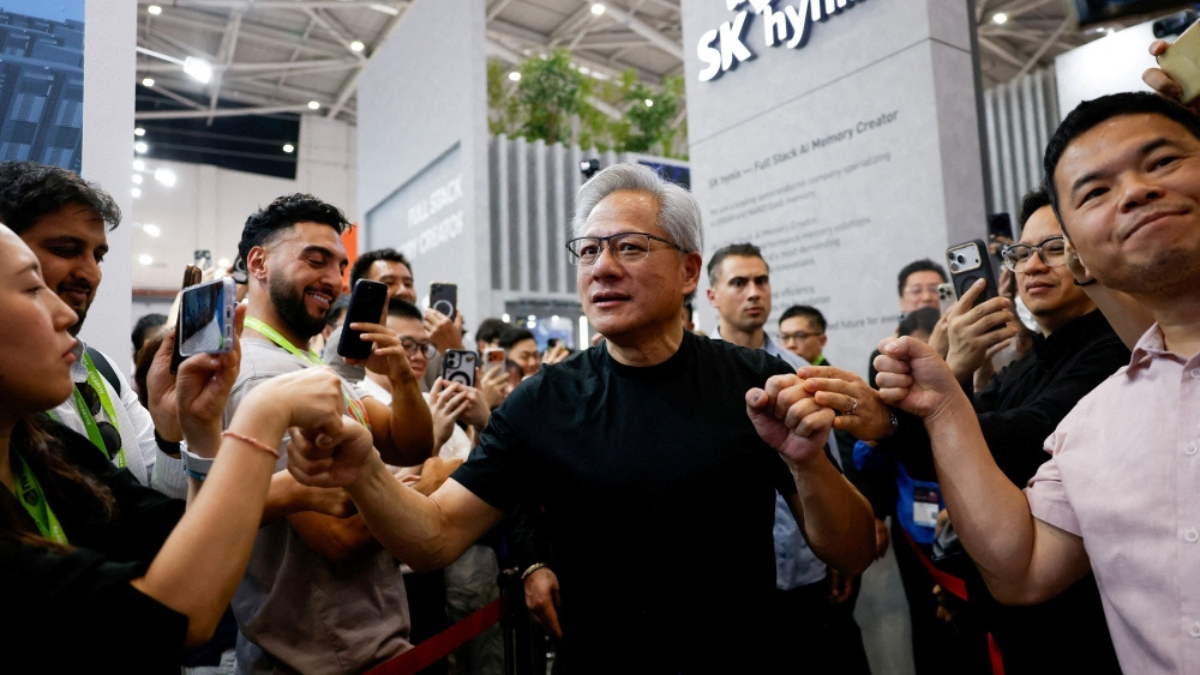
Artificial intelligence has dominated global technology headlines for the past several years, but a new theme is beginning to emerge from the conversations of industry leaders. Increasingly, the focus is shifting beyond large language models and cloud computing toward a sector that could reshape entire economies: robotics. That message was delivered clearly when Nvidia CEO Jensen Huang arrived in South Korea and declared that robotics could become the country’s next major industry.
According to Reuters, the Nvidia CEO made the remarks shortly after landing at Gimpo Airport on June 5. Although brief, his comments immediately attracted attention from investors, policymakers, and technology companies across Asia. South Korea already possesses some of the world's most advanced manufacturing capabilities, and Huang’s endorsement suggests that the country may be uniquely positioned to become a global robotics powerhouse.
The timing of the visit is particularly significant. The Nvidia CEO is scheduled to meet leaders from Hyundai, Samsung, SK Group, LG, and Naver, some of the largest and most influential corporations in South Korea. Together, these companies represent industries ranging from automobiles and semiconductors to internet services and advanced manufacturing. Their combined capabilities could create a powerful ecosystem for the next generation of intelligent machines.
Why the Nvidia CEO Is Betting on Robotics
For years, Nvidia has been associated primarily with graphics processing units (GPUs), gaming, and more recently artificial intelligence infrastructure. However, the vision repeatedly expressed by the Nvidia CEO extends far beyond data centers.
Huang has often described robotics as the physical manifestation of artificial intelligence. While AI models process information and make decisions, robots bring those decisions into the real world. In other words, robotics is where software meets physical action.
This perspective helps explain why the Nvidia CEO views robotics as a natural extension of the AI revolution. The same computing technologies powering advanced AI systems can also power autonomous vehicles, industrial robots, warehouse automation systems, drones, and humanoid robots.
From Nvidia’s perspective, the robotics opportunity is enormous because every intelligent machine requires significant computational power. Whether a robot is assembling automobiles, delivering packages, assisting healthcare workers, or performing warehouse operations, it needs advanced AI capabilities to perceive its environment and make decisions.
"Did I bring any gifts for Korea? I brought a lot of business for Korea," the Nvidia CEO told reporters, according to Reuters.
That statement may have sounded casual, but it carried important implications. It suggests that Nvidia sees South Korea not merely as a customer market but as a strategic partner in future AI and robotics development.
South Korea’s Unique Advantage in the Robotics Race
The optimism expressed by the Nvidia CEO is rooted in South Korea’s industrial strengths.
Few countries combine semiconductor leadership, advanced manufacturing, automotive expertise, and consumer electronics capabilities as effectively as South Korea. These strengths create ideal conditions for robotics development.
Several factors support the argument:
- World-class semiconductor manufacturing.
- Advanced automotive engineering capabilities.
- Strong industrial automation infrastructure.
- Highly skilled engineering talent.
- Government support for technology innovation.
- Global leadership in electronics production.
The Nvidia CEO appears to recognize that robotics requires all of these elements simultaneously. Unlike software applications, robots combine hardware, sensors, AI models, chips, mechanical engineering, and cloud connectivity into a single product.
South Korean companies already excel in many of these areas. Hyundai has been aggressively investing in robotics and autonomous mobility. Samsung continues to push semiconductor innovation. LG has expanded its presence in smart devices and automation technologies. Meanwhile, Naver has invested heavily in AI research and digital platforms.
The convergence of these strengths may explain why the Nvidia CEO sees South Korea as a potential leader in the robotics era.
The Hyundai Connection Could Be the Biggest Opportunity
Among all the meetings scheduled during the visit, the discussions involving Hyundai may be particularly important.
Recent reports suggest that Nvidia and Hyundai have been exploring deeper cooperation involving AI infrastructure and research facilities. According to reports cited by GuruFocus, Nvidia and Hyundai have reportedly been involved in discussions related to an artificial intelligence research center connected to the Saemangeum development project.
If these discussions progress, the partnership could become a major milestone for both companies.
The Nvidia CEO understands that modern vehicles are increasingly becoming AI-powered computing platforms. Future mobility solutions will rely on autonomous driving systems, intelligent manufacturing, predictive maintenance, and robotic automation.
For Hyundai, collaboration with Nvidia could accelerate innovation in:
- Autonomous vehicle development.
- Factory automation.
- Industrial robotics.
- Smart logistics.
- Future mobility platforms.
- AI-powered manufacturing systems.
For Nvidia, Hyundai represents a large-scale industrial partner capable of deploying AI technologies across multiple sectors.
The relationship demonstrates how the vision of the Nvidia CEO extends beyond traditional computing markets into transportation and industrial automation.
How Robotics Could Become the Next AI Boom
The current AI boom has largely centered on software and cloud infrastructure. Companies have invested billions of dollars in GPUs, data centers, and AI models.
However, the Nvidia CEO appears to believe the next phase will involve bringing intelligence into physical environments.
Consider what happens when AI gains the ability to interact directly with the real world:
- Factories become more autonomous.
- Warehouses require fewer manual processes.
- Healthcare facilities gain robotic assistants.
- Agricultural operations become increasingly automated.
- Transportation systems become more intelligent.
- Service industries deploy autonomous machines.
Each of these applications creates demand for advanced processors, sensors, software platforms, and AI training systems. As a result, robotics could potentially become one of the largest long-term growth opportunities in technology.
The repeated emphasis from the Nvidia CEO suggests that Nvidia intends to play a central role in enabling that future.
The Strategic Importance of Samsung, SK, LG, and Naver
The visit extends beyond Hyundai.
The Nvidia CEO also plans meetings with Samsung, SK Group, LG, and Naver. Each company brings a unique capability that could contribute to a broader AI and robotics ecosystem.
Samsung and SK are particularly important because advanced AI systems depend heavily on memory chips and semiconductor technologies. As AI workloads continue growing, collaboration between Nvidia and South Korean semiconductor leaders becomes increasingly valuable.
At the same time, Naver’s AI initiatives could support software and platform development that complements Nvidia’s hardware ecosystem.
These discussions reinforce the broader vision articulated by the Nvidia CEO during his visit.
Investors Are Watching for the Next Catalyst
Financial markets closely follow every major move made by the Nvidia CEO because Nvidia has become one of the most influential companies in the global technology sector.
When Huang discusses robotics, investors pay attention because his company sits at the center of the AI infrastructure boom.
The key question now is whether the meetings in South Korea lead to concrete announcements.
Potential developments could include:
- New AI research centers.
- Expanded GPU supply agreements.
- Joint robotics initiatives.
- Manufacturing partnerships.
- Autonomous vehicle collaborations.
- Industrial AI deployments.
If even a portion of these possibilities materializes, the strategic importance of South Korea within Nvidia’s global network could increase significantly.
That possibility helps explain why comments from the Nvidia CEO generated immediate attention across financial and technology communities.
The Long-Term Vision Behind Nvidia CEO Jensen Huang’s Comments
It would be easy to view the remarks from the Nvidia CEO as a routine statement made during an overseas visit. However, doing so may underestimate their significance.
Huang has consistently demonstrated an ability to identify major technology trends before they become obvious to the broader market. Nvidia’s rise during the AI revolution is partly the result of long-term strategic planning that began years before generative AI captured public attention.
When the Nvidia CEO says robotics is the next major sector for South Korea, investors naturally wonder whether he is once again pointing toward the next phase of technological transformation.
The convergence of AI, robotics, autonomous systems, advanced manufacturing, and semiconductor innovation could create one of the largest industrial shifts in decades.
South Korea appears particularly well-positioned to benefit from that transformation.
Conclusion
According to Reuters, the Nvidia CEO arrived in South Korea with meetings scheduled across some of the nation’s largest corporations and declared that robotics could become the country’s next major industry.
Those comments align with broader trends reshaping the global technology landscape. Artificial intelligence is increasingly moving beyond software and entering the physical world through robotics, autonomous systems, and advanced manufacturing.
The vision presented by the Nvidia CEO highlights South Korea’s unique strengths in semiconductors, automotive engineering, electronics, and industrial automation. Combined with Nvidia’s AI expertise, these capabilities could create significant opportunities for innovation and economic growth.
Whether through expanded partnerships with Hyundai, deeper collaboration with Samsung and SK, or new initiatives involving LG and Naver, the visit signals that South Korea may play an increasingly important role in the future of AI-driven robotics.
For investors, industry leaders, and policymakers alike, the message from the Nvidia CEO is clear: the next chapter of artificial intelligence may not be written solely inside data centers. It may be built in factories, vehicles, warehouses, and intelligent machines operating throughout the real world.