



Silver price collapsed: Could SpaceX Spark the Next Silver Boom?
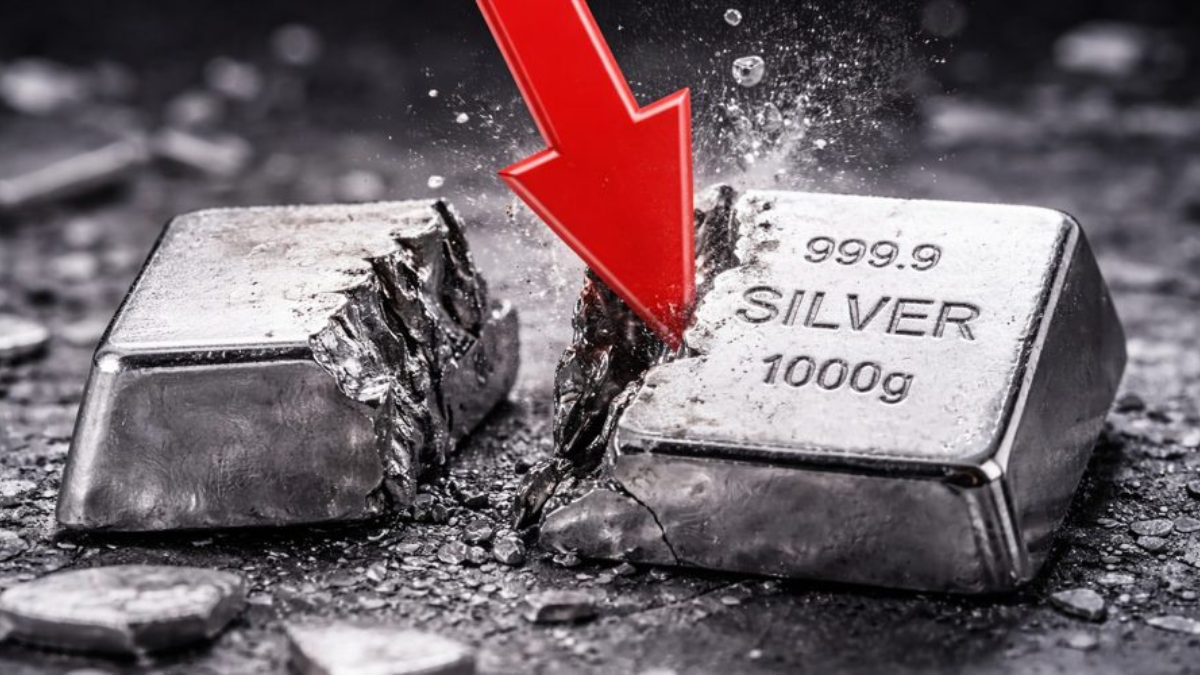
The silver market has experienced a sharp correction over the past month. For many investors, the recent decline has been alarming. The fact that the Silver price collapsed triggered significant losses across silver-related ETFs has forced market participants to reassess the metal's near-term outlook. Yet beneath the volatility lies a much larger story involving supply shortages, renewable energy expansion, artificial intelligence infrastructure, and the potential impact of SpaceX.
According to 24/7 Wall Street, shares of the iShares Silver Trust (SLV), the world's largest physically backed silver ETF, fell more than 19% over the past month. Despite this decline, silver remains up more than 76% over the last year and over 127% during the past five years. In this context, the fact that the Silver price collapsed may represent a correction within a broader long-term uptrend rather than the end of the bull market.
Why the Silver price collapsed
Whenever the Silver price collapsed, investors naturally look for signs of weakening demand or deteriorating economic conditions. However, the recent decline appears to be driven by multiple factors rather than a single fundamental shift.
After a powerful rally over the previous year, profit-taking became increasingly widespread. At the same time, changing expectations surrounding interest rates, economic growth, and risk assets contributed to heightened volatility across commodity markets.
Silver occupies a unique position as both a precious metal and an industrial commodity. This dual role often creates sharp swings in investor sentiment. As a result, the fact that the Silver price collapsed does not necessarily indicate a deterioration in long-term fundamentals.
Short-term price movements rarely alter long-term supply-demand realities.
The Growing Supply Deficit
One of the strongest bullish arguments for silver comes from its supply-demand imbalance.
According to Dan Dreyfus, founder of Borneite Capital, global silver consumption currently reaches approximately 1.2 billion ounces annually while production remains near 1 billion ounces.
This creates an annual deficit of roughly 200 million ounces.
Dreyfus further argues that only around 600 million ounces of above-ground silver inventory remain available worldwide.
If current trends persist, global inventories could theoretically be depleted within approximately three years.
While forecasts vary, the structural shortage argument suggests that even though the Silver price collapsed, long-term supply constraints remain firmly in place.
Solar Energy Could Drive Future Demand
Renewable energy development has become one of the most important drivers of industrial metal demand.
Silver plays a critical role in photovoltaic cells due to its exceptional electrical conductivity.
As countries continue investing heavily in solar infrastructure, demand for silver is expected to increase significantly.
Even though the Silver price collapsed, demand from the solar sector has shown little sign of weakening.
Many analysts believe that solar installations could become one of the largest long-term sources of silver consumption during the next decade.
How SpaceX Could Change the Equation
The upcoming SpaceX IPO has introduced a new dimension to the silver investment thesis.
According to public filings and reports, SpaceX is exploring orbital computing infrastructure powered by space-based solar arrays.
If these projects eventually scale, they could create substantial new demand for solar technology and, by extension, silver.
This is where the narrative becomes particularly interesting. The fact that the Silver price collapsed today does not necessarily reflect future industrial demand.
SpaceX's ambitions involving orbital data centers, satellite networks, and AI infrastructure could require significant solar generation capacity, potentially increasing silver consumption dramatically over time.
Institutional Investors Are Paying Attention
Large institutional investors appear to be monitoring these developments closely.
According to reports, Citadel established a new position in SLV during the first quarter of 2026.
Meanwhile, the gold-to-silver ratio remains near 63:1, significantly above its century-long average of approximately 40:1.
Historically, elevated gold-to-silver ratios have often been interpreted as signs that silver may be undervalued relative to gold.
For this reason, some investors view the fact that the Silver price collapsed as a potential buying opportunity rather than a warning sign.
Risks Investors Should Consider
Despite the bullish narrative, significant risks remain.
- Supply deficit forecasts may prove overly optimistic.
- SpaceX's orbital solar projects remain largely theoretical.
- Global economic slowdowns could reduce industrial demand.
- Interest rate changes may continue to pressure commodity prices.
Therefore, while the Silver price collapsed, investors should avoid assuming that a rapid recovery is guaranteed.
Conclusion
The fact that the Silver price collapsed has captured headlines, but the broader investment story remains intact.
Supply shortages, expanding solar demand, artificial intelligence infrastructure growth, and potential SpaceX-related developments continue to support the long-term case for silver.
According to 24/7 Wall Street, investors are increasingly focused on whether the next decade could usher in a new era of structural demand growth for silver.
Ultimately, the most important question may not be why the Silver price collapsed, but whether future supply constraints and technological expansion will lead to a significant revaluation of silver in the years ahead.