



Intel Fights Back in CPU Market Battle
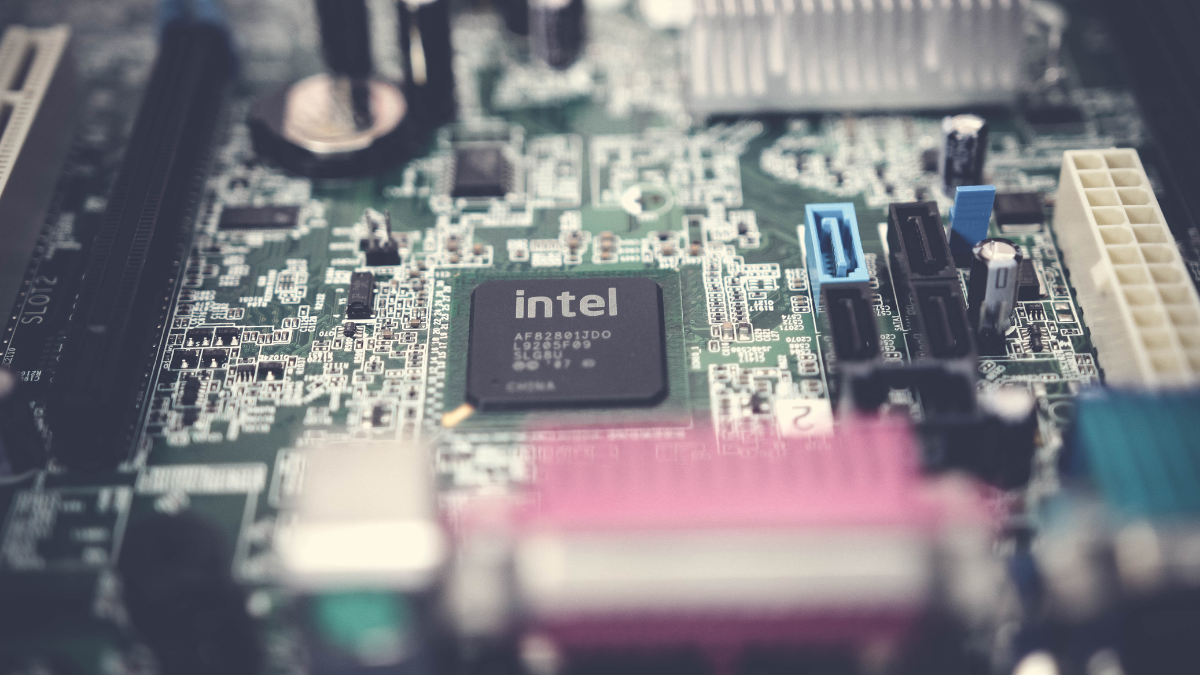
Intel’s Turning Point in the Server CPU War
For much of the past decade, Intel has been synonymous with dominance in the central processing unit (CPU) market. However, recent years have seen that dominance challenged, particularly by Advanced Micro Devices (AMD), whose EPYC server chips have steadily gained traction among data center operators. According to The Motley Fool, AMD’s success has largely been driven by superior performance metrics and competitive pricing, creating a compelling value proposition that Intel has struggled to match consistently.
The shifting dynamics of the CPU market are not merely about incremental improvements. They reflect a broader transformation fueled by artificial intelligence workloads, cloud computing expansion, and the increasing importance of energy efficiency. In this evolving environment, Intel finds itself at a critical juncture—one where reclaiming technological leadership is not optional but essential.
The Rise of AMD and the Pressure on Intel
AMD’s ascent in the server CPU market has been nothing short of remarkable. Its EPYC processors have captured market share at a steady pace, benefiting from strong architectural design and efficient manufacturing partnerships. Meanwhile, Intel has experienced a noticeable decline in both unit share and revenue share, underscoring the competitive pressure it faces.
Data from Mercury Research highlights this trend clearly. In the first quarter of 2026, Intel’s share of the server CPU market dropped to 66.8%, a six-percentage-point decline year over year. The consumer CPU segment tells a similar story, with Intel losing 5.5 percentage points to settle at 70.4%. These figures illustrate how AMD is not only gaining ground but also exerting pricing power, as evidenced by its higher revenue share relative to unit share.
This erosion of market leadership has placed Intel under intense scrutiny. Investors and industry observers alike have questioned whether the company can regain its competitive edge or whether it risks falling further behind in a market increasingly defined by innovation speed.
Intel’s 18A-P Process: A Strategic Counterattack
In response, Intel has introduced a potentially game-changing development: the 18A-P process node. This advanced manufacturing technology represents a refined iteration of the company’s 18A node, offering significant improvements in performance, efficiency, and thermal management.
The 18A-P process is currently in what is known as “risk production,” a phase where chips are produced in limited quantities to evaluate performance, defect rates, and manufacturability. While this stage does not guarantee success, it is a crucial step toward large-scale production. Notably, Intel has already brought the original 18A node into volume production, suggesting that the transition to 18A-P may proceed more smoothly than previous node transitions.
The improvements promised by Intel are substantial. The company claims a 9% performance increase at the same power level compared to 18A, alongside an 18% reduction in power consumption at equivalent performance. Additionally, enhanced thermal resistance—ranging from 20% to 40%—could significantly lower cooling costs for data centers, a factor that is increasingly critical in large-scale AI deployments.
Why Intel’s Technological Leap Matters
The implications of the 18A-P process extend far beyond incremental gains. For Intel, this technology could serve as the foundation for regaining competitiveness in multiple domains, including server CPUs, AI accelerators, and foundry services.
One of the most important aspects of Intel’s strategy is its integration of design and manufacturing capabilities. Unlike AMD, which relies on third-party foundries, Intel retains control over its production processes. This vertical integration allows the company to optimize performance and cost simultaneously—provided it can execute effectively.
“Technological leadership in semiconductor manufacturing is not just about speed; it is about consistency, scalability, and cost efficiency.”
If Intel can deliver on its promises, the 18A-P node could help close the gap with AMD and even create new advantages. Lower power consumption and improved thermal performance are particularly valuable in data centers, where operational costs are heavily influenced by energy usage.
AI Demand and Intel’s Opportunity
The rapid growth of artificial intelligence has created a surge in demand for high-performance computing infrastructure. This trend has benefited both AMD and Nvidia, but it also presents a significant opportunity for Intel.
AI inference workloads, in particular, are driving demand for server CPUs. These workloads require efficient processing capabilities, making performance-per-watt a critical metric. Intel’s advancements with the 18A-P process could position it more favorably in this segment.
Moreover, Intel’s Xeon 6 processors, built on the 18A node, are already gaining traction. The fact that Nvidia has selected these processors for its Rubin rack-scale servers underscores their relevance in the AI ecosystem. This partnership highlights how Intel is still deeply embedded in the infrastructure that powers modern computing.
Financial Momentum and Business Segments
Despite competitive challenges, Intel’s financial performance shows signs of resilience. The company’s Data Center and AI (DCAI) segment reported a 22% year-over-year revenue increase in the first quarter, reaching $5.1 billion. Meanwhile, its foundry business grew by 16% to $5.4 billion.
These figures indicate that Intel is not merely defending its position but actively expanding in key growth areas. Together, these segments accounted for $10.1 billion of the company’s total $13.6 billion revenue, demonstrating their strategic importance.
The potential addition of high-profile customers, such as Apple, further strengthens Intel’s outlook. If the 18A-P process proves successful, it could attract more clients to Intel’s foundry services, diversifying its revenue streams and reducing reliance on internal product sales.
Challenges and Risks Ahead for Intel
While the outlook appears promising, Intel faces several challenges. The risk production phase of the 18A-P node is not without uncertainty. Manufacturing defects, yield issues, or performance shortfalls could delay or derail the transition to volume production.
Additionally, AMD is unlikely to stand still. The competitive landscape remains dynamic, with both companies investing heavily in research and development. For Intel, maintaining momentum will require consistent execution across multiple fronts.
- Ensuring high yields in advanced process nodes
- Maintaining competitive pricing
- Strengthening partnerships within the AI ecosystem
- Expanding foundry customer base
Each of these factors will play a crucial role in determining whether Intel can sustain its recovery.
Investor Perspective: Hold or Wait?
From an investment standpoint, Intel presents a complex picture. On one hand, the company is making significant technological advancements and showing signs of financial growth. On the other hand, it remains absent from certain “top stock” lists, as noted by The Motley Fool.
For long-term investors, the question is whether Intel’s turnaround efforts will translate into sustained growth and stock price appreciation. The company’s ability to execute on its roadmap will be a key determinant.
- If the 18A-P node achieves mass production successfully, Intel could regain market share.
- If AI demand continues to grow, Intel’s server CPU business may benefit significantly.
- If foundry services expand, Intel could unlock new revenue streams.
These factors suggest that holding Intel stock may be a reasonable strategy for investors willing to tolerate some level of risk.
Intel’s Path Forward
The semiconductor industry is entering a new phase, defined by AI-driven demand and rapid technological innovation. In this environment, Intel is striving to reclaim its position as a leader, leveraging its 18A-P process and expanding its presence in high-growth segments.
While challenges remain, the company’s recent developments indicate a clear commitment to closing the gap with competitors. Whether Intel succeeds will depend on its ability to execute consistently and deliver on its promises.
As the battle between Intel and AMD continues, one thing is certain: the outcome will shape the future of computing. For now, Intel appears to be gearing up for a strong comeback—one that could redefine its role in the industry and offer new opportunities for investors.