



GM renews China joint venture for long term
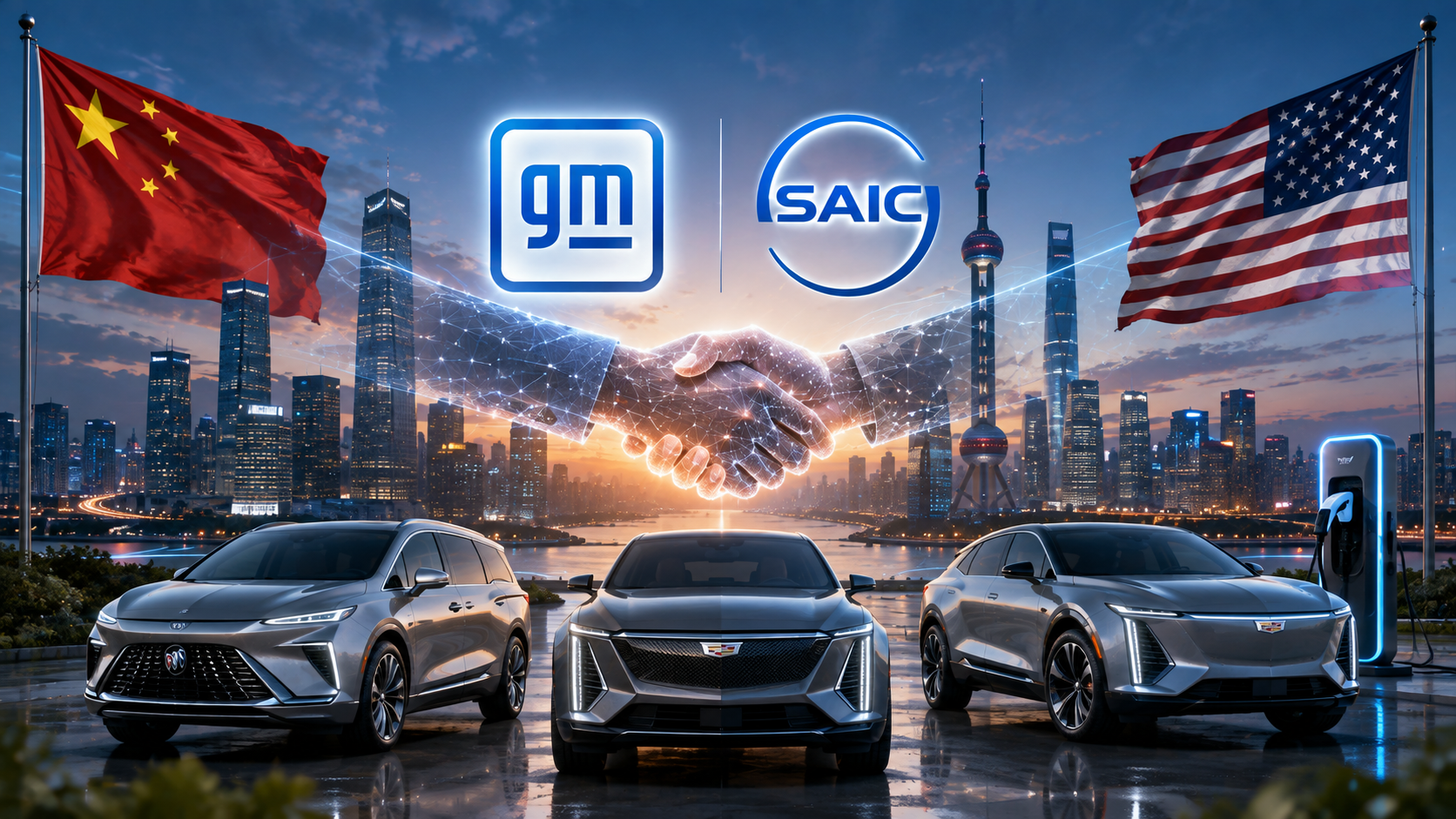
A Defining Moment as GM renews China joint venture
The announcement that GM renews China joint venture with SAIC Motor for another 20 years is more than a contractual extension—it represents a strategic recalibration in one of the world’s most competitive automotive markets. According to Reuters, this decision comes after years of declining sales, restructuring efforts, and a rapidly shifting industry landscape dominated by electrification and domestic innovation.
For General Motors, China was once a cornerstone of global growth. The country helped the automaker achieve scale, profitability, and global relevance. Yet over the past decade, that advantage eroded. The fact that GM renews China joint venture today reflects both necessity and opportunity—a recognition that success in China requires deeper localization, sharper focus, and long-term commitment.
From Market Leader to Challenger
To understand why GM renews China joint venture matters, one must revisit the company’s historical trajectory in China. GM entered the market in 1997 through its partnership with SAIC, quickly becoming one of the top-selling foreign automakers. For years, it generated billions in annual profits, riding the wave of China’s automotive boom.
However, the landscape has shifted dramatically. Domestic automakers have evolved from low-cost competitors into technologically advanced players, particularly in electric vehicles. As a result, GM’s annual sales in China fell to 1.9 million units last year, down 51% from 2016. The decision that GM renews China joint venture is therefore rooted in a recognition that the old playbook no longer works.
- Domestic EV brands have gained significant market share.
- Consumer preferences have shifted toward smart, connected vehicles.
- Foreign brands face increasing pressure on pricing and innovation.
Restructuring as a Foundation for Renewal
Before the moment where GM renews China joint venture, the company undertook a painful but necessary restructuring. This included plant closures, model discontinuations, and over $5 billion in non-cash charges tied to its China operations.
These moves were not merely cost-cutting exercises; they were designed to realign GM’s business with the realities of the modern Chinese market. The fact that GM renews China joint venture after this restructuring suggests that the company now believes it has built a more sustainable foundation.
Restructuring is often seen as retreat, but in GM’s case, it may prove to be the reset required for long-term competitiveness.
Strategic Focus: Cadillac and Buick
A key pillar of the strategy behind why GM renews China joint venture is brand focus. GM has decided to prioritize Cadillac and Buick while discontinuing Chevrolet sales in China. This marks a significant shift in positioning.
Chevrolet struggled in China, particularly in the face of aggressive pricing from domestic competitors. By contrast, Buick retains strong brand equity, and Cadillac offers a premium positioning that aligns with rising consumer expectations. The decision that GM renews China joint venture is therefore tied to a more disciplined portfolio strategy.
- Cadillac: Positioned as a premium brand with global appeal.
- Buick: Maintains strong historical recognition in China.
- Chevrolet: Deprioritized due to competitive pressures.
China as an Export Hub
Another critical dimension of the decision where GM renews China joint venture is the role of China as a global export base. GM plans to leverage its Chinese operations to export Buick and Cadillac vehicles to markets such as the Middle East, Africa, South America, and parts of Asia.
This approach reflects a broader industry trend: China is no longer just a destination market—it is becoming a manufacturing and innovation hub. By ensuring that GM renews China joint venture, the company gains access to cost efficiencies, supply chain advantages, and localized engineering talent.
The Electric Future Driving the Partnership
Electrification is at the heart of why GM renews China joint venture. SAIC-GM plans to launch at least 30 electric or hybrid models by 2030, signaling a strong commitment to competing in the EV space.
One notable example is the Buick Electra sub-brand, developed specifically for China. The Electra E7 SUV recorded over 10,000 sales in its first month, demonstrating the potential of locally tailored products. The fact that GM renews China joint venture ensures that such initiatives can scale.
- EV adoption in China continues to accelerate.
- Local development improves product-market fit.
- Hybrid models provide a transitional pathway.
Competing in a New Era of Innovation
The decision that GM renews China joint venture must also be viewed through the lens of technological competition. Chinese automakers are no longer followers—they are leaders in areas such as battery technology, software integration, and autonomous driving features.
For GM, maintaining relevance requires not just participation, but adaptation. By ensuring that GM renews China joint venture, the company positions itself closer to the center of innovation rather than operating from the periphery.
In today’s automotive industry, innovation is increasingly local, and global players must embed themselves within regional ecosystems to remain competitive.
Profitability: Early Signs of Recovery
After years of losses, there are signs that GM’s restructuring is beginning to pay off. The company recently reported $83 million in second-quarter income from its China operations. While modest, this marks a return to profitability.
The timing of when GM renews China joint venture is therefore significant. It suggests that GM is not doubling down on a failing strategy, but rather building on early signs of recovery.
Still, the path forward is uncertain. The Chinese market remains intensely competitive, and profitability can be fleeting. The decision that GM renews China joint venture is a long-term bet that current improvements can be sustained.
Geopolitical Constraints and Market Limits
An important caveat to the strategy where GM renews China joint venture is the geopolitical environment. Trade tensions, tariffs, and national security concerns have limited the ability of China-developed vehicles to enter the U.S. market.
As a result, GM has no plans to export China-built vehicles to the United States. This constraint shapes the global ambitions tied to the decision that GM renews China joint venture.
- Tariffs limit cross-border vehicle trade.
- Regulatory scrutiny affects technology transfer.
- Regional strategies must remain distinct.
The Long-Term Bet
Ultimately, the announcement that GM renews China joint venture is a long-term bet on the continued importance of China in the global automotive industry. Despite challenges, China remains the world’s largest auto market and a leader in EV adoption.
By extending the partnership for 20 years, GM is signaling confidence—not just in SAIC, but in the broader trajectory of the Chinese market. The decision that GM renews China joint venture reflects a belief that the company can adapt, compete, and ultimately thrive in this environment.
Conclusion: Reset, Not Retreat
The narrative surrounding GM in China has often been framed as decline. But the moment where GM renews China joint venture offers a different perspective. It is not a retreat, but a reset—a deliberate effort to align strategy with reality.
According to Reuters, the renewed agreement will enable deeper localization, expanded EV development, and a more focused brand strategy. These elements suggest that GM is not abandoning China, but rather redefining its role within it.
In the end, the significance of GM renews China joint venture lies in what it represents: a recognition that success in today’s automotive industry requires flexibility, partnership, and a willingness to evolve. Whether this reset leads to a sustained comeback remains to be seen, but one thing is clear—the story is far from over.