



Global Oil Inventories Signal Energy Risks
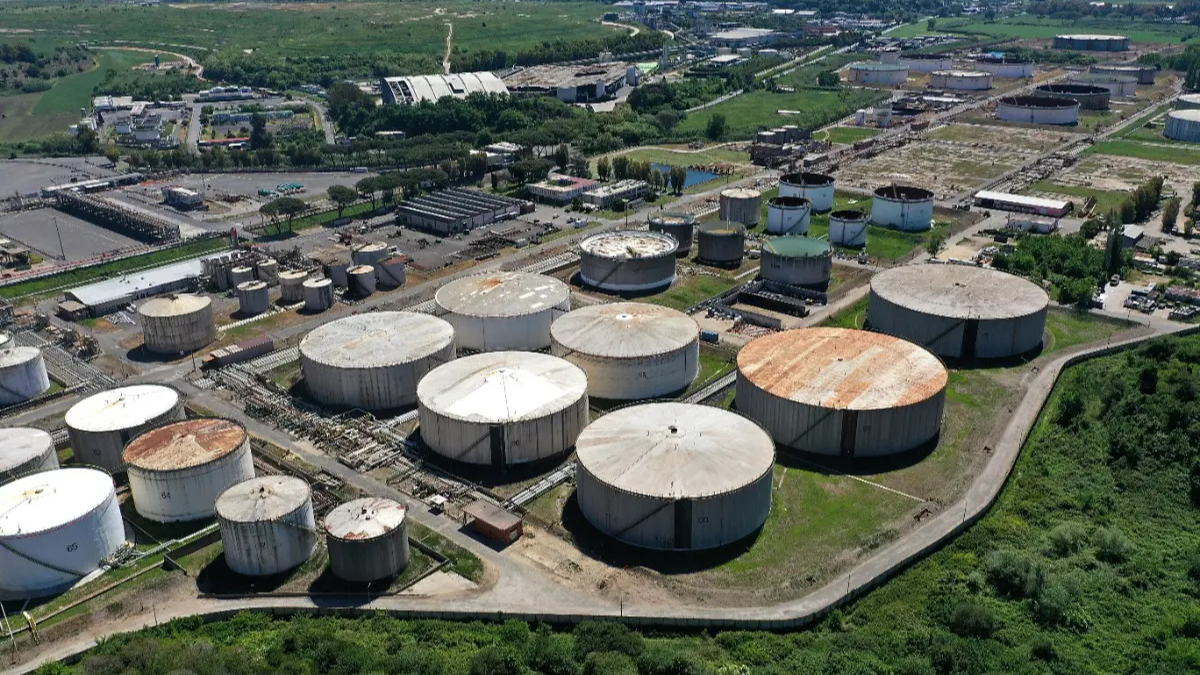
The global energy market has entered one of its most uncertain periods in years. Investors are facing a dangerous combination of geopolitical instability, supply concerns, and rising fears surrounding long-term energy security. At the center of this growing anxiety is a troubling statistic: Global Oil Inventories have fallen to their lowest levels in more than a decade.
According to The Motley Fool, the decline in Global Oil Inventories is becoming increasingly significant as conflict in the Middle East continues to pressure energy markets. While crude oil prices continue swinging sharply based on daily headlines, the deeper issue lies beneath the surface — the world’s safety buffer of available oil reserves is shrinking rapidly.
Historically, Global Oil Inventories act as a shock absorber for the energy market. When supply disruptions occur, reserves help stabilize prices and maintain confidence. But when Global Oil Inventories become dangerously tight, markets can react violently to even small disruptions.
That reality is beginning to reshape how investors view the entire energy sector.
Why Global Oil Inventories Matter More Than Oil Prices
Many retail investors focus almost entirely on crude oil prices. Financial television networks often treat oil as a short-term trading instrument, emphasizing daily price moves driven by geopolitical headlines or economic data.
However, experienced energy analysts understand that Global Oil Inventories may be a far more important indicator than the spot price of crude itself.
Oil inventories represent the available supply cushion that countries, producers, and refiners can rely on during periods of stress. When Global Oil Inventories remain healthy, the market can absorb disruptions more comfortably. But when inventories fall to historically low levels, the margin for error disappears.
According to The Motley Fool, Global Oil Inventories are now estimated to be at an 11-year low. That means the world has less flexibility to respond to unexpected supply shocks.
Middle East tensions have amplified these concerns. The region remains one of the world’s most critical oil-producing hubs, and any prolonged disruption can quickly tighten already strained supply chains.
Even if the conflict eventually de-escalates, analysts warn that rebuilding Global Oil Inventories could take months. Energy infrastructure, shipping logistics, and production schedules cannot instantly return to normal.
As a result, investors are beginning to reassess risk across the entire energy market.
The Emotional Nature of Oil Markets
One of the biggest challenges facing investors today is the emotional nature of commodity markets.
Oil prices rarely move in perfectly rational ways. Instead, markets react emotionally to geopolitical developments, policy announcements, and even rumors. This creates sharp volatility that can make traditional oil investing extremely difficult.
According to The Motley Fool, many energy insiders believe the market is underestimating the seriousness of declining Global Oil Inventories. Despite tightening reserves, crude oil prices continue fluctuating aggressively based on short-term headlines rather than long-term fundamentals.
This disconnect creates uncertainty.
On one hand, shrinking Global Oil Inventories could eventually force oil prices much higher if supply concerns intensify. On the other hand, a sudden ceasefire or diplomatic breakthrough could send oil prices lower almost immediately.
That unpredictability makes directional bets on oil prices risky, even for experienced investors.
Long-term investors therefore face a difficult balancing act. They may want exposure to the energy sector because of tightening Global Oil Inventories, but they also want protection from extreme commodity volatility.
This is why many analysts are now recommending a more defensive approach to energy investing.
Why Midstream Companies Look Attractive
In uncertain environments, investors often gravitate toward businesses with stable cash flow models. Within the energy sector, that has increased interest in midstream companies.
According to The Motley Fool, companies such as Enterprise Products Partners and Enbridge may offer investors a safer way to gain exposure to energy markets while avoiding some of the risks associated with fluctuating oil prices.
These companies operate as infrastructure providers rather than pure oil producers.
Enterprise Products Partners and Enbridge own massive pipeline networks and transportation systems that move oil and natural gas across North America. Instead of depending heavily on commodity prices, they primarily generate revenue by charging fees for the use of their infrastructure.
That distinction is extremely important during periods when Global Oil Inventories are unstable.
Unlike exploration companies that rely directly on high oil prices to generate profits, midstream businesses can continue producing relatively stable cash flows even when crude prices fluctuate sharply.
Their business model resembles a toll road.
As long as oil and gas continue flowing through pipelines, these companies collect fees.
Demand for energy transportation tends to remain relatively strong throughout the energy cycle, even when oil markets become volatile due to shrinking Global Oil Inventories.
Dividend Stability During Energy Uncertainty
Another major reason investors are paying attention to midstream companies is income stability.
According to The Motley Fool, Enterprise Products Partners currently offers a dividend yield around 5.5%, while Enbridge offers approximately 4.8%.
More importantly, both companies have long histories of increasing dividends consistently over decades.
That reliability becomes especially attractive when Global Oil Inventories create uncertainty across financial markets.
Many traditional oil producers experience dramatic earnings swings depending on crude prices. During downturns, dividends can become vulnerable to cuts. But pipeline operators often maintain steadier cash generation because their contracts are tied more closely to transportation volumes than commodity pricing.
Investors seeking defensive exposure to tightening Global Oil Inventories may therefore prefer businesses capable of generating recurring income regardless of daily market sentiment.
This strategy allows investors to focus more on dividend payments and less on short-term oil price swings.
“The best part of the story is that oil prices aren’t really that important to their financial results.”
That observation from The Motley Fool captures why many conservative investors are becoming more interested in infrastructure-focused energy companies.
Global Oil Inventories and Energy Security
The decline in Global Oil Inventories is also reshaping broader conversations about energy security.
For decades, countries have relied heavily on globally integrated energy supply chains. But geopolitical instability has exposed vulnerabilities within that system.
As Global Oil Inventories continue tightening, governments may prioritize supply reliability over pure cost efficiency.
This shift could benefit North American energy infrastructure companies significantly.
According to The Motley Fool, countries concerned about Middle East instability may increasingly seek oil and gas imports from politically stable regions such as the United States and Canada.
If that trend accelerates, companies like Enterprise Products Partners and Enbridge could experience stronger long-term demand for transportation and export infrastructure.
In other words, declining Global Oil Inventories may indirectly strengthen the strategic importance of North American energy networks.
This is especially relevant because both Enterprise and Enbridge operate far from the geopolitical conflict zones currently dominating headlines.
Unlike producers directly exposed to Middle East instability, these companies benefit from geographic insulation.
Their operations continue functioning normally even as Global Oil Inventories tighten worldwide.
The Risk of Underestimating Global Oil Inventories
One of the greatest dangers facing investors today may be complacency.
Financial markets have become accustomed to rapid recoveries from crises. Investors often assume supply disruptions will resolve quickly or that governments will intervene effectively.
However, energy markets do not always recover instantly.
According to The Motley Fool, rebuilding Global Oil Inventories after a major disruption could take considerable time. Production capacity cannot always increase overnight, particularly when geopolitical risks remain unresolved.
Moreover, years of underinvestment in fossil fuel infrastructure have already reduced spare production capacity in several regions.
This means Global Oil Inventories may remain structurally tighter for longer than many investors currently expect.
Should another major disruption occur while inventories remain low, the market reaction could become significantly more severe.
Energy prices could spike rapidly, inflation pressures could intensify, and global economic growth could slow.
That possibility explains why some analysts are becoming increasingly defensive despite recent oil price pullbacks.
Why Volatility Could Persist
Even if Middle East tensions eventually ease, volatility surrounding Global Oil Inventories may continue for an extended period.
Oil markets are influenced by multiple overlapping forces:
- Geopolitical conflict
- OPEC production decisions
- Economic growth trends
- Refinery capacity constraints
- Currency fluctuations
- Government energy policy
- Strategic petroleum reserve management
Because so many variables interact simultaneously, forecasting oil prices becomes extraordinarily difficult.
This complexity reinforces the appeal of infrastructure-focused businesses.
Instead of attempting to predict daily oil price movements, investors can focus on companies positioned to benefit from long-term energy demand regardless of short-term commodity swings.
As long as the global economy continues consuming large quantities of oil and natural gas, pipeline and transportation infrastructure should remain necessary.
That structural demand could become even more important if Global Oil Inventories remain constrained.
Can Renewable Energy Replace Oil Fast Enough?
Some investors argue that renewable energy growth could eventually reduce the importance of Global Oil Inventories altogether.
While renewable adoption continues expanding, the transition remains far slower than many policymakers originally projected.
Oil still powers transportation, manufacturing, aviation, shipping, and large portions of industrial activity worldwide.
Even optimistic renewable forecasts suggest fossil fuels will remain deeply integrated into the global economy for years.
That reality means Global Oil Inventories continue carrying enormous strategic significance.
In fact, declining investment in traditional oil production during the energy transition may actually contribute to tighter inventories in the near term.
Some producers have become hesitant to expand aggressively due to environmental pressures and uncertain long-term demand projections.
As a result, supply growth may struggle to keep pace with global consumption.
This dynamic could create a prolonged period where Global Oil Inventories remain historically tight even as renewable energy expands gradually.
How Investors Should Position Themselves
The current environment requires balance.
Investors chasing speculative oil producers purely based on rising crude prices may expose themselves to excessive volatility. At the same time, completely ignoring the energy sector while Global Oil Inventories continue shrinking could also prove risky.
A more measured approach may involve focusing on financially stable infrastructure operators with durable business models.
Companies like Enterprise Products Partners and Enbridge offer several advantages:
- Stable fee-based cash flows
- Long-term infrastructure assets
- Attractive dividend yields
- Reduced exposure to commodity price swings
- Strategic positioning within North American energy networks
According to The Motley Fool, these characteristics make them appealing defensive plays during periods when Global Oil Inventories remain under pressure.
Importantly, investors should still recognize that no energy investment is entirely risk-free. Regulatory changes, environmental policy shifts, and economic slowdowns can still affect pipeline operators.
However, compared to highly cyclical exploration companies, midstream businesses often provide greater resilience during uncertain periods.
Final Thoughts on Global Oil Inventories
The decline in Global Oil Inventories represents more than just a temporary market headline. It reflects deeper structural pressures within the global energy system.
According to The Motley Fool, inventories have fallen to their lowest levels in more than a decade, while geopolitical instability continues threatening already fragile supply chains.
Although oil prices may continue moving unpredictably based on daily news cycles, the underlying issue of shrinking Global Oil Inventories cannot be ignored indefinitely.
For investors, this creates both risk and opportunity.
Speculative bets on oil prices may remain dangerous due to emotional market reactions and geopolitical uncertainty. But infrastructure-focused companies capable of generating stable cash flow could become increasingly valuable as energy security concerns intensify.
Enterprise Products Partners and Enbridge represent examples of businesses positioned to benefit from long-term energy demand without relying entirely on rising oil prices.
In a world where Global Oil Inventories continue tightening, stability may become one of the most valuable assets investors can own.